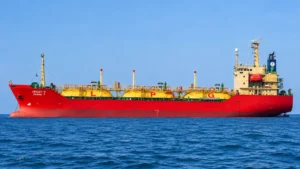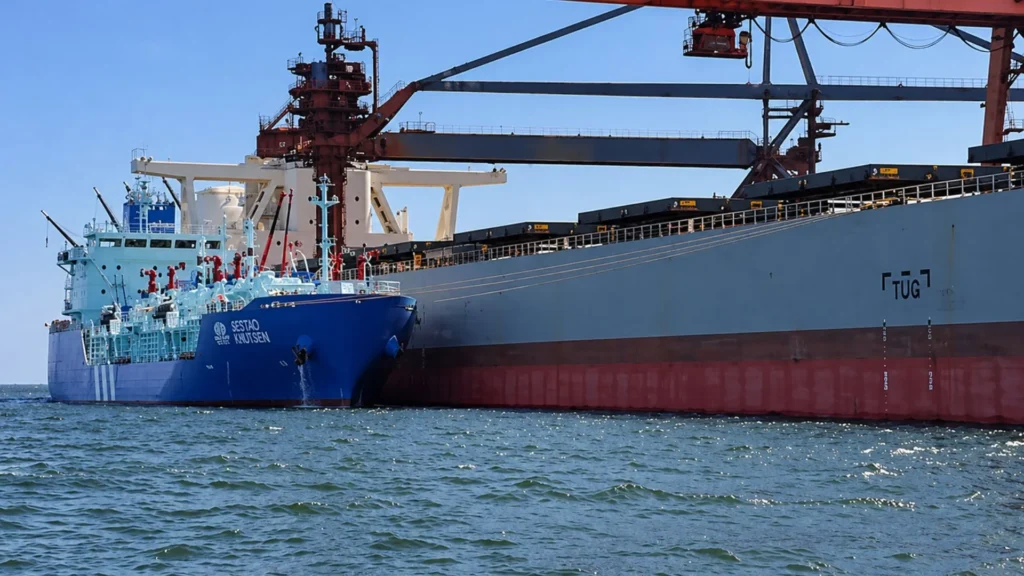
Osaka Gas has commenced LNG bunkering operations using the ship-to-ship method, ensuring its capacity to offer all three major marine fuel supply systems.
A crucial step in the supply of marine LNG
The start of ship-to-ship LNG bunkering marks an operational advancement for Osaka Gas in the marine fuel market. The Japanese company now integrates three delivery methods: ship-to-ship, truck-to-ship, and port-to-ship, allowing it to adapt to different logistical conditions.
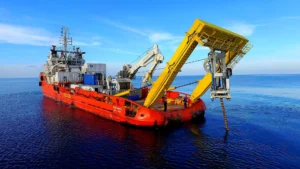
Furthermore, the first operation took place on April 21, when the bunkering vessel SETO AZURE supplied liquefied natural gas to a dual-fuel Capesize bulk carrier at the JFE Steel facility in Hiroshima.
Operational flexibility and greater resilience
The ship-to-ship method allows LNG to be transferred directly to docked or anchored vessels, increasing refueling efficiency. This method also improves service continuity by reducing reliance on fixed infrastructure.
Furthermore, Osaka Gas can load LNG from its terminals in Senboku and Himeji, which strengthens operational redundancy and ensures greater reliability of supply.
SETO AZURE crucial part of the system
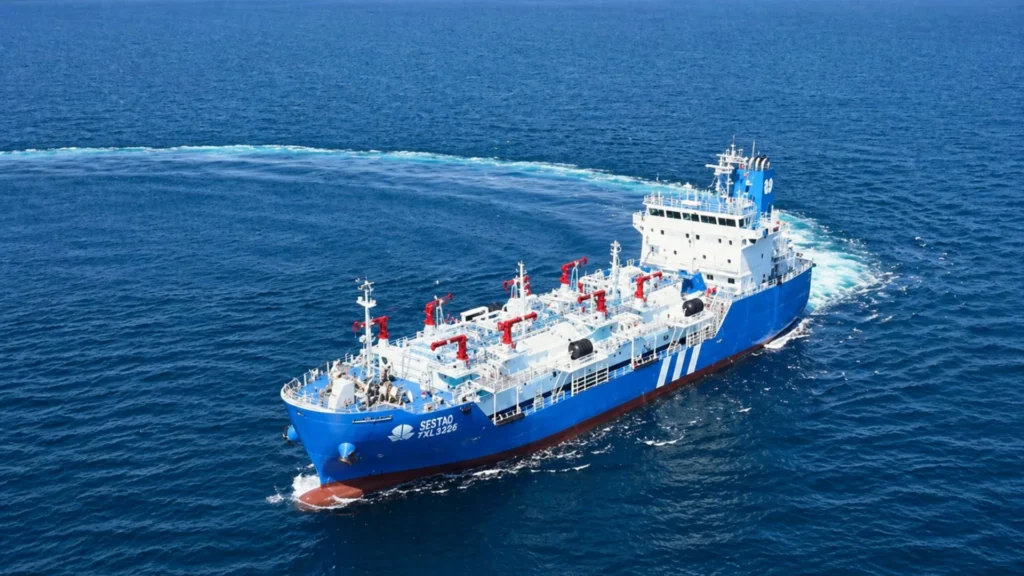
The SETO AZURE vessel, operated by Osaka Bay LNG Shipping, will be the cornerstone of these operations in Osaka Bay and the Setouchi region. Its addition allows for more precise and safer LNG transfers.
This asset reinforces the company’s strategy to expand its liquefied natural gas logistics network in Japan, where bunkering infrastructure is still limited.
LNG promotes the decarbonization of maritime transport
The use of LNG as a marine fuel continues to grow globally. According to industry data, the number of vessels powered by this fuel has steadily increased over the past decade.
In environmental terms, LNG allows for a reduction in CO₂ emissions compared to traditional fuels such as heavy fuel oil. Furthermore, its future combination with e-methane and synthetic fuels opens up new opportunities to reduce the carbon footprint of maritime transport.
Long-term energy strategy
Osaka Gas is promoting these initiatives as part of its Energy Transition 2050 plan, with the aim of expanding the use of cleaner fuels and strengthening its presence in the maritime sector.
With the addition of ship-to-ship bunkering, the company enhances its image as a comprehensive marine LNG supplier in Japan.
Source and photos: Osakagas