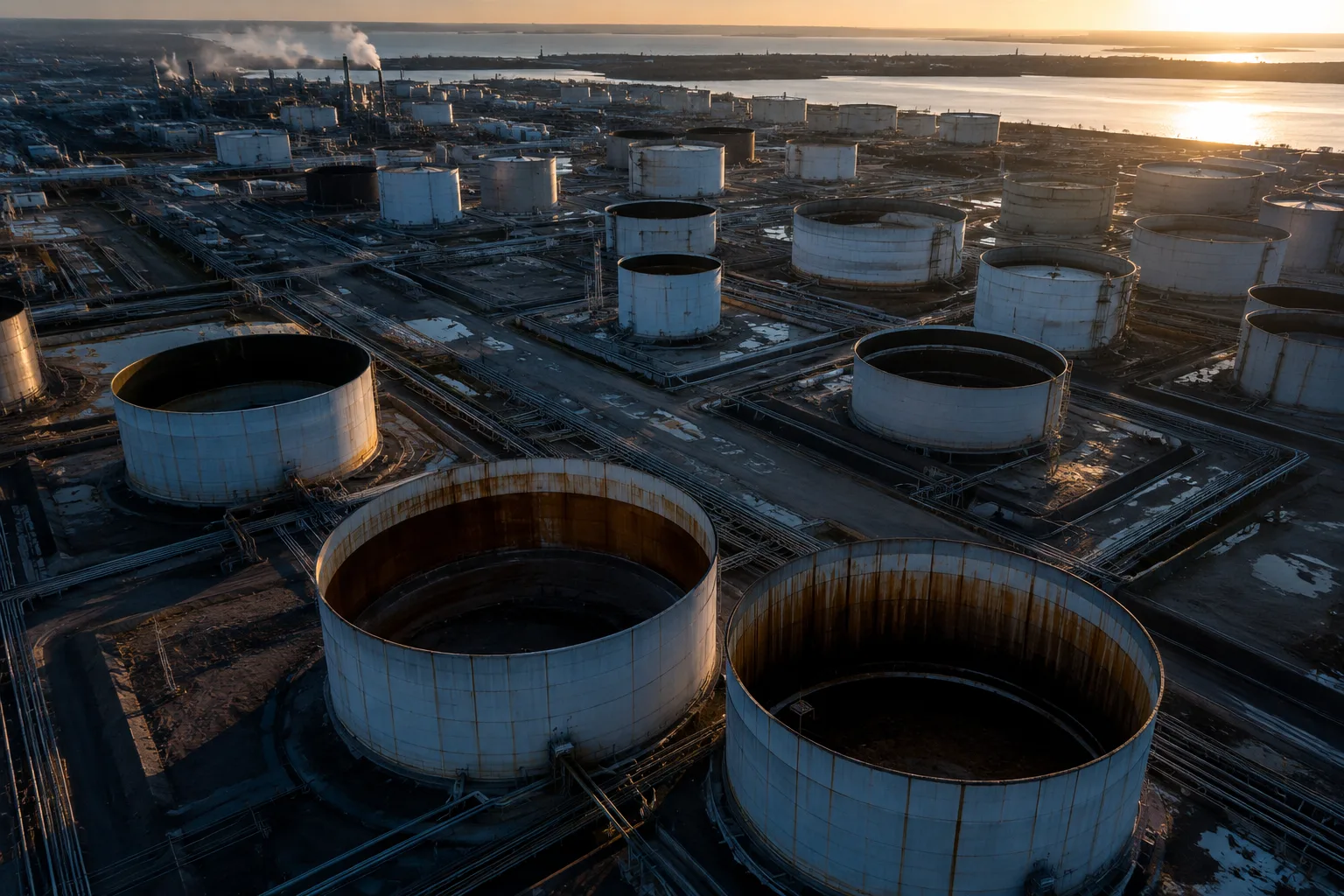
Global oil inventories could fall to critical levels before the summer demand peak if current withdrawals continue, warned the International Energy Agency (IEA), while Hormuz continues to limit nearly 14 million barrels per day of Gulf production.
Inventories Under Pressure Before Demand Peak
Toril Bosoni, head of the IEA’s oil industry and markets division, presented the scenario during the S&P Global Energy Middle East Petroleum and Gas Conference in London on June 2.
The warning is direct: if inventory withdrawals continue at the current pace, the market will enter the northern summer with historically low storage levels just as seasonal fuel demand reaches its peak in the northern hemisphere.
The problem is not just about price. It is about physical barrel availability. Refineries planning maintenance campaigns, terminal operators managing storage contracts, and companies with international supply exposure face a window of operational uncertainty.
This uncertainty goes beyond market volatility. The IEA had previously warned about a global energy crisis stemming from disruptions in the Gulf, and this new data confirms that pressure on oil inventories is materializing.
Hormuz Could Take Months to Normalize
The IEA estimates that even if an agreement were reached today to reopen the Strait of Hormuz, normalizing transit could take six to eight months. This means the market cannot count on a rapid supply recovery even if the political environment improves. Since late February, Gulf producers have lost approximately 14 million barrels per day of effective export capacity.
The Strait of Hormuz could extend oil market instability until 2027, as Saudi Aramco warned in May. The convergence of both views—IEA and Aramco—points to a market that has no short-term recovery mechanism available.
Emergency Reserves Do Not Solve the Structural Problem
Nearly half of the coordinated release of 400 million barrels announced in March has not yet reached the market. This gap between announcement and physical delivery reduces the effectiveness of strategic reserves as a buffer. The IEA further confirmed that a new emergency release is not currently under discussion, eliminating that relief valve from short-term market expectations.
Japan evaluated releasing up to 80 million barrels from its strategic reserves in response to the Hormuz crisis. The U.S. crude inventories fell 9.1 million barrels in a single week in May, confirming that oil inventories in withdrawal are not a future risk but an ongoing process.
Impact of Oil Inventories on Refineries, Terminals, and Energy Logistics
The decline in inventories before summer has concrete operational implications. Refineries dependent on international spot supply face shorter procurement windows and higher premium prices. Storage terminal operators see the value of their available capacity increase. Companies with long-term contracts that include crude availability clauses must review their operational continuity scenarios.
The IEA’s warning confirms that the oil market is entering a phase where physical barrel availability, rather than price, may become the true operational bottleneck. Analysis of available oil inventories is now more critical than ever.
Energy sector experts recommend that oil inventory operators review their hedging and storage strategies in light of the prospect of a summer with restricted supply and volatile prices.
Continuous monitoring of global oil inventories is key to anticipating disruptions in the energy supply chain.
Sources: Reuters | International Energy Agency (IEA)