Table of Contents
- Eni Seri Industrial LFP Batteries: Stationary Storage Chain in Europe
- Agreement Structure: Eni Seri Industrial LFP Cells, Modules, and Batteries
- Financing: Eni Acquires 30% for 55 Million Euros
- Eni Seri Industrial batteries and the European stationary storage market
- Roadmap: LFP Batteries Europe with Gigafactory in 2029
Italy accelerates the construction of its own supply chain for LFP batteries. The alliance between Eni Industrial Evolution and Seri Industrial seeks to reduce European dependence on Asian manufacturers through an integrated platform that will cover everything from cell production to recycling, with a capacity exceeding 8 GWh annually planned for 2029.
Eni Seri Industrial LFP Batteries: Stationary Storage Chain in Europe
Next-generation European LFP batteries will be produced by Eni Industrial Evolution and FIB, a subsidiary of the Seri Industrial group, following the signing of an agreement on May 29, 2026, to jointly develop an integrated industrial supply chain. The Eni Seri Industrial battery alliance aims to position Italy as a European manufacturing platform in a segment where Asian suppliers currently control more than 80% of the global cell market.
Agreement Structure: Eni Seri Industrial LFP Cells, Modules, and Batteries
The agreement—derived from the collaboration framework of May 16—envisages the production of LFP cells and modules, and the assembly of systems for stationary energy storage and industrial and commercial electric mobility applications. In later stages, the platform will integrate battery recycling, recovery of strategic materials, and the manufacturing of active cathode material, closing the value cycle of the chain.
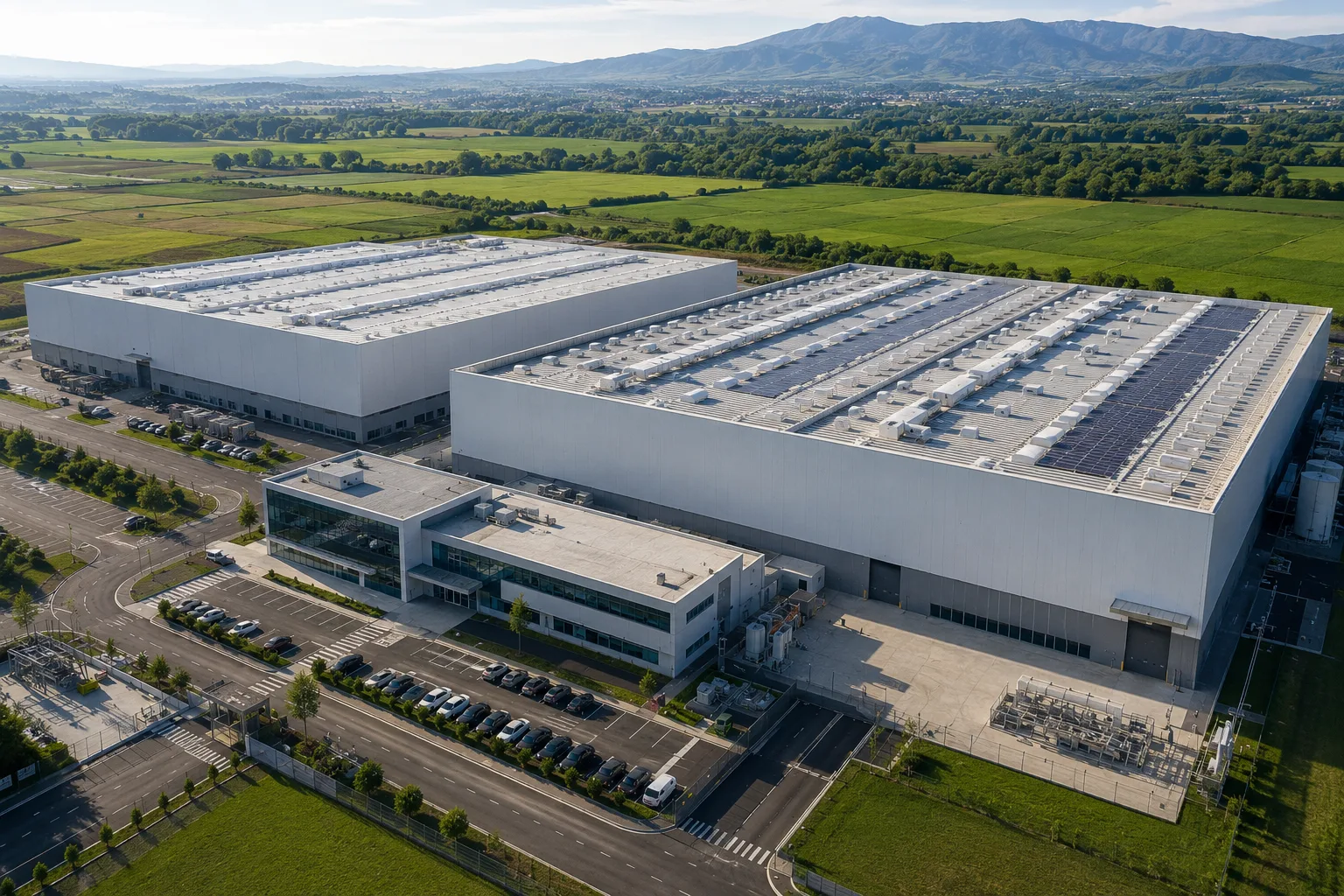
The facilities are concentrated in two Italian hubs: Teverola (Caserta), where FIB’s first LFP cell plant is already operational, and Brindisi. Eni Storage System—a company under the joint control of Eni Industrial Evolution and FIB—will complete the industrial-scale BESS system assembly line at the Teverola-Brindisi hub before the first half of 2027. The second gigafactory will reach more than 8 GWh of cells and modules annually in 2029.
Financing: Eni Acquires 30% for 55 Million Euros
The financial structure stipulates that Eni Industrial Evolution will acquire 30% of a newly created entity established by FIB—which retains 70%—through a fixed payment of 55 million euros. This company will manage the commercial development, engineering, and procurement activities of the Eni Seri Industrial project.
Umberto Carrara, CEO of Eni Industrial Evolution, stated: “We are announcing the substantial definition of the agreements with SERI Industrial, which confirms the realization of Eni’s industrial transformation plan and adds another piece to the puzzle to complete the supply chain from critical materials to energy storage production, leveraging innovative technologies and long-term industrial partnerships.”
Eni Seri Industrial batteries and the European stationary storage market
The stated objective is to capture more than 10% of the European stationary battery storage market, a sector where European LFP batteries are gaining ground against Asian suppliers. This segment is seeing growing demand due to the expansion of renewable energy in Europe and the need to stabilize power grids dependent on variable sources. In June 2026, CATL projected that stationary storage will represent 50% of its global sales by 2030, a figure that illustrates the magnitude of the market at stake.
The Eni Seri Industrial project is part of the European Union’s effort to reduce dependence on Asian suppliers for technologies critical to energy security. The platform also consolidates Eni’s verticalization, as it moves to control not only renewable generation but also the storage components it requires. With local manufacturing in Italy, the project reduces supply times and exposure to Asian export restrictions—factors that have affected several European storage projects in recent years.
Roadmap: LFP Batteries Europe with Gigafactory in 2029
The Eni Seri Industrial alliance sets the assembly of BESS systems in 2027 and the second gigafactory by 2029 as key milestones. The platform also opens the possibility of incorporating recycled battery materials into the production chain, a competitive differentiator against manufacturers that rely on imported raw materials for their LFP cells. The initiative is part of the European commitment to building renewable storage capacity in Europe with its own technology and capital. Progress in European LFP batteries reduces Asian dependence on technologies critical to the continent’s industrial energy transition.
Sources:
– Reuters, May 29, 2026: reuters.com
– Eni — official press release, May 29, 2026: eni.com
– ESS News, sector analysis: ess-news.com