Table of Contents
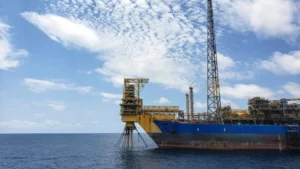
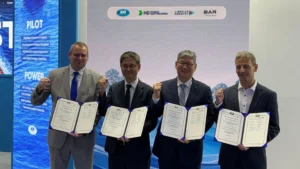
Energy companies James Fisher and Aquaterra Energy formalized a global strategic alliance dedicated to the offshore decommissioning of offshore platforms. This agreement provides operators with a unified pathway to plan and execute well abandonment, minimizing intermediaries and mitigating operational risks.
The technical integration of offshore decommissioning services
On the one hand, James Fisher’s energy division contributes its technical expertise in subsea operations and open-sea logistics deployment. On the other hand, Aquaterra Energy provides specialized front-end engineering solutions and access to oil wells. This technical combination replaces traditional fragmented schemes with a continuous operating framework, ensuring greater accountability from initial design through the removal phase. Likewise, the model’s flexibility makes it possible to adjust resources according to the changing demands of each energy project.
Regarding market statistics, the need for efficient services is driven by a substantial increase in infrastructure reaching the end of its service life. According to reports from the North Sea Transition Authority, a total of 153 wells on the UK Continental Shelf have exceeded their authorization deadlines, requiring estimated investments of £44 billion.
Additionally, projections for Australia estimate that abandonment liabilities will reach £48 billion over the next five decades. Internationally, industry estimates indicate that more than 2,500 offshore structures will require decommissioning by 2040.
Initially, commercial efforts will focus on the North Sea, Asia-Pacific, and the Middle East due to the high concentration of wells in the process of becoming obsolete. Operations will be managed on a project-by-project basis, assigning multidisciplinary crews to reduce onboard personnel, optimize mobilization costs, and minimize overall exposure to hazards in offshore environments.
Regarding tactical implementation, Mark Stephen, Director of Decommissioning at James Fisher Energy, explained that operators demand delivery certainty, reduced contractual friction, and financial predictability.
The executive emphasized that combining subsea capabilities with early engineering directly reduces the usual offshore setbacks. Likewise, Matt Marcantonio, Head of Engineering at Aquaterra Energy, noted that next-generation projects require rigorous design control to avoid late modifications at the operations site. The partners confirmed that they are maintaining active negotiations with various global operators to assess upcoming awards in the current energy market.
Source and photo: James Fisher