Table of Contents
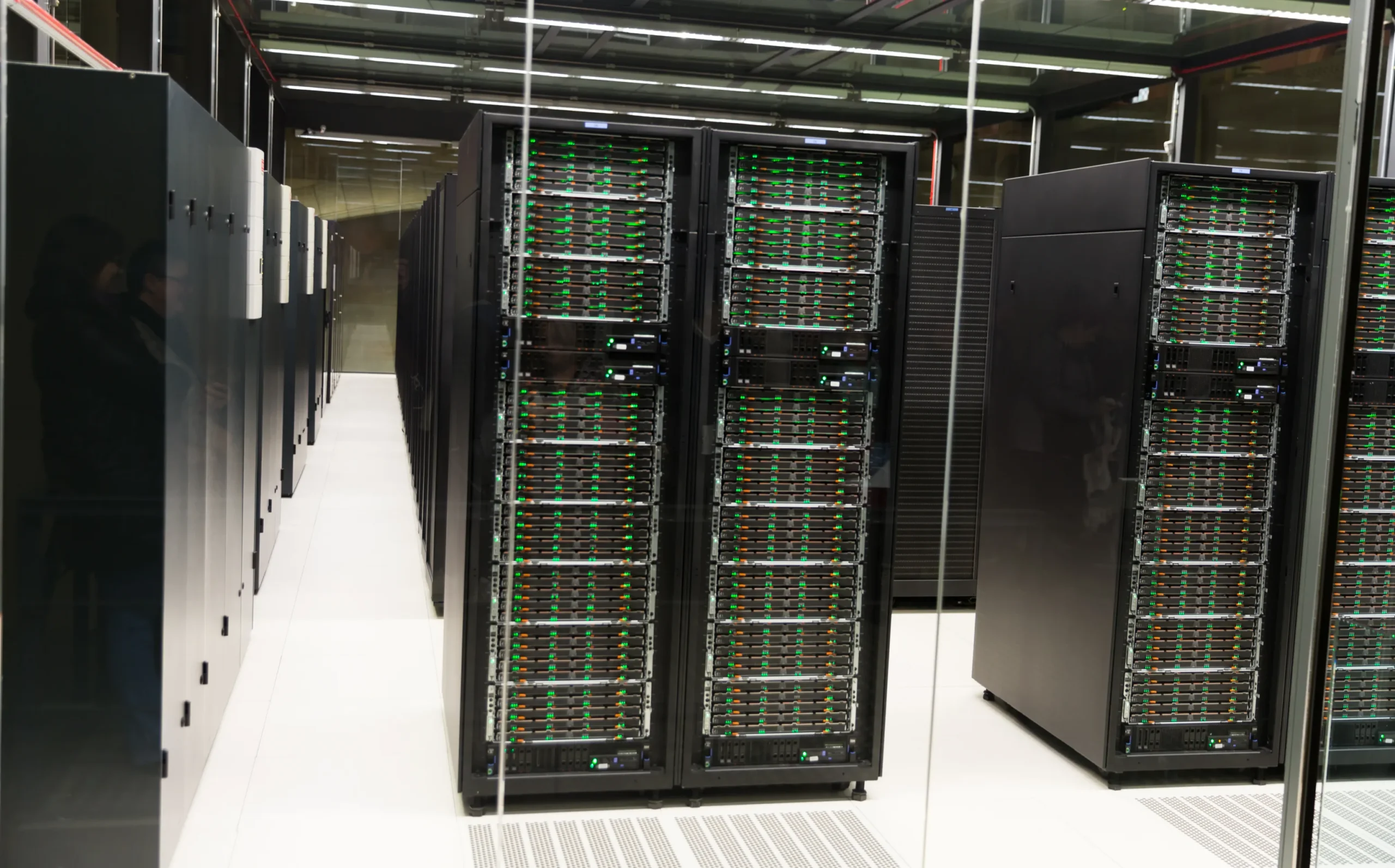
Italy granted the status of national strategic interest to Energy Vault’s Digital Vault Sulcis project, an initiative that envisions the development of a data center for artificial intelligence connected to renewable generation and energy storage systems in Sardinia.
The decision will allow for the acceleration of some of the administrative procedures necessary to move forward with the project, whose construction is planned for 2028 and the start of commercial operations for 2030.
Italy accelerates approval of AI data center
The Italian Council of Ministers declared the Digital Vault Sulcis project, which Energy Vault is developing in the Sulcis region of southern Sardinia, to be of national strategic interest.
This consideration opens the possibility of speeding up pending authorizations, in addition, the Government plans to appoint a special commissioner in charge of coordinating the procedures related to development.
The project initially envisions a artificial intelligence data center with an approximate capacity of 30 MW, although its design would allow for progressive expansion to reach between 50 and 60 MW. For its part, the associated energy infrastructure could reach a maximum power of 100 MW.
Energy Vault plans to begin construction in 2028 and start commercial operations in 2030, although these dates will continue to be subject to obtaining final authorizations and the progress of the various stages of the project.
An investment to strengthen Italy’s digital infrastructure
Digital Vault Sulcis is part of a broader Italian strategy to attract data center investment and expand the country’s technology infrastructure. Energy Vault’s initiative represents an estimated investment of €1.49 million.
At the same time, the Italian government granted the same strategic designation to another data center campus developed by K2 Strategic in the Milan metropolitan area. This project envisions approximately 400 MW of capacity and an investment of around €5.3 million.
Streamlining procedures is especially important for these types of facilities, as data centers require large amounts of electricity and depend on energy connections available within specific timeframes.
In Sardinia, Energy Vault seeks to combine IT infrastructure with renewable generation and storage systems capable of more efficiently managing changes in electricity production and consumption.
Digital Vault Sulcis will reuse an old coal mine
The data center will be located in the former Monte Sinn mining complex in Nuraxi Figus, the land belongs to Carbosulcis, a publicly owned mining company in Sardinia.
The project will thus transform a facility historically linked to coal mining into a complex dedicated to digital and energy infrastructure.
Energy Vault Carbosulcis and Carbosulcis have been working on the development of the site since 2024, taking advantage of some of the existing infrastructure to incorporate new energy storage technologies.
The mine has four vertical shafts that reach depths of up to 500 meters, these characteristics offer suitable conditions for evaluating solutions that use height differences to store and subsequently recover energy.
Gravitational storage and batteries will power the complex
One of the key technological components of Digital Vault Sulcis will be a hybrid energy storage system, Energy Vault plans to combine its modular EV0 pumped storage technology with its B-VAULT battery platform.
EV0 uses gravity to store energy and retrieve it when needed, unlike conventional pumped-storage hydroelectric plants, which rely on large reservoirs, this solution uses prefabricated modules with membranes installed at different levels.
The design can be adapted to former mining sites and operate alongside other storage technologies, the Sardinia facility is planned as the first commercial application of EV0, while a prototype of the technology is already under development at the site.
The batteries, meanwhile, will allow for a faster response to variations in electricity generation and consumption. Energy Vault plans to coordinate both systems using its VaultOS energy management platform and a plant controller responsible for integrating the different assets.
The energy system could reach 100 MW
The energy concept developed for Carbosulcis envisions a maximum power output of up to 100 MW, a European Commission study published in 2025 described a possible configuration comprising 20 MW of gravitational storage and 80 MW of lithium-ion batteries. According to this plan, the gravitational system could deliver its nominal power for approximately four hours.
The project also envisions incorporating renewable energy generation in stages, the first phase would include 10 MWp of photovoltaic solar energy along with 10 MW of lithium-ion batteries. Later, another 10 MW of solar capacity would be added, followed by an additional phase with three 4.2 MW wind turbines.
In this way, the old mining complex could integrate solar energy, wind power generation, batteries and gravitational storage within the same infrastructure.
Sardinia connects energy storage and AI
The addition of the data center significantly expands the scope of the energy project that was initially planned for Carbosulcis. The growth of artificial intelligence is increasing the electricity demand of data centers and, with it, the need for energy generation and storage near these facilities.
Sardinia’s proposal seeks to address this challenge through a hybrid architecture that combines renewable sources with different storage technologies. At the same time, the project will allow for a new industrial use of a former coal mine as Italy seeks to attract investments linked to artificial intelligence, data centers and energy infrastructure.
Progress towards the construction phase will now depend on pending authorizations, the declaration of national strategic interest seeks to reduce administrative times and facilitate Digital Vault Sulcis’ ability to begin construction in 2028.
Source: Energy Storage
Photo: Shutterstock