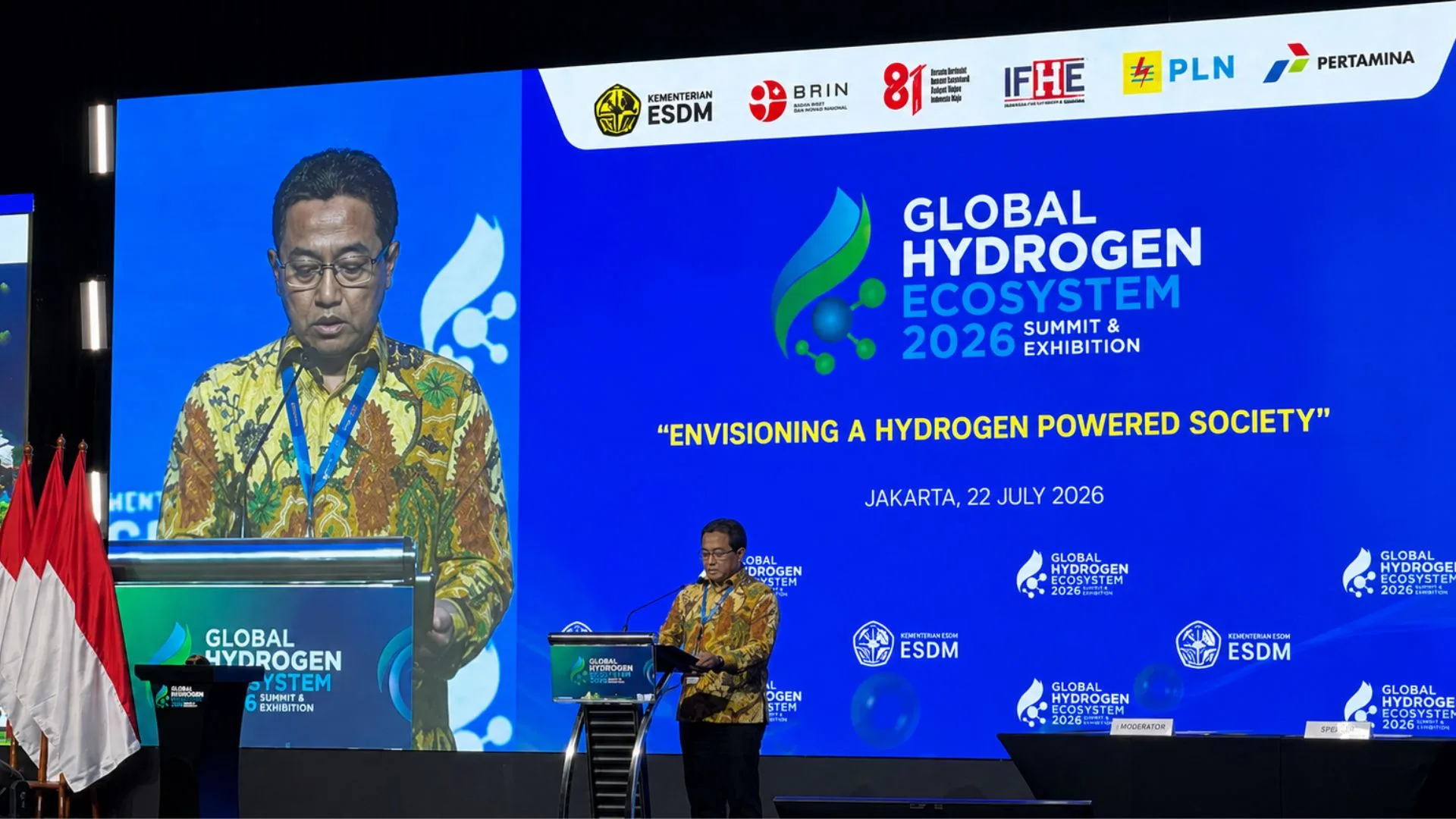
Indonesia is making progress in creating a low-carbon energy network through a corridor that will connect production, industry, transport, and ports.
Indonesia presented a plan to develop a 194-kilometer green hydrogen corridor between Jakarta, Karawang, and Patimban. The initiative seeks to link clean energy production centers with industrial zones, logistics hubs, and strategic ports.
The project was announced during the 2026 World Hydrogen Ecosystem Summit held in Jakarta. Its design is based on spatial, technical, economic, and logistical studies aimed at improving the efficiency of the future supply chain.
Green hydrogen corridor, production, logistics, and consumption
Firstly, the corridor will integrate green hydrogen plants, refueling stations, industrial areas, transport networks, ports, and end-users. The goal is to create a coordinated infrastructure that can be expanded to other regions of the country.
Prahoro Nurtjahyo, head of the Human Resources Development Agency at the Ministry of Energy and Mineral Resources, noted that this corridor will be the foundation of a future national hydrogen network.
Authorities have identified 12 potential locations within the route; their development will be carried out in phases to adapt production and supply capacity to actual demand.
PEM Electrolyzers for the first phase
Furthermore, the initial stage includes refueling stations installed at the point of consumption. These units will use Proton Exchange Membrane (PEM) electrolyzers.
Each system will have the capacity to produce 100 kilograms of green hydrogen per day. This scale will allow for supplying pilot projects and validating the technical operation of the network before expanding its coverage.
State-owned electricity company PT PLN is already developing a green hydrogen plant and a refueling station in Muara Karang. It is also promoting facilities in Senayan and Duren Tiga to serve the Jakarta metropolitan area.
Toyota tests hydrogen mobility in Karawang
In turn, PT Toyota Motor Manufacturing Indonesia is building a refueling station in Karawang. The facility will support vehicle testing promoted by hydrogen and allow for evaluating its use under real operating conditions.
The launch of the corridor also coincided with the presentation of a pilot bus with a hydrogen-diesel dual-fuel system. This technology can reduce conventional fuel consumption during the transition to lower-emission fleets.
Likewise, Patimban Greenport and Toyota Tsusho are collaborating on the Eastern GX Corridor, a program that seeks to integrate sustainable port logistics and clean transport within the future national network.
Energy security and industrial development
Additionally, the Government of Indonesia links the project to its energy self-sufficiency strategy. The initiative is part of President Prabowo Subianto’s Asta Cita vision and plans to strengthen the industrial value chain.
Minister of Energy and Mineral Resources, Bahlil Lahadalia, believes that clean hydrogen can reduce the country’s exposure to international market volatility. It can also support energy diversification against geopolitical risks affecting traditional supply.
With this corridor, Indonesia aims to develop local capabilities for hydrogen production, distribution, and consumption. The project also opens a path to decarbonize transport, industry, and port operations while the country builds a more flexible energy infrastructure.
Source and photo: En.antaranews