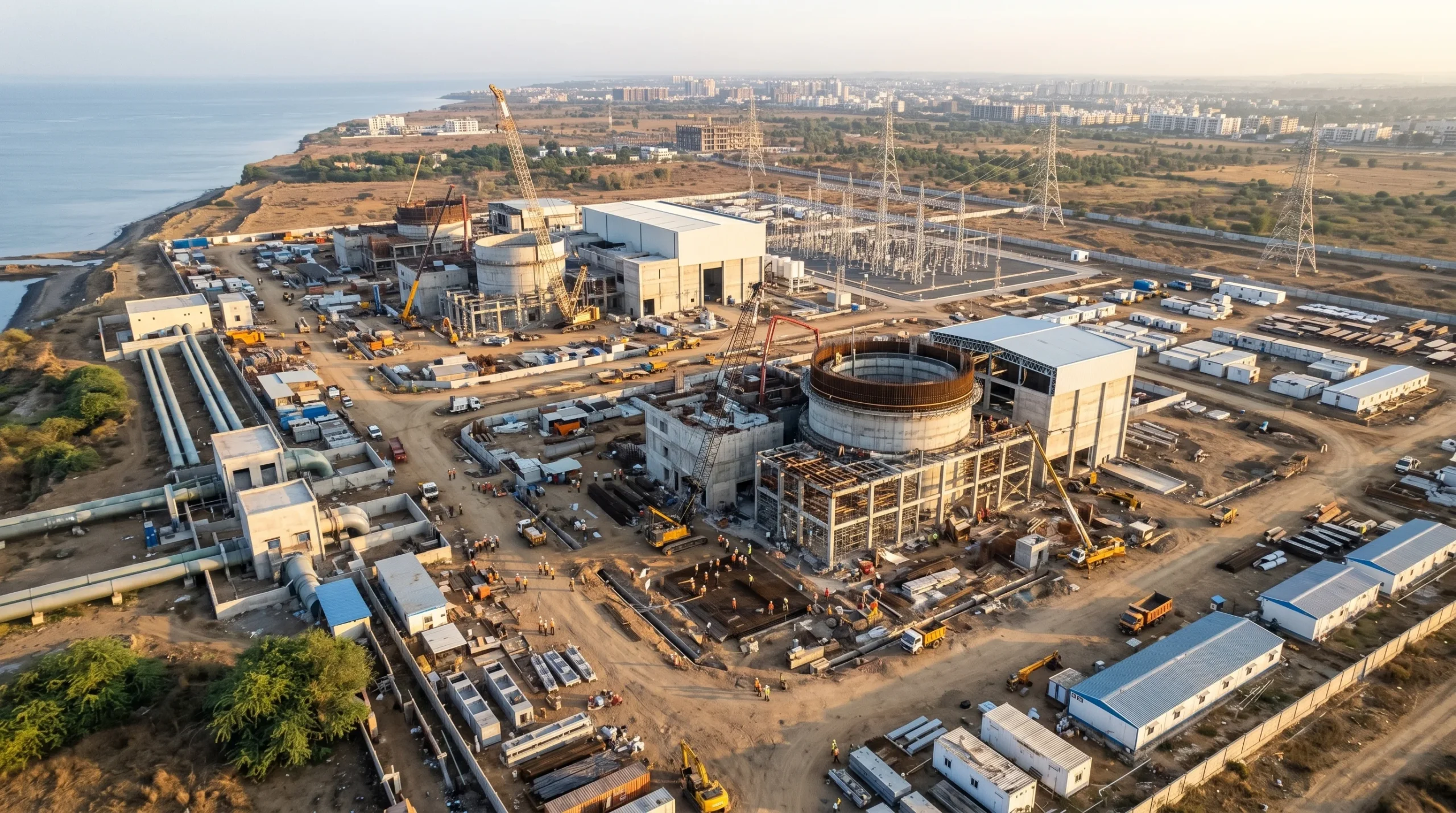
Nuclear energy in India is entering a new phase of expansion following the opening of the sector to private investment, a decision that could significantly accelerate the growth of the country’s electricity capacity over the coming decades. This shift aims to mobilize billions of dollars towards nuclear projects capable of supporting increasing energy demand, strengthening supply security, and backing the decarbonization goals of one of the world’s fastest-growing economies.
In this scenario, large industrial conglomerates are beginning to position themselves in a market that had previously been dominated primarily by state-owned companies, driving a transformation that could redefine India’s energy future.
Nuclear Energy in India Aims for 100 GW by 2047
The Indian government has set one of the world’s most ambitious nuclear targets, projecting an installed capacity of 100 gigawatts by 2047. Currently, the country operates around 8.8 GW, meaning the challenge involves multiplying the existing infrastructure several times over the next two decades.
To achieve this goal, authorities estimate that cumulative investments exceeding US$200 billion will be needed, allocated to both conventional reactors and new advanced nuclear technologies.
Adani Accelerates Its Bet on Nuclear Generation
Within the new regulatory framework, the Adani Group announced its intention to develop up to 10 GW of nuclear capacity by 2035 through its Adani Atomic Energy division.
This initiative is part of a broader strategy aimed at diversifying the conglomerate’s energy portfolio and participating in one of the segments with the greatest growth potential within the Indian electricity market. If this objective is achieved, the company would become one of the country’s leading nuclear operators.
Modular Reactors Gain Strategic Prominence
One of the segments attracting significant interest is small modular reactors (SMRs), a technology designed to reduce costs, accelerate construction times, and offer greater operational flexibility compared to traditional nuclear power plants.
Various industrial players are currently exploring opportunities to develop SMR-based projects, a trend that aligns with the growing global interest in energy solutions capable of providing 24/7 carbon-free electricity.
Private Investment Transforms the Indian Energy Market
The opening of the nuclear sector represents a structural change for India’s energy system. Private capital participation can facilitate access to new funding sources, accelerate project deployment, and promote the incorporation of advanced technologies developed both locally and through international alliances.
In addition to strengthening electricity generation capacity, this strategy seeks to reduce dependence on fossil fuels and improve the energy system’s resilience in the face of sustained demand growth.
Nuclear Energy in India Gains Strategic Relevance
The expansion of nuclear energy in India reflects the growing need for generation sources capable of providing reliable, low-emission electricity in a context of rapid economic growth and electrification.
With increasingly ambitious capacity targets, greater opportunities for private investment, and the development of technologies like small modular reactors, the country is laying the groundwork for a transformation that could make it one of the world’s most important nuclear markets in the coming decades.
Source: Oil Price