Google will allocate at least 13 billion euros to artificial intelligence infrastructure in Finland and will support part of that expansion with nuclear electricity from the Loviisa power plant.
The company is preparing one of its largest investments in artificial intelligence in Europe, Google plans to invest at least 13 million euros in Finland during 2027 and 2028 to expand its digital infrastructure and increase the capacity of its data centers.
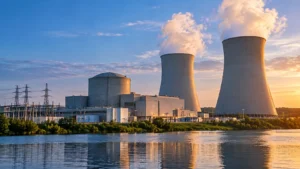
The operation will also have a significant energy component, Google has reached a 22-year power purchase agreement with the Finnish company Fortum, linked to the Loviisa nuclear power plant. The contract will cover part of the growing electricity consumption associated with its artificial intelligence operations.
In this way, Finland strengthens its image within Google European infrastructure, the deployment includes the expansion of the Hamina data center and the development of new facilities in Kajaani, Muhos and Vaala.
Google secures Loviisa nuclear power for 22 years
For its part, the agreement with Fortum represents the first nuclear energy contract signed by Google outside the United States. The PPA covers up to 50% of the production from the Loviisa nuclear power plant over a period of 22 years.
The facility, located on Finland’s southern coast, generates around 10% of the country’s electricity and employs approximately 600 people. The agreement will also help finance modernization work and extend its operational life until 2050.
In this way, Loviisa acquires a strategic role within Google digital expansion plans, the data centers require a continuous power supply due to the high computational load of the models artificial intelligence and other digital services.
The announcement also had repercussions for Fortum in the markets, the company’s shares rose by around 10% in the hours following the announcement of the agreement.
Finland will host new Google data centers
Meanwhile, the planned 13 million euros will be distributed among different areas of the country, Google will expand its existing infrastructure in Hamina and develop new sites in Kajaani, Muhos and Vaala.
Hamina occupies a central position within this strategy, Google has maintained operations in the town since 2009, after transforming a former paper mill into a data center that it has progressively expanded over the past few years.
Finland offers favorable conditions for these types of facilities, its cool climate reduces cooling requirements, while its electricity system combines nuclear, wind, and hydroelectric power generation. This combination facilitates access to large volumes of relatively stable electricity for facilities with high energy consumption.
The new capacity will support services such as Gemini, Search, Maps and YouTube, as well as expand the infrastructure available for developing and running artificial intelligence applications.
The investment could generate more than 37,000 jobs
Furthermore, the project could have a considerable impact on the Finnish economy during its construction phase. Estimates related to the deployment point to an average contribution of 3.6 million euros annually to Finland’s GDP during 2027 and 2028.
During that period, more than 37,000 jobs could be created in the country, nearly 16,000 of which would be directly related to construction activities.
Once the facilities are operational, Google estimates the infrastructure could support around 7,000 jobs per year. These include technical and maintenance positions, as well as jobs related to equipment and service providers. Given its scale, the investment would be Google’s largest single investment in Europe to date.
Google combines nuclear, wind, and battery power
Furthermore, Google’s energy strategy in Finland is not limited to the nuclear agreement, the company has also signed contracts related to 629 MW of onshore wind energy this capacity will be complemented by a 94 MW battery storage system near Kajaani, which is scheduled to become operational by the end of 2027.
This combination aims to address one of the main challenges associated with the expansion of artificial intelligence: ensuring a continuous supply of large amounts of electricity. Wind power can provide renewable generation, while batteries allow for managing supply fluctuations. Nuclear energy, for its part, provides a stable source over extended periods.
Therefore, the agreement with Fortum directly links the expansion of AI infrastructure to the Finnish electricity grid. The modernization of Loviisa will extend the plant’s operation, while Google secures long-term access to electricity for its projects data centers.
AI energy demands are gaining importance
Finally, the growth of data centers keeps the debate open regarding their environmental impact, the increased computing power needed to train and run artificial intelligence systems is driving up the electricity demand of large technology companies.
According to data provided for this news story, Climate Power’s data center pollution tracker gave Google a score of 61 out of 100 for clean energy during August, tied with Meta.
Google is not the only technology company seeking long-term nuclear contracts, Microsoft and Amazon have also closed deals related to nuclear power plants in the United States to support their electricity supply needs.
The operation in Finland now extends this trend to Europe, with 13 million euros committed and nuclear supply assured for more than two decades, the country becomes a relevant piece within the expansion of Google’s artificial intelligence infrastructure.
Source: Oil Price
Photo: Shutterstock