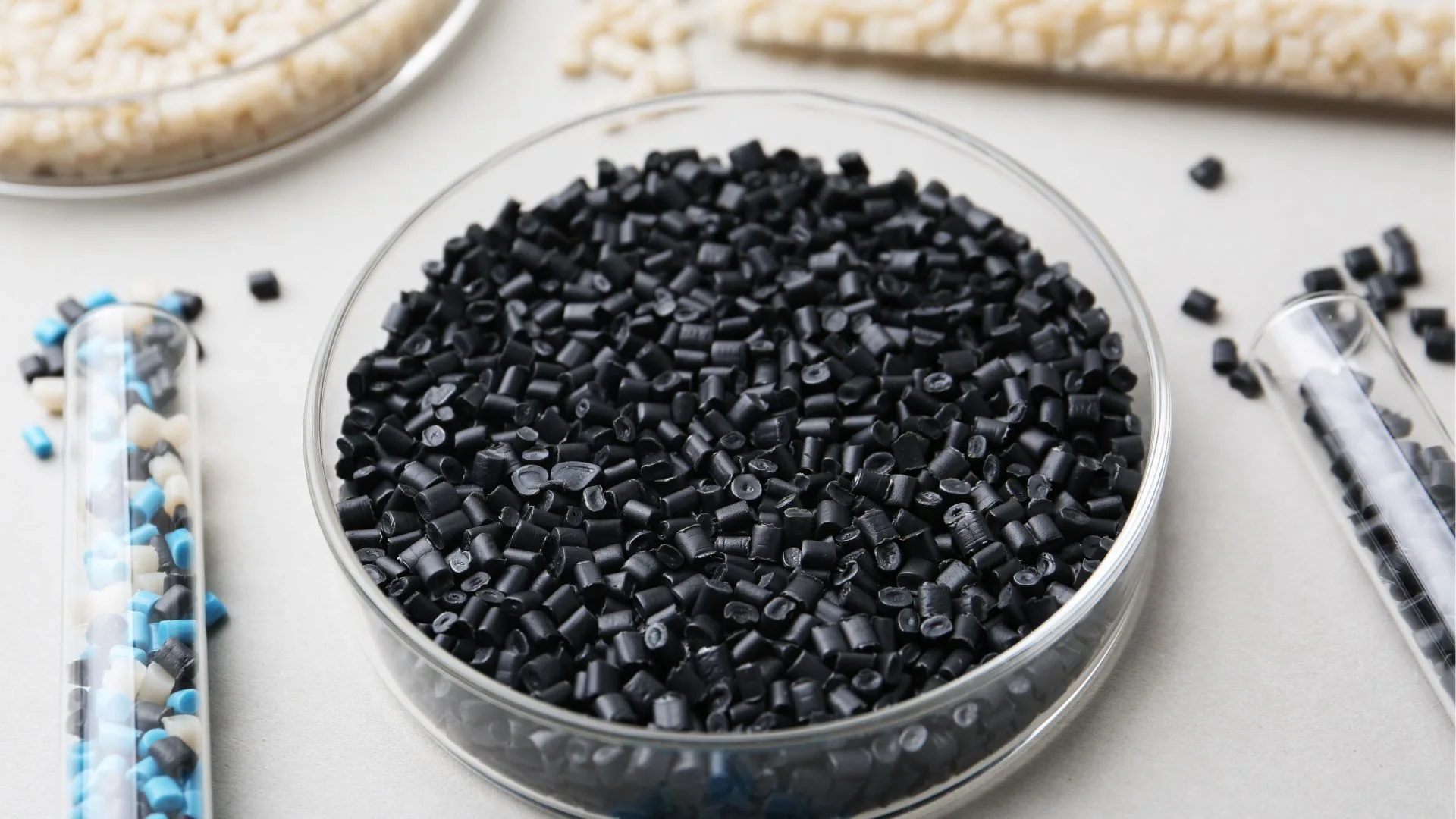
recycled HDPE this will be the focus of the MultiCycCon project, launched by the Fraunhofer Institute for Structural Durability and Reliability of Systems (Fraunhofer LBF) and the German Federal Institute for Materials Research and Testing (BAM), the initiative will analyze how successive recycling processes modify the properties of this material.
The research will focus on the resistance to environmental stress cracking of high-density polyethylene or HDPE, this characteristic is especially relevant when the material is used in transport containers and packaging intended for hazardous materials.
Furthermore, the project seeks to develop a rapid method for inspecting recycled HDPE materials, the tool would allow for the detection of unsuitable batches before incorporating them into new products and promote safer reuse of the polymer.
The recycled HDPE will undergo ten stages of extrusion
To study the cumulative effects of recycling, researchers will work with three HDPE materials that will be subjected to up to ten extrusion stages. Some samples will also undergo thermo-oxidative aging processes or be exposed to ultraviolet radiation. Subsequently, they will be reprocessed to reproduce in the laboratory the conditions that a material may experience during successive cycles of use and recycling.
This procedure will allow observation of how the polymer’s characteristics evolve as the number of processing cycles increases, Fraunhofer LBF will analyze the mechanical properties, molecular weight distribution, the material’s behavior in the molten state, and the chemical changes that occur during the process.
BAM, for its part, will study crystallinity, oxidation stability, and resistance to stress cracking, full-notch creep tests and fracture surface analyses will also be performed to observe how cracks originate and propagate.
The MultiCycCon project will compare aged and recycled materials
The trials will also include recycled materials using samples from real-world applications, researchers will compare them with samples subjected to artificial aging to determine how degradation and repeated processing affect their reusability. In this way, MultiCycCon seeks to establish whether there is a point at which successive processing cycles begin to limit the safe use of recycled HDPE. This issue is particularly important for containers that must maintain certain performance characteristics throughout their lifespan; a reduction in crack resistance could affect the material’s behavior under prolonged stress and adverse environmental conditions.
New recycled content requirements from 2030
Starting in 2030, mandatory minimum recycled content requirements for hazardous material packaging will come into effect, however, a knowledge gap remains regarding the effect of multiple recycling cycles on the stress cracking resistance of HDPE. Currently, verification methods do not explicitly consider this property in recycled materials. Furthermore, type tests used for batches up to 25 metric tons require lengthy processes, for this reason, one of the technical objectives of MultiCycCon is to develop a faster incoming inspection method that allows for the assessment of material quality before processing.
Rapid inspection to detect unsuitable batches
With this methodology, manufacturers of recycled materials, processors, and container producers could identify in advance those batches that do not meet the necessary conditions, a faster assessment would also reduce production defects and avoid certain time-consuming verification processes. The information obtained would help determine which materials can be safely returned to new production cycles.
The project also aims to facilitate closed material cycles and conserve resources by making better use of recycled HDPE, without reducing the safety requirements applicable to hazardous material containers, the researchers hope that the knowledge gained can later be applied to other applications made with high-density polyethylene.
MultiCycCon is funded under the Industrial Collective Research (IGF) program, grant number 01IF25124N, this scheme facilitates access to applied and pre-competitive research results for small and medium-sized enterprises.
Source: Hydrocarbon Processing
Poto: Shutterstock