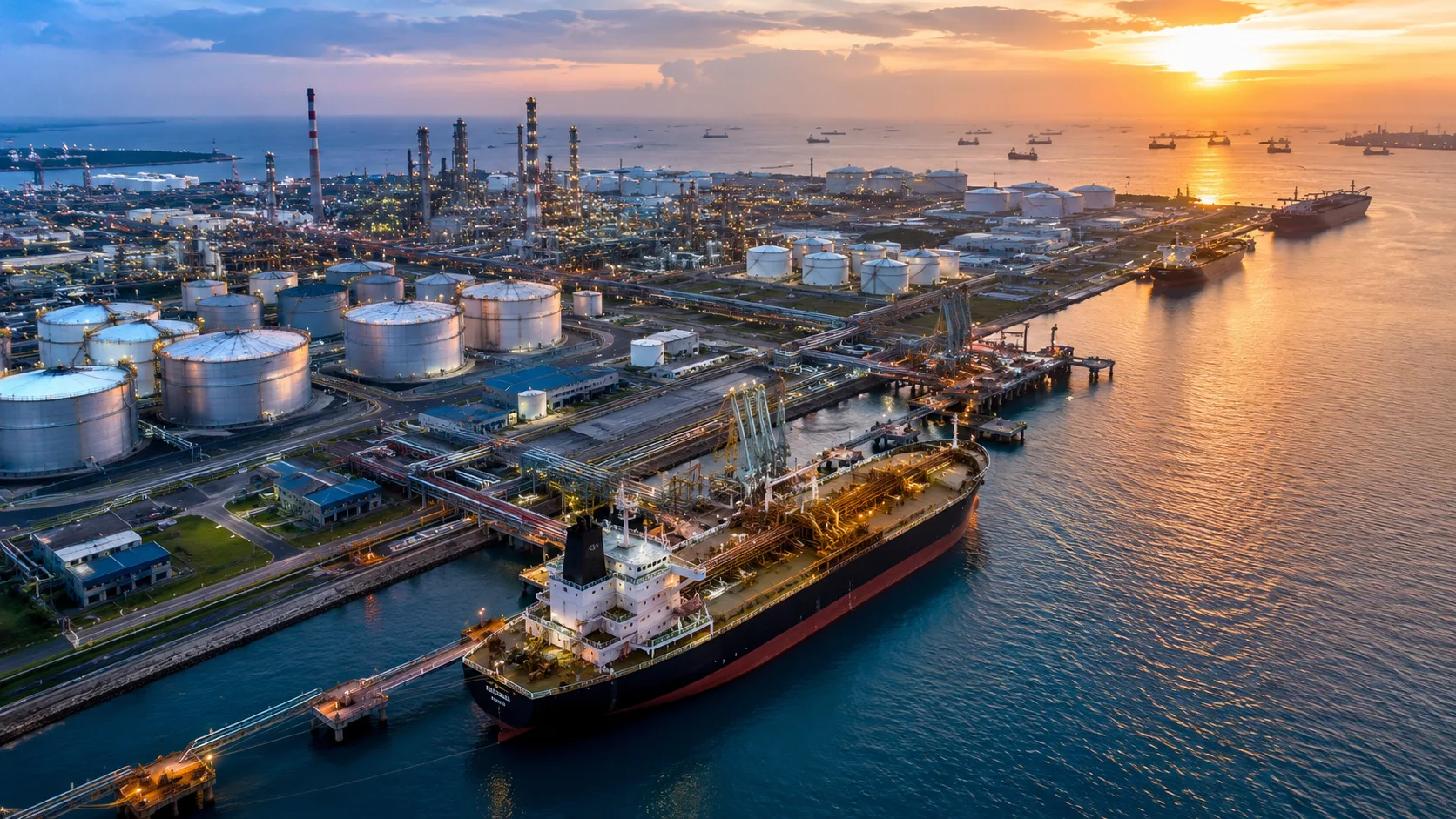
The global diesel market is undergoing a redistribution of trade flows driven by geopolitical shifts, adjustments in the availability of refined fuels, and increasing competition among importing regions. This new scenario is modifying supply routes, strengthening the role of some refining centers, and elevating the strategic importance of logistical infrastructure to ensure supply security.
Global diesel market redefines supply routes
International diesel trade has ceased to rely on traditional export and import patterns to adapt to a more dynamic environment. Disruptions in product availability from some exporting countries have forced buyers in Europe, the Mediterranean, and Latin America to diversify suppliers and reorganize their supply chains.
This redistribution is not solely a response to commercial factors. It also reflects the impact of geopolitical tensions, operational restrictions, and the need to reduce dependence on a limited number of origins to ensure fuel supply.
As a result, maritime flows are constantly evolving, with greater movements between America, Europe, Asia, and the Middle East, as operators seek to optimize delivery times, logistical costs, and cargo availability.
Europe increases competition for refined fuels
Europe continues to be one of the regions where diesel supply security represents a strategic challenge. The reduction in supply from certain markets has intensified competition for available cargoes, driving greater commercial activity among refineries, distributors, and international operators.
In this context, regional price differentials can widen when logistical disruptions, scheduled maintenance, or changes in export flows coincide. These factors force buyers to react more quickly to secure sufficient inventories before periods of higher consumption.
Volatility also increases the importance of having storage infrastructure, efficient maritime terminals, and logistical planning capable of responding to changing scenarios.
America gains prominence in international trade
The transformation of the global diesel market is also strengthening the role of new trade corridors.
Countries in the Americas are increasing their participation as origins and destinations for cargoes, favored by the flexibility of their logistical systems and the capacity of some refineries to respond quickly to changes in international demand.
At the same time, Asia continues to consolidate its position as a relevant player in both the production and consumption of refined fuels, generating new opportunities for interregional trade and increasing competition for available volumes.
This greater diversification reduces dependence on traditional routes, although it also introduces new challenges related to transportation costs, vessel availability, and delivery times.
Refineries acquire a strategic role
In a market characterized by greater uncertainty, refineries are once again occupying a central position within the energy chain.
Operational reliability, the availability of process units, and the ability to maintain high utilization levels become competitive advantages when global supply faces disruptions.
From an industry perspective, concepts such as mechanical integrity, predictive maintenance, risk-based inspection, and asset digitalization gain greater relevance, as they contribute to reducing unscheduled shutdowns and improving operational continuity.
Companies that manage to combine energy efficiency, facility reliability, and logistical flexibility will be better prepared to respond to an increasingly competitive international market.
Energy logistics enters a new stage
The redistribution of diesel trade is also modifying the operation of ports, storage terminals, and maritime transport networks.
Operators must manage longer routes, changes in import patterns, and increased competition for logistical capacity, factors that heighten the importance of operational planning and coordination among producers, marketers, and transporters.
In parallel, the digitalization of the supply chain facilitates inventory tracking, shipment scheduling, and optimization of port operations, allowing for quicker responses to market variations.
A more flexible market for a new energy reality
The recent evolution of the global diesel market demonstrates that international trade in refined fuels is entering a stage of greater flexibility and diversification. The ability to adapt quickly to supply changes, develop new trade routes, and strengthen logistical infrastructure will be crucial for maintaining supply stability in an increasingly complex geopolitical environment.
More than a temporary adjustment in trade flows, this transformation reflects a structural trend that will continue to redefine how producers, refineries, logistics operators, and consumers interact within the global energy market.
Source: S & P Global