Inspenet, February 7, 2023
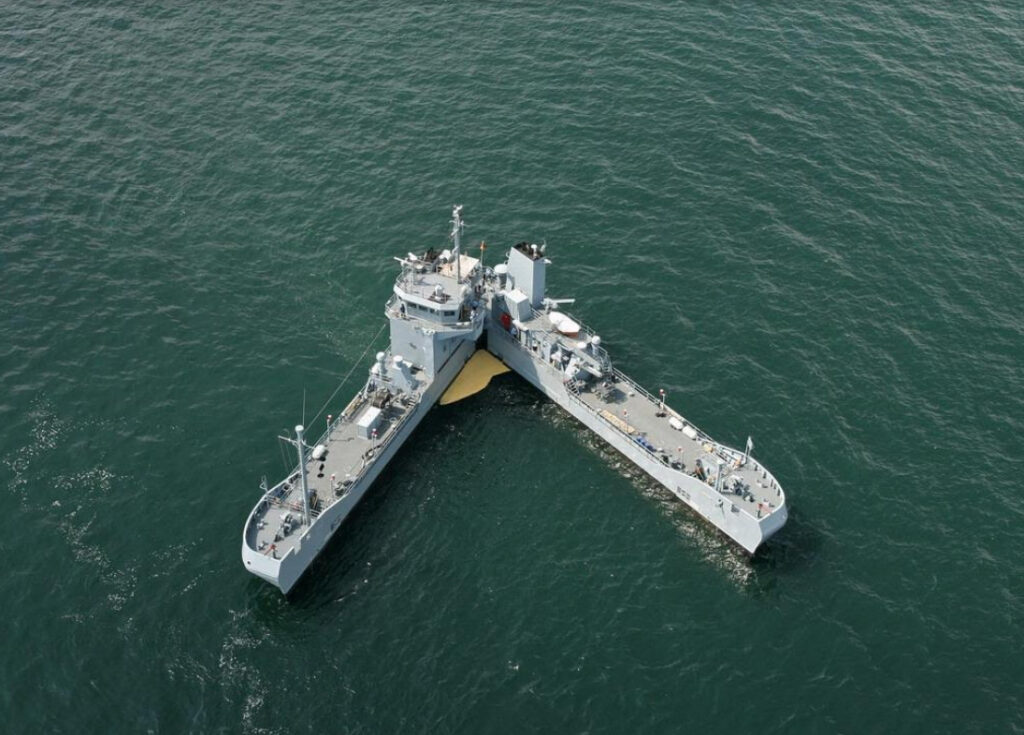
The Bottsand (Y 1643) and Eversand (Y 1644) ships are Bottsand (738) class hydrocarbon collection vessels and present a striking peculiarity: they are foldable, open up to 65º to remove oil and fuel from the water.
To clean up contamination from surface waters, these vessels can change configuration like a huge hinge. The oil, oil or any other polluting substance that you want to remove from the ocean ends up pushed towards the central angle formed by the ship, a collection area that exceeds 40 m 2 . As the ship progresses, it absorbs the mixture of water and oil, a substance that is then responsible for separating and pumping it into the tanks it transports on board.
In total, the ships are equipped with half a dozen tanks that add up to a total capacity of 790 m 3 . In a matter of one hour of work, it is estimated that a Bottsand can clean and remove around 140 m 3 of water contaminated by a two-millimeter surface of oil or petroleum.
These ships known as Oil recovery ship Bottsand have a length of 43 meters, with double hull and 650 tons of displacement. If they are folded and moving forward like a conventional ship, they are capable of reaching a speed of 10 knots. Both the Eversand and the Bottsand share another trait: they were built in the 1980s and both came from the C. Lühring shipyard, located in Brake.
Source and photo : https://www.xataka.com/otros/este-barco-aleman-se-abre-como-bisagra-literalmente-mitad-mar-su-objetivo-tragar-chapapote
Don’t miss the Inspenet News at: https://inspenet.com/inspenet-tv/