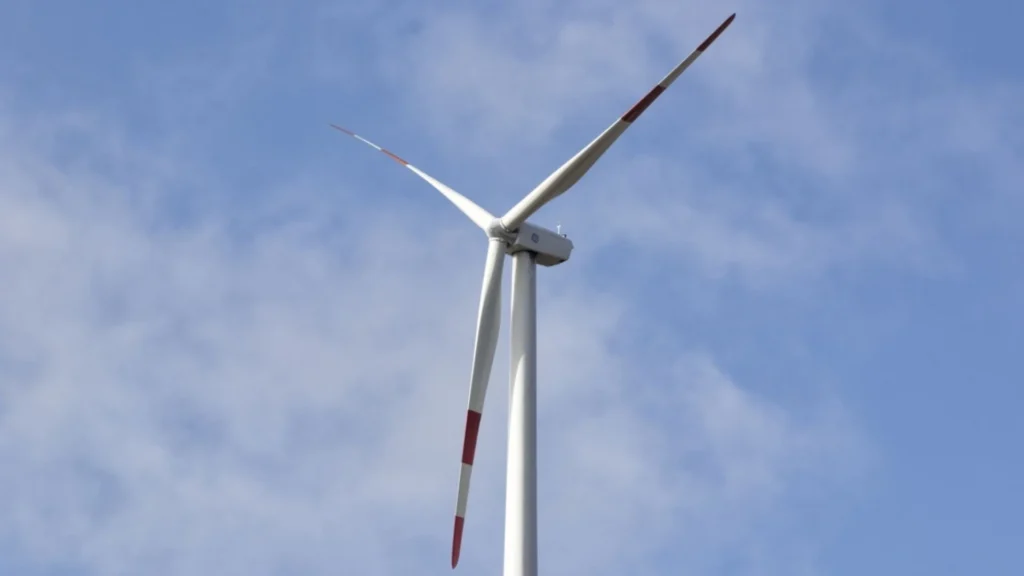
The French Ministry of Energy opened the combined AO9/AO10 tender on June 11, 2026, for 10 gigawatts (GW) of offshore wind energy capacity, the most ambitious renewable procurement program ever launched in the country. The volume represents more than seven times the current operational capacity of less than 2 GW. The Energy Regulatory Commission (CRE) published the technical specifications on the same day, with an average reference price of 100 euros per MWh. France’s offshore wind program establishes a clear regulatory framework for the next ten years.
The tender divides the capacity into two equal blocks: 5 GW of fixed-bottom wind turbines—anchored to the seabed—and 5 GW of floating installations, a technology that enables operation in deep waters far from shore. Developers have four months to submit bids, with award scheduled for February 2027. The projects are distributed along all of France’s maritime coasts, including Normandy, Brittany, the southern Atlantic, and the Mediterranean.
Wind Energy in France and the Floating Technology Challenge
The floating block represents a technological segment with engineering challenges distinct from fixed-bottom: floating platforms, complex mooring systems, and specialized installation procedures increase costs compared to conventional foundations. The reference price of 100 euros per MWh—versus the 66 euros awarded to TotalEnergies in the last fixed-bottom tender—reflects this technological premium. The Ministry aims for France to become a global leader in floating wind, with a specific target of nearly 6 GW of this modality by 2040.
The awarded wind farms will operate under contracts for difference (CfD): when the market price falls below the reference level, the State covers the gap; when it exceeds it, operators return the differential. The new tender incorporates industrial resilience criteria: projects with more than four out of nine strategic components manufactured in China will be penalized, and the use of permanent magnets of Chinese origin will be limited to 50%. The France offshore wind push in the floating segment positions France as a technological reference in Europe.
Impact on the European Supply Chain
The tender volume has direct implications for the industrial supply chain. Turbine manufacturers such as Vestas, Siemens Gamesa, and GE Vernova have been renegotiating production capacity for months to absorb the order flow that France offshore wind AO9/AO10 will generate. Specialized shipyards and ports on the French Atlantic coast—Le Havre, Brest, Saint-Nazaire—are concentrating logistics investments exceeding 2 billion euros by 2030. WindEurope estimates that each sustained offshore GW requires between 3,000 and 5,000 direct and indirect jobs.
European Renewable Context
The intermediate target of 15 GW installed by 2035 would allow France to scale from ninth to second place in Europe in offshore wind capacity, according to WindEurope projections. Germany, which leads the continent with more than 9 GW operational, already views the AO9/AO10 tender as competitive pressure on its own 30 GW target for 2030. The France offshore wind plan is also part of the European target of 111 GW of offshore wind by 2030, a horizon that industry analysts consider at risk without regulatory acceleration in several member countries. Industry experts emphasize that France offshore wind represents the largest offshore wind tender program in France’s history, and that its success will depend on industrial capacity to mobilize resources in a timely manner.