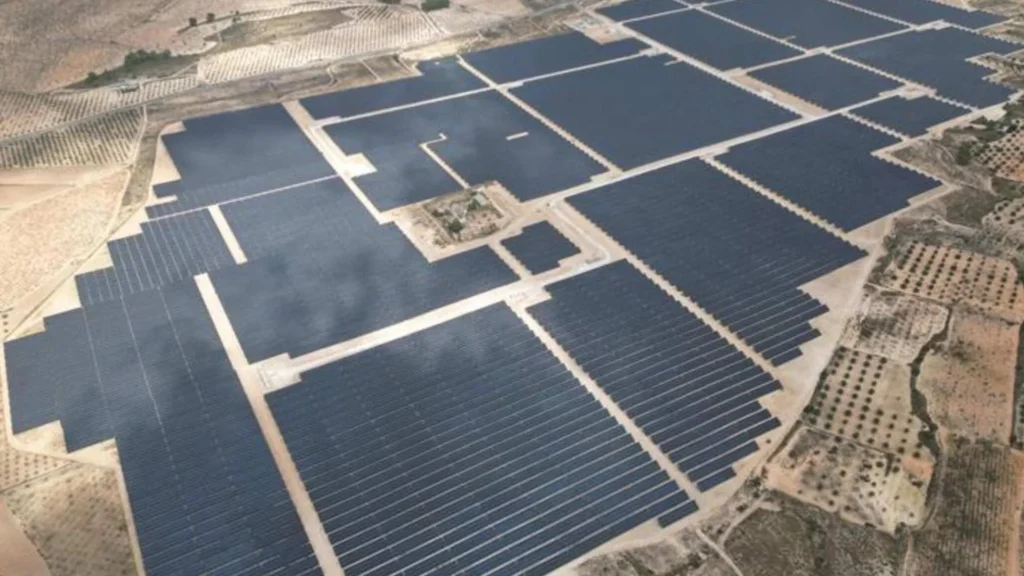
Endesa has commissioned its largest solar plant in the Region of Murcia, consolidating its commitment to photovoltaic energy. The Balbona facility, located in the La Capellanía area of Jumilla, reaches an installed capacity of 145 MW and triples the company’s renewable capacity in this territory.
The largest solar plant in Murcia
Furthermore, the project required an investment of 82 million euros and has an estimated production of 241 GWh per year. This electricity generation is equivalent to the energy consumption of approximately 150,000 inhabitants, reinforcing the role of solar energy in the regional energy mix.
During the construction phase, more than 300 people participated in the development of the plant, with a significant presence of workers from the Jumilla area. This approach aligns with the shared value strategy promoted by the company.
Likewise, training programs were developed for the assembly of solar panels and the operation of renewable facilities. These initiatives facilitated the employment of some participants and strengthened technical capabilities in the region.
Integration with the rural environment
The project incorporates integration measures with the agricultural environment. In this regard, the use of livestock for land maintenance allows for natural clearing that contributes to fire prevention and improves the plant’s operability.
Additionally, social actions aimed at vulnerable groups have been promoted, including training in environmental maintenance tasks. Self-consumption systems have also been installed in educational centers and local entities, favoring energy savings.
The Balbona solar plant stands out for the application of advanced technological solutions. These include the use of robots for panel installation and drones for construction supervision, which has optimized timelines and improved operational safety.
On the other hand, the implementation of e-house type substations has reduced the use of construction materials and contributed to decreasing the project’s carbon footprint. These solutions reflect the evolution of engineering applied to energy infrastructure.
Source and photo: Endesa