Lightning protection strengthens safety in tank farms
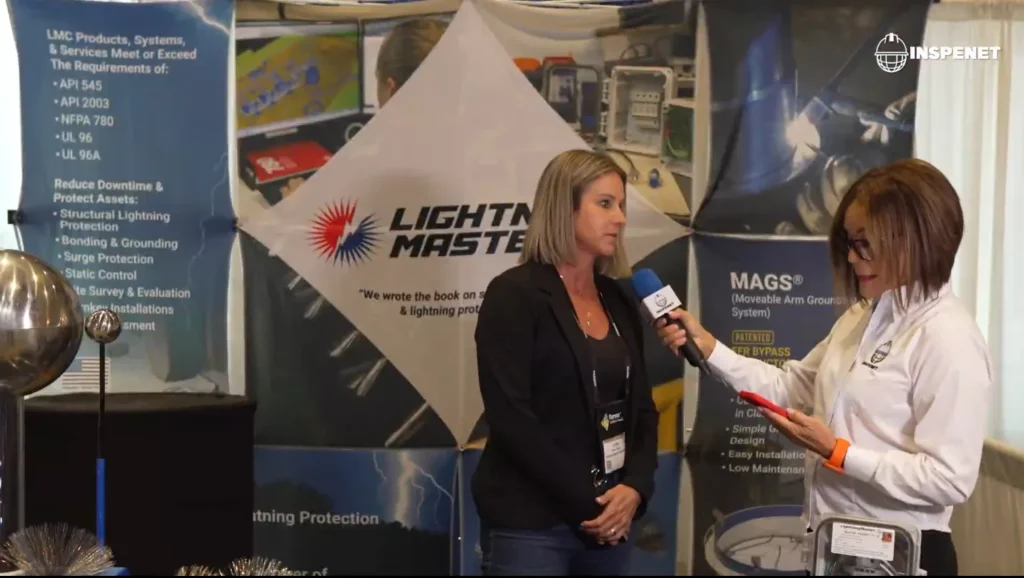
Static electricity management and lightning protection systems have become priority elements for the safe operation of terminals and tank farms within the energy sector. During NISTM 2026, Lindsey Coghlan, Chief Operating Officer of Lightning Master Corporation, explained how the industry is strengthening its prevention strategies to reduce fires, avoid operational disruptions, and improve the reliability of critical facilities.
Operational continuity takes center stage in oil and gas
Today, the hydrocarbon storage industry faces increasing pressure to ensure safe, continuous operations in the face of electrical and weather-related events. In this context, lightning protection is no longer limited to preventing structural damage; it is also part of operational continuity and risk-reduction strategies at storage terminals.
During the interview, Lindsey Coghlan noted that static electricity buildup remains one of the most significant challenges within tank farms and industrial facilities. As she explained, thunderstorms pose a direct risk to production, operational flow, and asset safety.
The executive stated that minimizing downtime and maintaining operational reliability during weather events is one of the main objectives of modern industrial electrical protection systems. She also emphasized that fire prevention remains an absolute priority for terminal operators and companies in the oil and gas sector.
Static electricity increases risks in tank farms
Within storage facilities, the accumulation of electrostatic charges can become an extremely dangerous ignition factor. This scenario is even more critical in areas where flammable vapors are present.
Coghlan explained that static control systems help mitigate discharges inside tanks and reduce the risk of ignition in the vapor space. To that end, Lightning Master developed specific technologies aimed at high-risk industrial applications.
Among them, she highlighted the “in tank static drain device”, a device designed to facilitate the dissipation of static electricity inside storage tanks. The solution uses ultra sharp point technology to promote coupling and draining of accumulated static charges.
In addition to tank applications, this technology can also be integrated into stacks, communication towers, and other industrial structures exposed to lightning strikes. The goal is to conduct the energy in a controlled manner and reduce the likelihood of hazardous electrical events.
The executive explained that static control must be addressed as an integral part of the lightning protection strategy, not as a standalone system. This integration helps improve overall facility safety and strengthen protection against complex electrical phenomena.
Bonding and grounding strengthen industrial safety
Another central point of the conversation was the role played by bonding and grounding systems within modern tank farms.
According to Coghlan, bonding connects isolated metal components to eliminate differences in electrical potential that could generate dangerous discharges. Meanwhile, grounding enables the safe conduction of energy to earth.
In lightning protection systems, both elements work in a coordinated manner to divert electrical energy away from critical structures and sensitive equipment.
To take the lightning energy off the structure and conduct it safely to earth.
Lindsey explained.
This process is essential in facilities where a strike could cause fires, explosions, or large-scale operational disruptions.
In today’s industrial environment, grounding and bonding solutions are also gaining relevance due to the growth of more automated and connected terminals. The presence of sensitive instrumentation and digital systems increases the need for properly protected electrical infrastructure.
Likewise, the evolution of international regulations has led many companies to review their protection systems to ensure operational compliance and reduce vulnerabilities.
Annual inspections help detect vulnerabilities
Beyond the initial installation of protection systems, Lightning Master highlighted the importance of conducting periodic inspections at industrial facilities and tank farms.
During the interview, Coghlan indicated that one of the most frequent issues detected during inspections is disconnections caused by third-party contractors. In many cases, modifications or subsequent work create unintentional interruptions in existing protection systems.
The executive explained that these disconnections can create significant vulnerabilities within facilities. In addition, she noted that plant and terminal expansions often add new areas that are not always integrated into the original protection system.
As a result, exposed points appear in the face of lightning strikes or static electricity buildup.
For this reason, Lightning Master recommends conducting inspections at least once a year. These assessments help identify compromised connections, deteriorated components, and areas that require upgrades as industrial operations evolve.
In energy storage facilities, where operational continuity is critical, preventive inspections also help avoid downtime associated with electrical failures or safety incidents.
Lightning protection evolves for new industries
During NISTM 2026, it also became clear that the industrial electrical protection market continues to evolve alongside global energy needs.
Coghlan explained that Lightning Master works on highly specialized applications and adapts its solutions to different industrial environments. The company develops custom components while maintaining compliance with international safety standards.
The executive noted that growth opportunities come primarily from new technological applications and changes within the energy market. In response, the company adjusts its solutions to meet different operating scenarios and technical requirements.
One of the most striking aspects mentioned during the interview was that Lightning Master has terminals installed even on Mount Everest, reflecting the reach and level of specialization of its lightning protection technologies.
The company also works in industrial sectors, utilities, critical infrastructure, and commercial projects where lightning mitigation is essential to maintain operational stability.
NFPA 780 and direct participation in industry standards
One of the factors that sets Lightning Master apart in the market is its active participation in the development of technical standards for lightning protection.
The company uses the slogan “We wrote the book on static solutions and lightning protection”, a direct reference to the work of Bruce Kaiser, the company’s owner and a member of the technical committee responsible for developing the NFPA 780 standard.
As Coghlan explained, Kaiser specifically wrote the chapter related to tanks within this international lightning protection standard.
Participation in drafting standards gives the company a relevant position within the sector, especially in projects where technical and regulatory compliance is a determining factor.
Today, energy companies seek solutions aligned with internationally recognized standards to minimize operational risks and improve the protection of critical assets.
Electrical safety gains weight in industrial strategies
As reliability and safety requirements grow within the energy sector, lightning protection and static electricity control are taking on an increasingly strategic role at terminals and tank farms.
The combination of grounding and bonding systems, preventive inspections, and mitigation technologies is enabling industrial operators to reduce risks associated with fires, electrical discharges, and operational losses.
During NISTM 2026, Lightning Master made it clear that prevention and specialized engineering remain fundamental factors in protecting critical infrastructure against increasingly complex electrical phenomena.
For more content about NISTM 2026, visit our LinkedIn profile.
Source: Inspenet.