Table of Contents
According to the latest official reports, crude oil production in Canada registered an annual increase of 4% during the previous annual period. This growth solidified the country’s position among the leading global suppliers, averaging 5.35 million barrels per day (bpd) and surpassing the previous historical record by a margin of 210,000 bpd. In December, extractive output reached a peak of 5.64 million bpd, substantially supported by the expansion of transportation capacity in pipeline networks such as Trans Mountain.
The Expansion of Crude Oil Production in the North American Market
Regarding regional distribution, the province of Alberta led the nation’s extractive growth. This territory contributed an additional volume of 182,000 bpd, a production increase primarily stimulated by the sustained rise in the extraction of unrefined bitumen from oil sands. Meanwhile, the coastal region of Newfoundland and Labrador reported a 15% increase in percentage terms, representing a contribution of 30,000 bpd to the industry’s overall total.
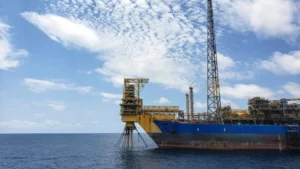
Concurrently, the Canadian energy sector currently accounts for 405 active hydrocarbon capital projects, with a combined valuation of 174.97 billion US dollars. Among the most notable offshore initiatives is the development of Bay du Nord, led by Equinor Corporation with an investment of 12 billion dollars and a projected capacity of 160,000 bpd by the beginning of the next decade. Similarly, Cenovus Energy is advancing the West White Rose complex with 3.2 billion dollars in capital, projecting an initial extraction of 52,500 bpd in the short term.
Furthermore, the commercial dynamics of Canadian crude maintain a close structural link with the United States’ refining infrastructure. Refineries in the neighboring country are specifically configured to process heavy and viscous Canadian crude, making Canada its predominant foreign supplier with a daily shipment of 4 million barrels. This figure represents 60% of US international imports, accumulating an energy export value of 114 billion dollars, equivalent to 20.2% of Canada’s global foreign trade in goods.
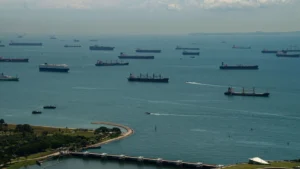
Nevertheless, the current administration of Prime Minister Mark Carney seeks to reconfigure this commercial landscape through a strategy aimed at reducing economic dependence on the US market. Faced with tariff tensions driven by the Donald Trump administration, the Canadian government plans to halve the volume of trade with its northern neighbor. To achieve this goal, authorities are actively promoting the use of British Columbia’s infrastructure, a key region for channeling resources to new strategic markets.
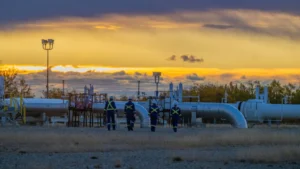
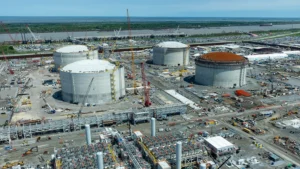
Consequently, pipeline optimization is fundamental to enabling the outflow of hydrocarbons beyond North America. The Trans Mountain pipeline network tripled its operational capacity to 840,000 bpd, with additional expansions planned through the application of friction-reducing chemical compounds. Additionally, the executive branch supports the planning of a new transportation route from Alberta to the Pacific coast capable of mobilizing 1 million bpd. This commercial opening policy has already seen formal progress following the signing of a liquefied natural gas supply agreement with the German energy company SEFE from the Ksi Lisims plant.
Source and photo: Industrial Info Resources