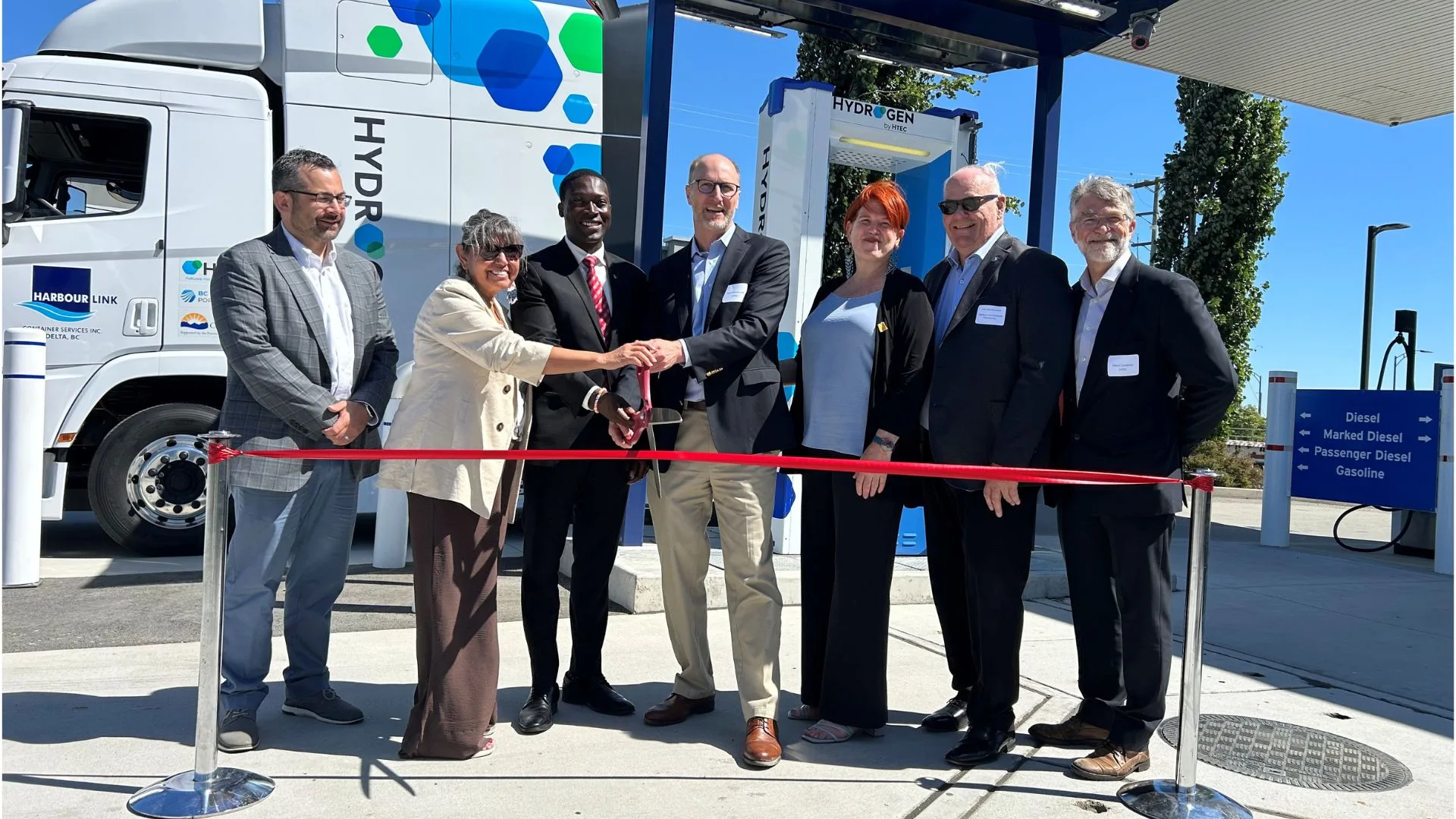
HTEC announced the opening of Canada’s first commercial 700-bar heavy-duty clean hydrogen refueling station. The facility is located on Tsawwassen First Nation industrial lands, within the Chevron Commercial Cardlock complex in Tsawwassen, British Columbia, and represents a new advancement for the adoption of hydrogen in freight transport.
The new station is part of the H2 Gateway strategy driven by HTEC to develop an integrated hydrogen value chain connecting production, distribution, and end-use. With this addition, the company expands the operational capacity of its Metro Vancouver Hydrogen Transportation Hub and strengthens the infrastructure necessary for the commercial deployment of zero-emission vehicles.
A hydrogen station designed for freight transport
The station will allow for the refueling of an initial fleet of 12 Class 7 and Class 8 fuel cell electric trucks funded through provincial initiatives aimed at accelerating the decarbonization of heavy-duty transport.
These vehicles will operate on regional freight routes and port drayage activities, providing operational data under real-world conditions and contributing to the gradual incorporation of hydrogen into commercial fleets.
Additionally, the facility has supply capacity at both 350 and 700 bar and can dispense up to 400 kilograms of hydrogen daily. This configuration allows it to serve fuel cell trucks, diesel-hydrogen dual-fuel vehicles, and hydrogen-powered buses.
Hydrogen gains ground in Canadian logistics
One of the main challenges of the energy transition is reducing heavy-duty transport emissions. Due to the long distances and operational demands of freight fleets, hydrogen-based solutions are considered a relevant alternative to complement other clean mobility technologies.
The 700-bar refueling capacity offers significant advantages for this segment by allowing vehicles to carry larger amounts of fuel, extend their range, and maintain operating times compatible with the needs of the logistics sector.
Furthermore, the project demonstrates that hydrogen infrastructure in British Columbia is evolving from the pilot stage toward commercial applications for everyday use.
An integrated network from production to end-use
HTEC works across the entire clean hydrogen value chain, including production, liquefaction, distribution, refueling stations, and zero-emission mobility solutions.
The supply for the new station comes from the clean hydrogen production plant that the company operates in Burnaby, with a capacity of 1.8 tonnes per day. This integration ensures local supply and strengthens the development of a regional hydrogen-based economy.
Collaboration between industry, communities, and governments
The project was developed with the support of the Tsawwassen First Nation, Sunoco LP, Canada Infrastructure Bank, Natural Resources Canada, and the Government of British Columbia through various low-carbon fuel and clean energy programs.
The participation of the Tsawwassen First Nation played a significant role during the planning, permitting, and development stages. Additionally, the station incorporates works by local community artists, reinforcing the site’s identity and the project’s integration with its surroundings.
Furthermore, companies such as Powertech Labs, Hyundai Motor Company, Unilia, and Elemental Trucks collaborated on various technical components related to infrastructure and vehicle integration.
First commercial operations with hydrogen trucks
The companies Harbour Link Container Services and Triple Eight Transport will be the first to use the new infrastructure by operating two Hyundai XCIENT Fuel Cell trucks.
The deployment of these units will allow for the collection of performance, range, and efficiency data in real-world freight transport applications. The results will serve to evaluate future investments and accelerate the adoption of hydrogen technologies in the Canadian logistics sector.
With this inauguration, HTEC reinforces the expansion of hydrogen infrastructure in Canada and provides a new boost to the transition toward lower-emission transport systems in one of the most complex segments to decarbonize.
Source and photo: HTEC via Globe Newswire