BMW Group’s Leipzig plant took another step in digitizing its industrial processes by incorporating terahertz-based technology to measure paint thickness on exterior plastic components during series production.
The solution enables non-destructive and automated inspections directly on the production line. With this, the company aims to improve the accuracy of quality control and reduce waste associated with traditional inspection methods.
BMW automates real-time paint inspection
Until now, analyzing paint thickness on plastic parts required manual inspections using scalpel cuts and microscopic observation. This procedure involved destroying components and made it difficult to detect deviations in the early stages of the process.
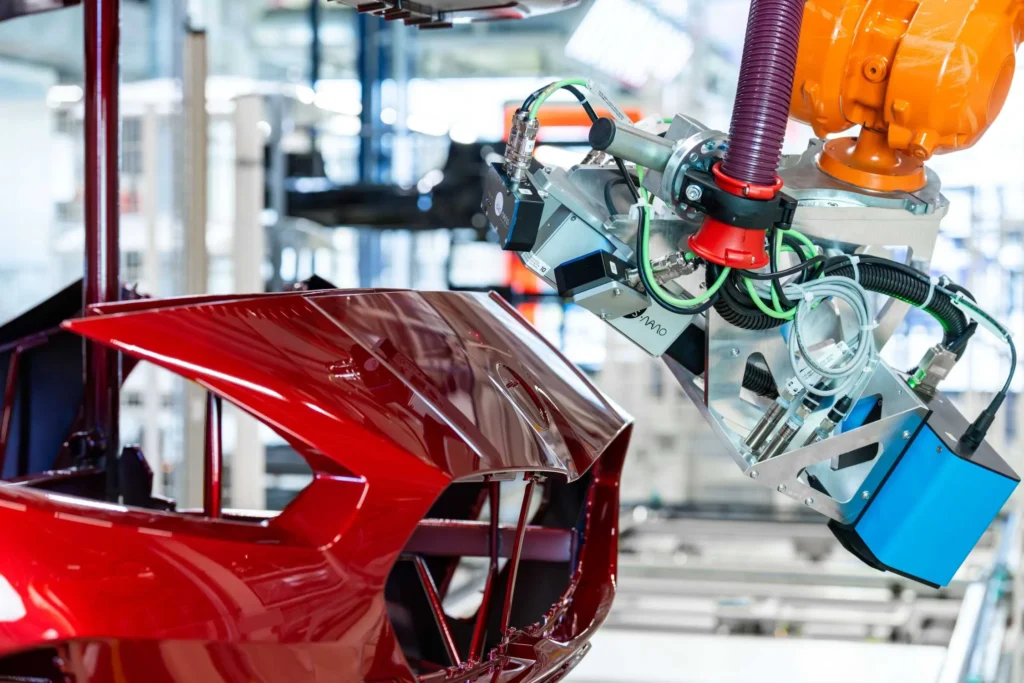
With the addition of the “Irys” system developed by das-Nano, the plant can perform contactless measurements using terahertz waves. Sensors installed on industrial robots analyze the return time of waves reflected off different layers of paint to calculate their thickness with micrometer precision.
Likewise, the measurements are performed in a few seconds within the existing final inspection cell on the production line.
Christoph Theiselmann, head of exterior plastics production at BMW Leipzig, explained that the technology replaces complex manual processes with a fully automated solution capable of raising the level of industrial quality control.
Terahertz technology applied to plastic components
The implementation represents one of the first applications of terahertz-based measurement for exterior plastic parts in the mass-produced automotive industry.
The system allows for the inspection of multi-layered paint structures without affecting the component’s integrity. This facilitates obtaining reproducible and objective results while increasing the transparency of production data.
Furthermore, digitizing the process provides real-time information that can be used to adjust operating parameters and detect variations before they affect entire manufacturing batches.
Waste reduction and efficiency improvement
BMW highlighted that eliminating destructive testing reduces material waste and optimizes resource use within the plant.
The integration of digital data also strengthens process control based on analytical information, allowing for improved quality traceability and increased operational efficiency in painting and finishing areas.
With this initiative, the Leipzig plant continues to expand the use of smart technologies geared towards industrial automation and advanced manufacturing within the automotive group’s global operations.
Source and photo: Bmwgroup