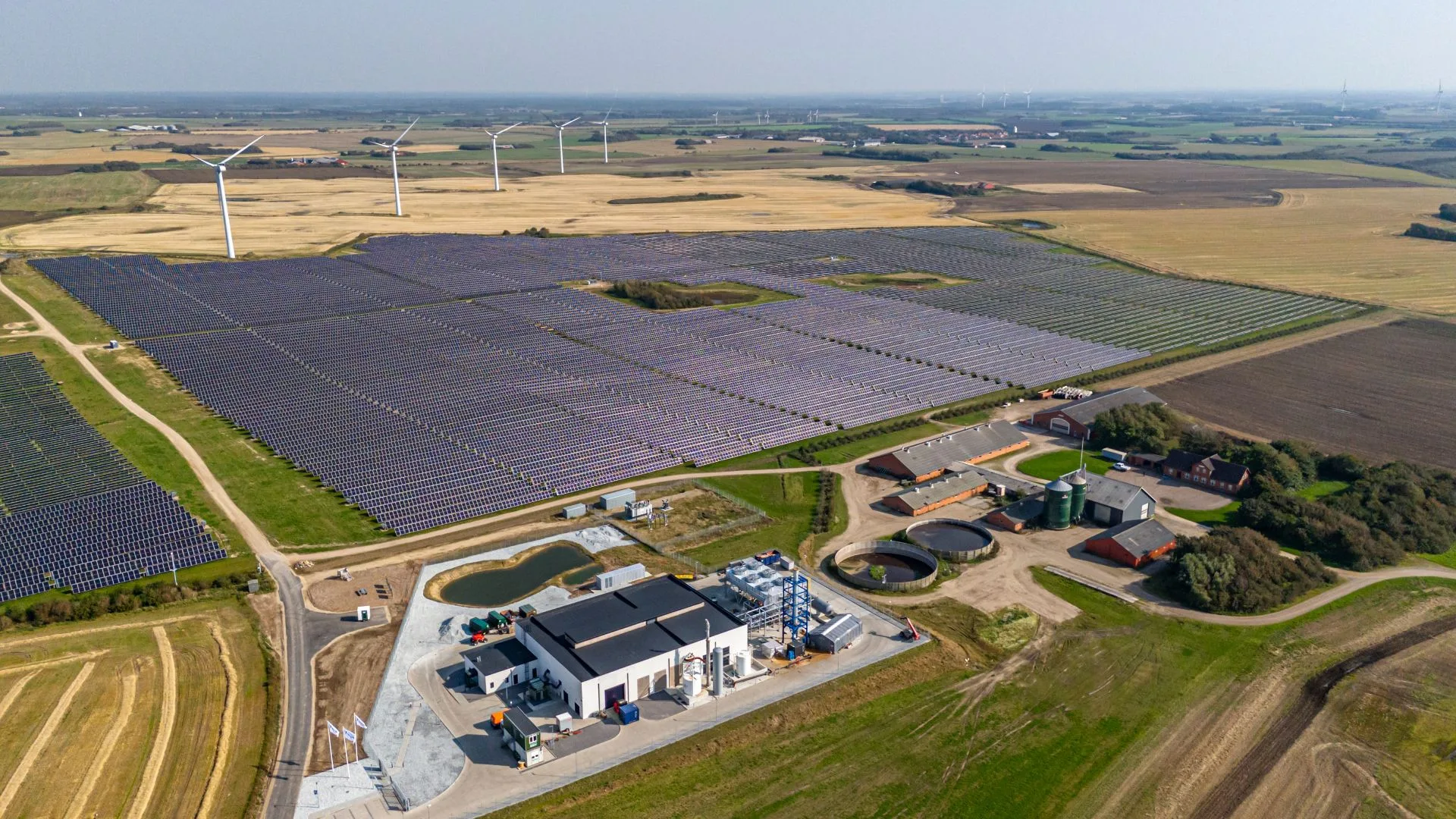
BeGreen it is expanding its energy project in Ingerslev Å, Denmark, with a battery energy storage system (BESS) that will be managed and optimized by Danske Commodities. The new installation is integrated into a photovoltaic solar plant that the energy trader already operates for the company.
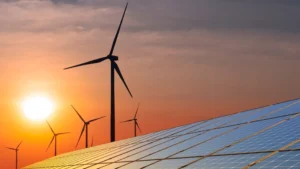
The project combines a 48 MW photovoltaic installation with a 20 MW/40 MWh battery storage system (BESS). The solar plant has been operational since June 2025 and is located in the municipality of Norddjurs, within the DK1 electricity pricing zone. With the addition of batteries, the installation will be able to store some of the electricity generated by the solar panels and use it according to the needs of the electrical system and market conditions.
BeGreen integrates a 40 MWh BESS system in Ingerslev Å
For its part, Danske Commodities will assume specific functions for each component of the energy complex. The trading company will act as the Balance Responsible Party (BRP) of the photovoltaic plant and as a balance service provider (BSP) for the BESS system.
This structure will allow for the coordinated management of solar power generation and energy storage. According to Danske Commodities, the batteries will contribute to improving both the utilization and value of the electricity produced in Ingerslev Å. Furthermore, the addition of 40 MWh of storage capacity offers greater flexibility in managing when the energy produced by the photovoltaic installation is used.
The project combines 48 MW of solar power with 40 MWh of storage
In technical terms, the BESS has a power output of 20 MW and an energy capacity of 40 MWh, this configuration equates to a nominal operating time of two hours at its maximum power.
BeGreen did not specify in the announcement whether all the hybrid project it is now fully operational, however, the company had reported a month earlier that it was conducting real-world commissioning of the battery system before its final delivery. Therefore, the BESS was then in an advanced stage prior to its full operational launch.
Integrated storage is gaining ground in Denmark
Danske Commodities is also involved in the optimization of other large-scale storage assets in the Danish market. These include European Energy’s Kvosted project, which has a capacity of 200 MWh. European Energy also recently completed two other integrated BESS projects with a combined capacity of 152 MWh.
The deployment of batteries alongside solar installations has a significant economic advantage in Denmark. According to Rimshah Javed, Head of Origination at Danske Commodities, the BESS independent systems receive similar treatment to consumers and must face additional grid charges. In contrast, storage systems integrated with solar plants are exempt from this payment. This difference favors the development of hybrid solar and storage installations over independent battery projects.
The BESS brings flexibility to a system dominated by wind power
Finally, energy storage can play an important role within the Danish electricity system due to the high presence of variable renewable sources.
Denmark has significantly more wind power generation than solar photovoltaic generation, in this scenario, BESS systems allow for the incorporation of flexible capacity to store electricity and respond to variations between generation and demand.
The integration of Ingerslev Å’s BESS thus transforms the BeGreen plant into a hybrid facility that combines photovoltaic generation and energy storage under the management of Danske Commodities.
Source: Energy Storage News
Photo: Shutterstock