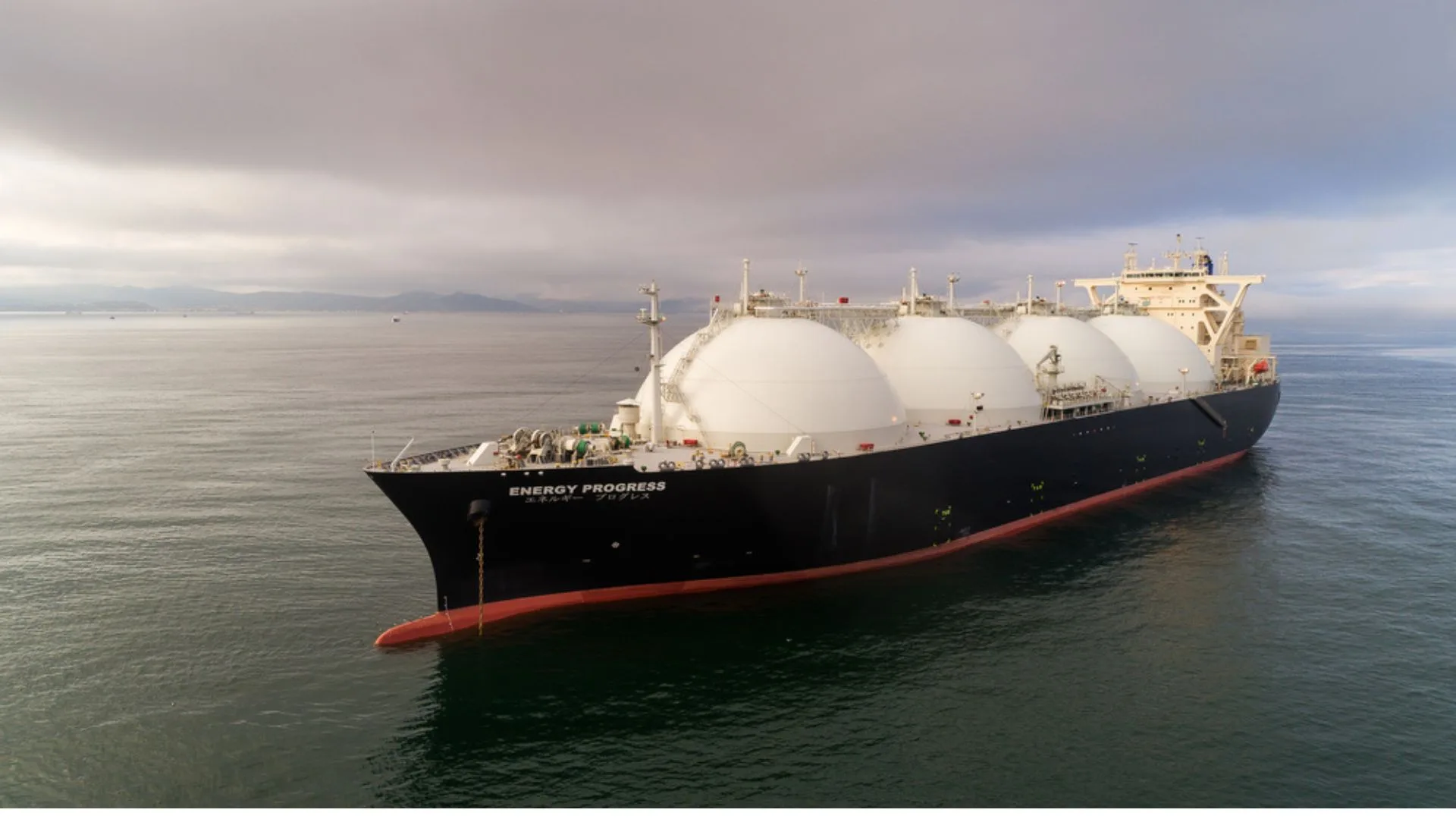
Asian LNG demand reached 21.83 million tonnes in June 2026, the highest level in five months, driven by a heatwave in Japan and industrial revival in China. Simultaneously, Petronas and JERA formalized a 20-year, 2 Mtpa supply contract starting in 2028, strengthening regional energy security.
Asian LNG Demand Recovers to Pre-Crisis Levels in June
Cargo tracking data compiled by Reuters shows that Asian LNG demand totaled 21.83 Mt in June, up from 19.10 Mt in May and 18.60 Mt at the February low. Japan led the rebound with 5.33 Mt, its highest monthly volume since January, while China contributed 4.48 Mt amid a manufacturing recovery.
The Asian LNG spot price—referenced to the JKM index—fell to US$18.80/MMBtu after hitting a peak of US$25.30/MMBtu in April, when the Hormuz crisis caused speculative shortages. The price moderation confirms that Asian LNG demand, while strong, is being partially met by inventories accumulated during the winter.
Petronas and JERA Close the Largest Bilateral Contract of the Year
Petronas, the Malaysian national oil company, and JERA, Japan’s largest LNG buyer, signed a 20-year, 2 Mtpa supply agreement on Tuesday starting in 2028. The contract is partially indexed to the JKM to capture Asian market variations.
This agreement guarantees base supply for Japan while we develop additional capacity in our deepwater LNG assets.
stated Petronas President and Group CEO Tengku Muhammad Taufik at the signing held in Kuala Lumpur on Tuesday.
JERA manages 40 million tonnes per year of long-term contracts and sought to replace volumes with maturities concentrated between 2027 and 2030. The agreement with Petronas covers approximately 15% of that renewal exposure.
India and China Expand Positions in the Spot Market
Asian LNG demand is being qualitatively led by China, which combined spot purchases with long-term contract deliveries. Chinese imports of 4.48 Mt represent an 18% increase compared to the same month in 2025, according to preliminary customs data.
India recorded 1.92 Mt in June, an all-time high for that month, due to power generation demand for cooling. Indian buyers paid premiums of up to US$0.80/MMBtu over the JKM for prompt delivery cargoes, a sign of tension in the spot segment.
The growth in Asian LNG demand reinforces the logic of the SEFE–Ksi Lisims agreement for European supply, whose export capacity could be partially redistributed toward Asia if price differentials justify it in the medium term.
Supply Outlook for the Second Half
Global LNG supply faces structural constraints that could keep Asian LNG demand above available supply. Delays in export projects in the US and Australia are putting pressure on the balance ahead of the 2026–2027 boreal winter.
“Asian buyers are learning that reliance on the spot market is expensive during cycles of tension. The era of long-term contracts is returning with force,” indicated a strategy director from Wood Mackenzie in a presentation to investors on June 9, 2026.
In this context, the final investment decision for Browse LNG in Australia takes on renewed urgency. Its 12 Mtpa capacity could alleviate the projected shortage for 2029–2030 if the sanction occurs before the end of the year, easing the Asian LNG demand that is currently pushing prices upward.
Sources