Table of Contents
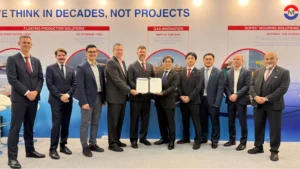
The international certification body Bureau Veritas granted level two preliminary approval to the PALM Quick Connection System (QCS) developed by Apollo. This technical validation was consolidated following the completion of a detailed twelve-month engineering and preliminary design study. Funding for this analysis was provided by specialized organizations such as the Offshore Wind Growth Partnership and Wave Energy Scotland.
Technical certification of the PALM QCS system by Bureau Veritas
The independent assessment confirms that the device fully complies with current global maritime industry regulations. This progress enables the company to proceed immediately to the final technical qualification and commercial approval phases of the technology, which is aimed at optimizing floating offshore wind energy infrastructure.
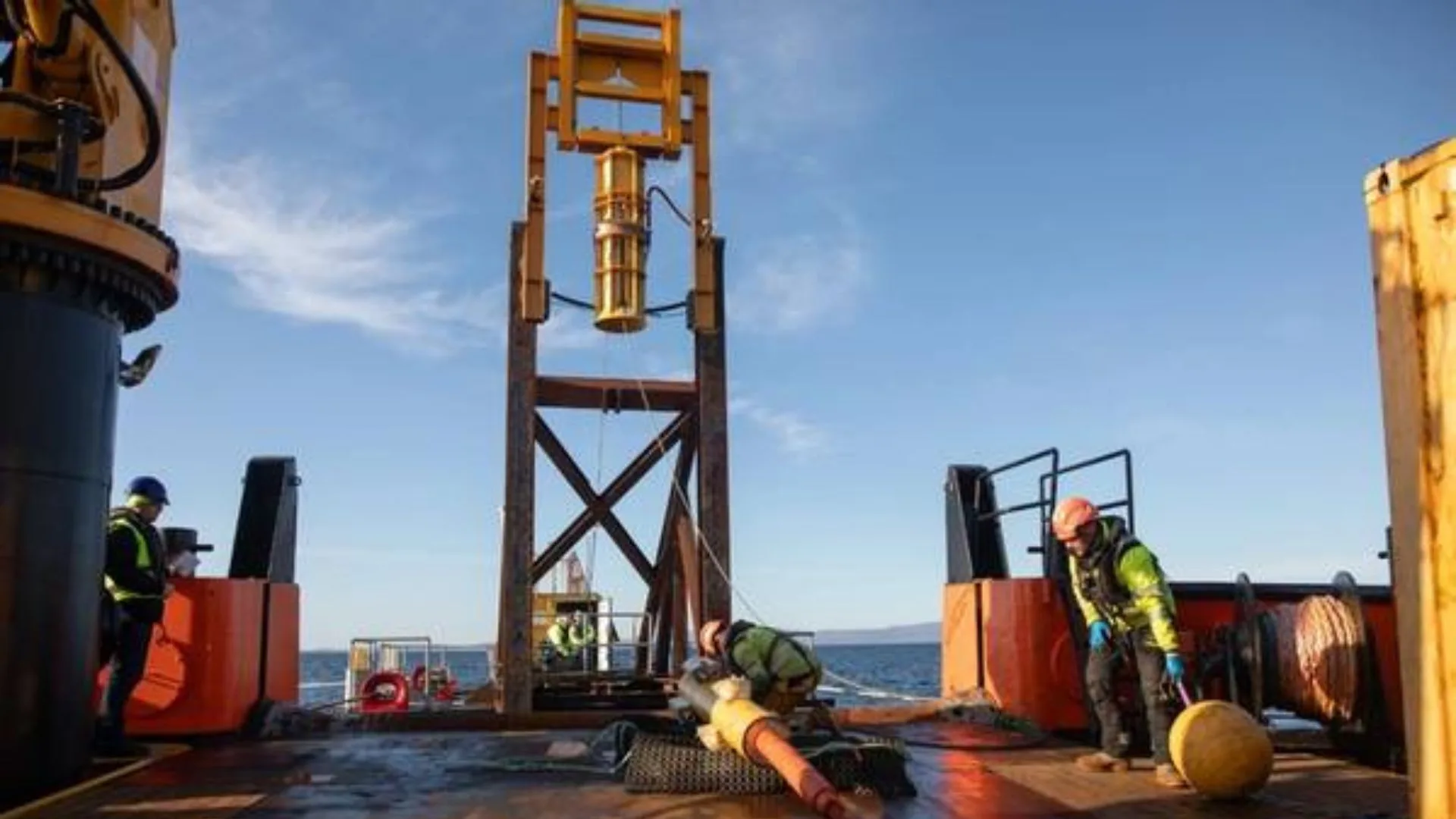
The PALM QCS mechanism simplifies interaction with dynamic cables for floating wind turbines installed in deep waters. Furthermore, its operational design completely eliminates the need for specialized vessels, divers, and technical personnel transfers during critical maintenance maneuvers. Field trials have accumulated fifty successful component connection operations in real marine environments.
Time efficiency is one of the primary advantages of this engineering development. Dynamic cable reconnection maneuvers require an estimated period of 5.5 hours, in contrast to methods that typically extend over several full days. This reduction in technical downtime directly decreases operational risks associated with adverse weather conditions at sea.
Likewise, financial projections calculated by the developer estimate a potential saving of $161 million over the full operational cycle of a gigawatt-scale floating offshore wind farm.
The origin of this connector dates back to an initial program promoted by Wave Energy Scotland, which evolved through specific adaptations for the modern wind sector. The immediate schedule includes the execution of complementary subsea electrical trials during 2027. These tests will be formally integrated into the European Union’s Horizon project under the strategic direction of the European Marine Energy Centre.
Nigel Robinson, Marine Energy Director at Apollo, highlighted that this progress provides certainty regarding the financial viability of the system and consolidates the path toward the first large-scale deployment of the technology. For her part, Stéphanie Gasc, Design Assessment Engineer at Bureau Veritas, confirmed that the rigorous design review and offshore test documentation ensure strict compliance with international subsea industry standards.
Source and photo: Apollo