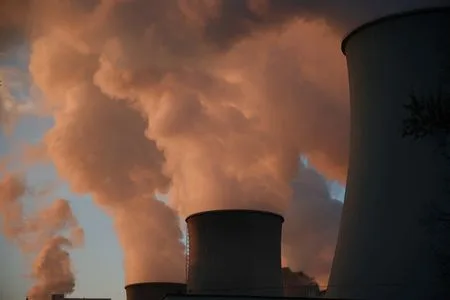
The increase in gas prices in Europe is modifying the dispatch of power plants. According to analysts cited by Reuters, coal-fired generation could increase by approximately 25% over the next six months to offset a similar drop in gas-fired generation.
European TTF exceeded €80/MWh in September, its highest level in three years.
This disruption is reflected in relative generation margins. Coal and lignite power plants, on average, once again presented more favorable economics than gas plants, a situation not observed since at least 2024, according to ICIS data cited by Reuters.
The shift does not mean Europe is rebuilding its thermal power fleet. The phenomenon occurs within a considerably reduced coal fleet after years of closures. Coal’s share in the European Union’s electricity generation fell from over one-third in 1990 to 9.2% in 2025, according to Eurostat cited by Reuters.
Germany Shows the System’s Physical Limit
The German case illustrates where economic response ends and physical constraint begins. Veyt anticipates that coal-fired generation will approach the practical maximum delivered by the remaining fleet during the fourth quarter, while much of the available reserve capacity is limited by facility availability.
This introduces a fundamental difference for analyzing electricity security: having installed capacity does not necessarily mean having that capacity available when the system needs it.
A power plant may be out of service, limited by maintenance, fuel, technical restrictions, or operational conditions. Therefore, nominal capacity does not automatically equate to firm available capacity.
The result is that a new increase in gas prices in Europe would not necessarily lead to a proportional substitution towards coal. Florian Boehnke, an ICIS analyst, noted that even if gas reached €100/MWh, the electricity sector would have little additional margin to react through fuel switching.
Renewables Do Not Eliminate the Need for Backup
Renewable generation can displace thermal generation when sufficient solar or wind resources exist, but its output depends on weather conditions. During periods of low renewable generation, thermal power plants continue to provide part of the capacity needed to balance production and demand.
This characteristic transforms the electricity system into an architecture of complementary resources. Gas, coal, renewables, storage, interconnections, and flexible demand all fulfill different functions within system stability.
Reducing one technology can decrease emissions, but it also reduces certain response options to supply disruptions.
Europe is experiencing precisely this tension. ICIS points out that the growth of renewables has changed the behavior of electricity markets, while gas price developments are increasingly linked to global LNG markets and geopolitical factors.
The Real Problem Is Available Flexibility
The most important essential point is not that coal is temporarily becoming profitable again. It is that the capacity for fuel substitution is becoming a limited resource. Reuters reports Veyt’s estimates that coal could remain economically cheaper than gas for power generation until 2027 and potentially until March 2028.
The situation also shows why the energy transition cannot be analyzed solely by annual generation percentages. Operating an electricity grid requires sufficient capacity, but also availability, responsiveness, reserves, and mechanisms to cover periods of low renewable production.
The electrical capacity that truly protects the system in Europe during a crisis is not the installed capacity in records, but the available and operable capacity at the necessary moment. Germany may have remaining coal plants, but if much of its reserve capacity is already physically limited, the margin for response to another gas price surge is reduced.
SOURCE and PHOTO: https://live.euronext.com/