Africa Accelerates Its Energy Agenda Toward 2027
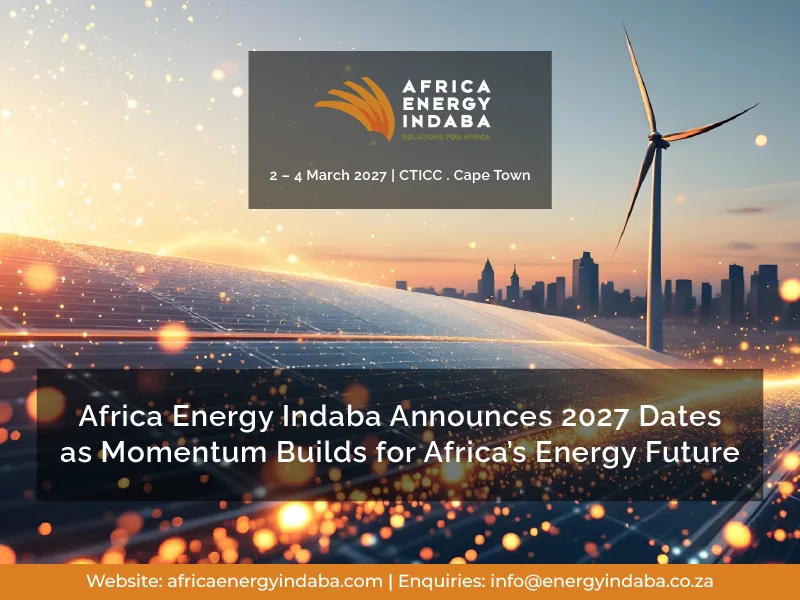
Africa Energy Indaba 2027 has confirmed its next edition from March 2 to 4 at the Cape Town International Convention Centre, consolidating its position as the continent’s leading energy forum. This announcement not only defines a date but reaffirms Africa’s positioning within the global energy map.
Held in Cape Town, the event becomes a strategic node where governments, investors, and energy sector operators converge. The choice of location is not coincidental: South Africa remains one of the continent’s most influential energy hubs, both in infrastructure and policy.
The momentum accumulated following the 2026 edition demonstrates a strategic phenomenon: Africa is no longer viewed solely as an emerging market, but as a central element in the global energy transition, especially in gas, renewables, and electrification.
Energy Investment: The True Driver of the Event
One of the central pillars of the event will be the mobilization of capital for energy infrastructure, an essential component, considering that Africa requires more than $100 billion annually to close its energy gap.
The forum will bring together development finance institutions, sovereign wealth funds, and private investors, creating an environment conducive to structuring bankable projects. Herein lies the true value of the Africa Energy Indaba event: moving from political discourse to financial execution.
Africa possesses nearly 60% of the world’s best solar potential, yet captures only about 2% of global investment in renewable energy. This gap represents a strategic opportunity that the Indaba seeks to capitalize on.
Infrastructure and Grids: The Structural Challenge
Beyond generation, the logistical limitations for Africa’s energy system lie in transmission and distribution. Power grid resilience will be one of the most critical topics on the 2027 agenda.
The Africa Energy Indaba event will address solutions to modernize grids, integrate intermittent renewable energy, and strengthen regional interconnections. This includes smart grid projects, energy storage, and digitalization of the electrical system.
Additionally, cross-border energy trade will be promoted, a significant factor in optimizing regional resources. Initiatives such as African power pools could redefine the continent’s energy efficiency in the coming decade.
Energy Transition: Between Realism and Pragmatism
Unlike Europe, the energy transition in Africa follows a pragmatic approach. The Africa Energy event will highlight an energy mix that includes renewables, natural gas, and even nuclear energy.
Gas, in particular, plays a strategic role as a transition fuel, enabling stability in electrical systems still under development. This approach has generated global debates but responds to the continent’s technical and economic realities.
Finally, Africa Energy Indaba positions itself as a platform where not only is the energy future discussed, but where the partnerships that will make it possible are designed. In a global context of energy uncertainty, Africa emerges as one of the regions with the greatest potential for structural transformation.
Source and Photo: https://africaenergyindaba.com