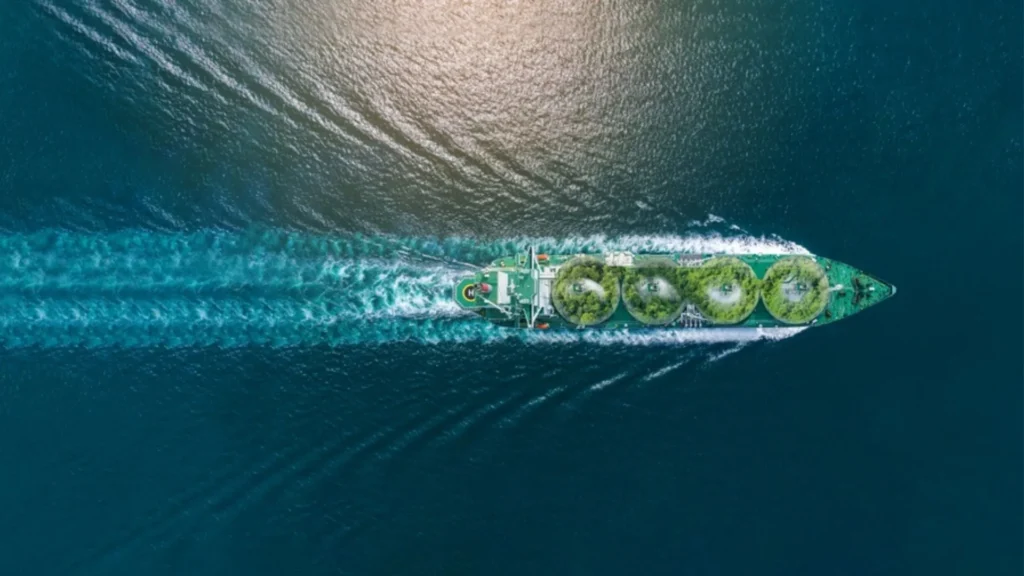
An ADNOC-managed LNG vessel reappeared laden near Indonesia after several days without an AIS signal, amid maritime risks in the Gulf.
Second LNG shipment reappears near Indonesia
The LNG carrier Mraweh, linked to ADNOC’s liquefied natural gas operations, reportedly crossed the Strait of Hormuz with a cargo bound for Asia, according to vessel-tracking data cited by specialized platforms. The latest signal placed it laden near northern Indonesia, with Japan as its next destination.
In addition, the movement is significant because it would be the second known LNG shipment to manage to leave the Persian Gulf since the start of the conflict between the United States and Iran in late February. The most recent precedent was the Mubaraz, another ADNOC-operated vessel that also stopped transmitting its position before reappearing en route to Asia.
AIS switched off and evasive routes in the Gulf
According to available data, the Mraweh was last seen empty on April 19 near the eastern entrance to Hormuz. It then remained without transmitting an AIS signal for more than two weeks, a practice that is increasingly common among vessels sailing near the Gulf under conditions of military tension.
Likewise, several LNG carriers have used low-profile tactics, such as switching off their automatic identification systems or altering transmission patterns. These measures aim to reduce exposure to attacks, detentions, or inspections in an area where energy traffic has become more complex.
Das Island remains the focus of exports
Although it is not confirmed where the Mraweh loaded, historical data point to the Das Island LNG export plant, a key ADNOC facility in the Persian Gulf. Since 2021, the vessel has taken cargoes only from that terminal, according to shipping records.
Moreover, satellite images cited by industry reports indicated the presence of another vessel berthed at Das Island, even though tracking systems showed no active carriers in the area. This suggests that ADNOC may be maintaining selective loading operations, even as transit through Hormuz remains limited.
The Hormuz crossing puts pressure on the global LNG market
The Strait of Hormuz is a critical route for global energy trade, and its partial closure has affected the flow of liquefied natural gas from the Gulf. Before the conflict, about three LNG-laden vessels crossed this maritime passage daily, a frequency that has now been reduced drastically.
Meanwhile, the conflict has constrained around one-fifth of global LNG supply, driving up gas prices in Europe and Asia. The situation has also put pressure on emerging economies that rely on seaborne imports to meet electricity, industrial, and residential demand.
A sign of continuity under high risk
The Mraweh’s possible crossing does not indicate a full normalization of maritime traffic, but it does show that some cargoes may be leaving the Gulf through very tightly controlled operational windows. For ADNOC, each successful transit helps sustain commercial commitments in Asia, albeit with greater logistical and security exposure.
In this context, developments in AIS movements, activity at Das Island, and the response of gas markets will be key to assessing whether LNG shipments through Hormuz gradually return or remain isolated operations amid regional tensions.
Source: Reuters