
TGS acquires Apparition Geoservices to improve subsurface imaging
The addition of Apparition Geoservices will allow TGS to expand its capabilities in seismic acquisition and subsurface imaging through a technology designed to increase operational efficiency and improve the quality of data obtained in marine campaigns.
TGS strengthens its offering with Apparition technology
TGS recently announced the acquisition of Apparition Geoservices GmbH to exclusively incorporate specialized technology for the simultaneous acquisition and separation of seismic sources. This transaction is part of the company's strategy to strengthen its technological offering within the energy sector and respond to the growing demands of seismic exploration projects .
The integration of this technology will be complemented by Gemini Enhanced Frequency Source (EFS), one of the platforms developed by TGS to optimize the capture of geophysical data and expand the operational capacity of its marine campaigns.
What does Apparition's technology bring to seismics?
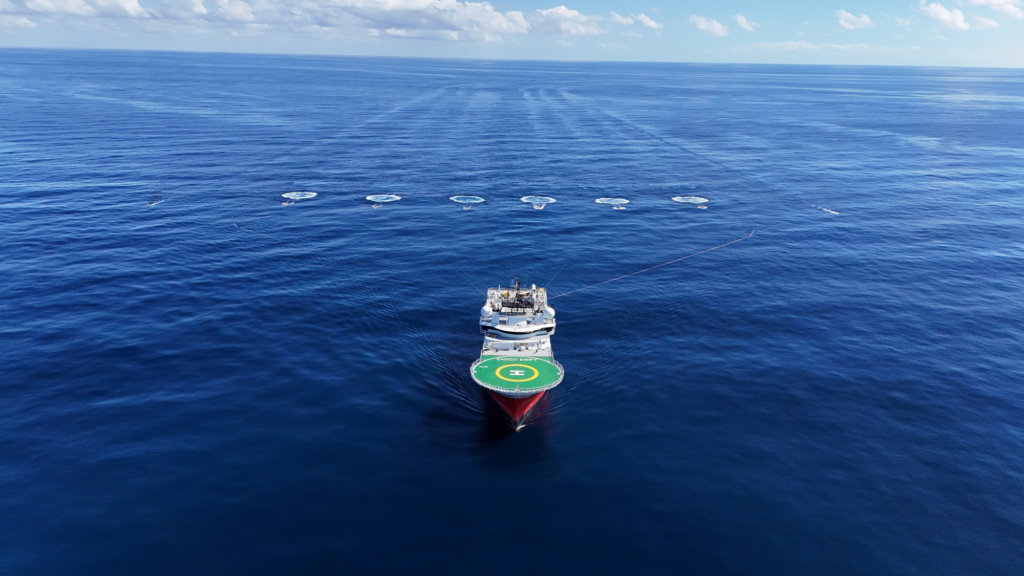
Unlike conventional seismic acquisition methods, Apparition's technology allows multiple acoustic sources to operate simultaneously under precise coordination. Thanks to a time-coding system, the signals generated by each source can be separated later during data processing .
This approach facilitates a more efficient use of available resources during seismic studies and allows for maintaining consistent levels of quality in the information collected.
Furthermore, the methodology helps to improve the recovery of signals from complex geological structures and favors a more detailed representation of deep areas of the subsurface.
Tests show improvements in efficiency and data quality
Over the past two years, TGS evaluated the technology in various marine environments and operating configurations. These tests were conducted in collaboration with specialists from Apparition Geoservices and several clients in the energy sector.
Among the results obtained, operational efficiency increases of up to 30% stand out, accompanied by improvements in the signal-to-noise ratio and in the recovery of low-frequency information.
Furthermore, the assessments carried out showed a greater capacity to identify complex geological targets located at greater depths, an aspect especially relevant for exploration projects in increasingly challenging areas.
Benefits for next-generation seismic studies
The addition of Apparition Geoservices will allow TGS to apply this technology to projects involving ocean floor nodes (OBN), towed seismic cable systems, and ultra-high-resolution 3D surveys.
As a result, customers will have access to more efficient seismic programs, with shorter execution times and more effective use of exploration resources.
Similarly, improving the image of the subsurface can help reduce uncertainty during the evaluation of geological structures and support decision-making processes related to the exploration and development of energy resources.
An operation aligned with TGS's technology strategy
TGS 's Executive Vice President of Marine Data Acquisition , the acquisition strengthens the company's technology portfolio and supports its strategy based on multiple data sources and integration.
The combination of Apparition Geoservices, Gemini EFS and the Ramform fleet seeks to increase the company's operational capacity while improving the quality of information delivered to customers.
With energy exploration facing increasingly complex scenarios, the combination of these technologies aims to offer more efficient seismic studies and a more accurate visualization of the subsurface, aspects that continue to gain relevance within the global market for geophysical services.
News of additional interest
Brazil and Belgium make progress on a clean maritime route
A new international consortium will work on developing an eco-friendly maritime corridor between the port of Açu, Brazil, and the port of Antwerp-Bruges, Belgium. The initiative brings together port operators, shipping companies, and energy firms with the goal of creating a logistics chain for transporting low-emission synthetic fuels such as e-ammonia and e-methanol produced in Brazil.
The group will analyze the infrastructure needs, vessel requirements, and business models necessary to make this trade route viable. The proposal is based on previous studies that identified Açu as a strategic location for the production and export of synthetic fuels, thanks to the availability of renewable energy, the push for green hydrogen, and favorable conditions for the development of new energy projects.
Van Oord will restore ecosystems in the Scheur River
Van Oord was selected by Rijkswaterstaat to carry out an environmental restoration project on the Scheur River in the Netherlands. The initiative involves the construction of nearly four kilometers of longitudinal dikes and the creation of approximately 31 hectares of new tidal zones with the aim of improving aquatic ecosystems and contributing to the water quality goals set by the European Union.
The works will take place in the Maassluis and Rozenburg areas and will include sand replenishment, riverbank modifications, and the creation of openings in existing structures to enhance the natural influence of the tides. These actions aim to create more suitable conditions for fish, birds, and aquatic plants. Furthermore, the project will incorporate reused materials from other company projects to reduce the environmental impact associated with transportation and the use of new resources.
New Bio-LNG station will expand the network in the UK
FreshLinc and Gasrec are moving forward with the development of a new public bio-LNG refueling station in Spalding, England. The project has already begun the permitting process and is scheduled to be operational by the end of 2026. The facility will be the first of its kind in East Anglia and will enhance the existing infrastructure for heavy goods vehicles using biomethane as fuel.
The future station will initially be able to service up to 100 trucks per day using a mobile unit, before transitioning to a larger, permanent facility. FreshLinc, a logistics operator with a fleet of approximately 400 commercial vehicles, plans to incorporate its first natural gas-powered trucks this year as part of its emissions reduction strategy. The center will also be open to other transport companies interested in accessing this alternative fuel.
Mako secures platform to move towards production
Conrad Asia Energy announced the signing of a contract for the supply of an offshore drilling rig to be used in the development of the Mako Gas Field , located in the Natuna Sea off the coast of Indonesia. The agreement covers the use of the Admarine 502 jack-up rig to drill six development wells and install key infrastructure for future gas production.
Operations are scheduled to begin during the second quarter of 2027 and will initially last 180 days. The Mako project will utilize a mobile offshore production unit and a pipeline network connecting the field to existing gas infrastructure to supply the Indonesian domestic market. The estimated investment to achieve the first gas delivery is US$320 million for the entire project.