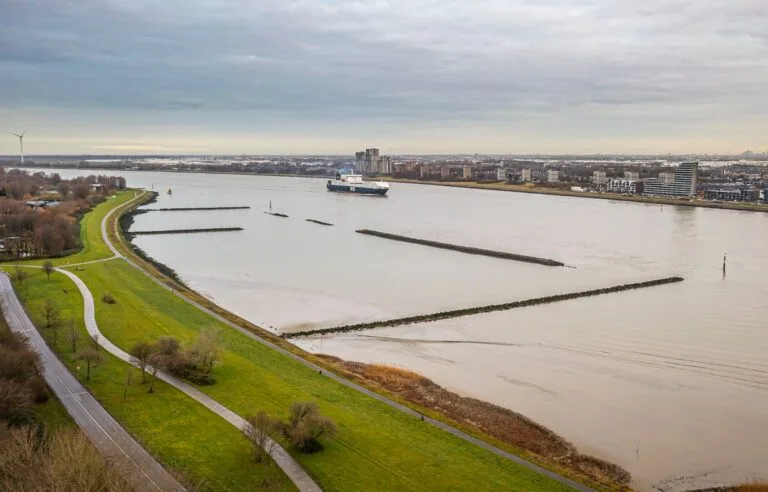
Rijkswaterstaat commissioned Van Oord to implement environmental improvement measures in the Scheur River, in the Netherlands. The project includes the construction of nearly 4 kilometers of longitudinal dikes and the creation of approximately 31 hectares of tidal area.
The intervention seeks to restore habitats for fish, birds, and aquatic plants, in addition to contributing to the protection and improvement of water quality.
The works are part of Dutch actions to meet the objectives of the European Union Water Framework Directive.
Longitudinal Dikes in Maassluis and Rozenburg
Van Oord will design and construct two longitudinal dikes in the Maassluis and Rozenburg areas, located along the Scheur River.
Sand will be deposited between the dikes and the existing riverbank, while the bank will be raised at several points to create a new tidal effect. This configuration will generate more favorable conditions for the recovery of riparian ecosystems.
Additionally, in Rozenburg and Maassluis, breaches will be opened in existing groynes to enhance tidal dynamics and improve the connection between the river and the new natural areas.
Restoration of Aquatic Habitats
The project aims to improve the ecological environment of the river by creating tidal zones, a valuable habitat type for aquatic species, birds, and vegetation associated with river systems.
These areas allow natural transitions between water and land, providing refuges, feeding grounds, and breeding spaces for diverse species.
According to Van Oord, the measures will contribute to creating a sustainable environment for both people and wildlife, reinforcing the role of ecological restoration within hydraulic infrastructure projects.
Reuse of Rocks and Reduced Impact
For the execution of the project, Van Oord will work with several partners, including its subsidiaries Paans Van Oord and Van Oord Grondstoffen.
The company will reuse rocks from its own projects, which will reduce transport distances and decrease the environmental impact associated with material logistics.
This approach reinforces the company’s sustainable construction strategy by leveraging existing resources and limiting transport-related emissions.
Works to Commence in 2026
Project execution will begin in the third quarter of 2026 and extend through summer 2027.
The initiative is part of the measures Rijkswaterstaat is developing in major Dutch rivers to support compliance with the Water Framework Directive. This regulation requires Member States to ensure clean and healthy surface and groundwater.
With this intervention, Van Oord will contribute to improving the ecological quality of the Scheur River and strengthening the resilience of its ecosystems, integrating hydraulic engineering, natural restoration, and material reuse.
Source and photo: https://www.vanoord.com/