
The Strait of Hormuz sees oil prices surge amid new attacks
Oil prices rose again after clashes between the United States and Iran intensified around the Strait of Hormuz . Tensions escalated over the weekend, raising fears of potential disruptions to one of the world's most important shipping routes for crude oil.
Furthermore, traders began to factor in a higher risk premium due to threats to oil tankers, ports, and coastal facilities. Although physical supply remains orderly for now, the energy market remains vulnerable to rapid changes should shipping face new restrictions.
The Strait of Hormuz is the focus of market attention
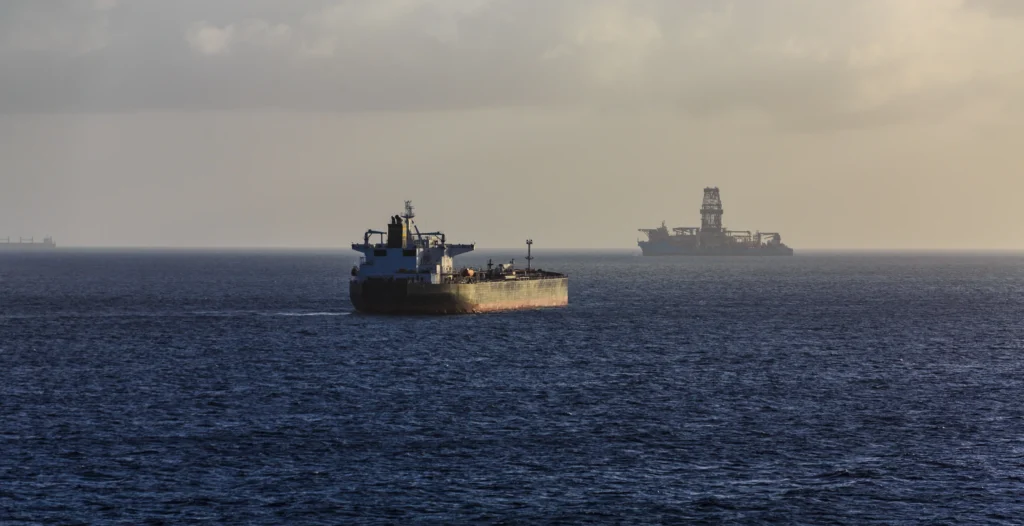
First, the Strait of Hormuz has become the epicenter of the tension due to its importance in Persian Gulf oil and gas exports. Any prolonged blockade could reduce shipping traffic and disrupt flows to Asia, Europe, and other markets.
Iran, for its part, stated that the maritime passage would remain closed until further notice. The United States rejected this claim, maintaining that its forces are prepared to uphold freedom of commercial navigation.
Meanwhile, U.S. Central Command reported that it conducted a new series of strikes against Iranian targets on July 12. The operations targeted air defense systems, coastal radar stations, missile and drone capabilities, and small vessels.
The United States and Iran expand their military operations
Iran subsequently responded with drone and missile attacks against US-linked positions in the Middle East, including Bahrain, Kuwait, and Qatar.
Meanwhile, the Speaker of the Iranian Parliament, Mohammad Bagher Ghalibaf, conditioned the reopening of the Strait of Hormuz on new agreements regarding transit and exports. Tehran has also warned of possible actions on other energy routes in the region.
According to teleSUR, the Iranian Revolutionary Guard raised the possibility of extending restrictions to corridors used for transporting oil and gas. These include Bab el-Mandeb, which connects the Red Sea to the Gulf of Aden.
The price of oil reflects geopolitical risk
crude oil benchmarks maintained an upward trend. Brent crude for September delivery rose to $86.15 per barrel, while West Texas Intermediate settled at $80.34, according to data published by Xspectro.
Both indexes also accumulated several sessions of gains, reaching levels not seen in the last month. This movement reflects fears that the confrontation could limit shipping or affect production-related facilities.
However, Saxo Bank noted that the moderate spread between short-term and long-term contracts indicates that the physical crude oil market is still functioning in an orderly manner. This situation could change if attacks target tankers, terminals, or loading areas.
Refined fuels increase pressure
On the other hand, the concern is not limited to crude oil; refined products are experiencing tighter conditions due to supply restrictions and the Russian ban on diesel exports mentioned by Saxo Bank.
Consequently, further disruptions can be passed on to transport prices, industrial production, and consumer goods. Increased diesel prices typically have a broad impact because this fuel is used in trucks, ships, and machinery.
Furthermore, the International Energy Agency warned that hostilities could hinder the rebuilding of reserves. A slow recovery of inventories would reduce the market's ability to respond to further supply losses.
Diplomacy can reduce part of the risk premium
In the short term, the evolution of oil prices will depend on actual traffic through the Strait of Hormuz. If ships continue to pass through and no significant damage occurs to ports or energy facilities, some of the increase may be mitigated.
Conversely, a noticeable drop in maritime flows could trigger further increases in Brent and WTI prices. Traders will be monitoring tanker movements, military decisions by Washington and Tehran, and any signs of negotiations.
Finally, analysts believe that credible talks could quickly remove some of the premium already factored into the price. However, the continued attacks currently reduce the chances of an immediate diplomatic solution.
As long as the confrontation persists, the Strait of Hormuz will continue to dictate the course of the energy market . Its situation will influence crude oil, refined fuels, and inflation expectations in various economies.
News of additional interest
Iberdrola reduces its renewable generation in the first half of the year
Iberdrola produced 45,906 GWh of renewable electricity during the first half of 2026, a figure that represents a 0.9% decrease compared to the same period of the previous year. The decline was driven by lower hydroelectric generation, although the company recorded progress in offshore wind, onshore wind, solar, and small hydroelectric plants.
By market, production decreased in Spain and Brazil while it increased in the United Kingdom, the United States, and other countries where the company operates. At the end of June, Iberdrola also expanded its installed renewable capacity to 46,058 MW, with increases in technologies such as offshore wind, solar, and battery storage systems.
Palisades is getting closer to resuming operations in the US.
The Palisades nuclear power plant, located in Michigan, is nearing completion of its power generation program after several years of being offline. Holtec International reported that it has finished the main reactor renovation work and that the remaining tasks are similar to those performed during a scheduled maintenance shutdown at an operating plant.
The project aims to reactivate an 800-megawatt reactor that was shut down in 2022 for economic reasons. Although the company has delayed the planned restart date more than once, it maintains that the process is nearing its final stage. Once reconnected to the grid, the facility could supply enough electricity to power millions of homes and set a precedent for reactivating other decommissioned nuclear power plants in the United States.
Lhyfe and Messer seal alliance for renewable hydrogen
Lhyfe and the industrial gases company Messer have signed an alliance that combines a 10-year renewable hydrogen supply contract with Lhyfe's acquisition of a 30% stake in Messer's four production plants located in France and Germany. The agreement guarantees long-term purchases starting in 2026 and strengthens the collaboration between the two companies to expand the availability of hydrogen for industry.
In addition to the commercial commitment, Messer will contribute its expertise in logistics, distribution, and gas handling to support the operation of the facilities. For Lhyfe, the transaction also represents an injection of resources through the partial sale of these assets, although it will retain control of the plants and continue to be responsible for their operation and management.
Sunda Energy seeks to expand its presence in New Zealand
Sunda Energy has filed an application for a gas exploration permit in the Taranaki Basin, off the coast of New Zealand's North Island. The area covered by the application is approximately 645 square kilometers and includes the Awakino gas and condensate field, discovered decades ago. The initiative is part of the company's expansion strategy in the New Zealand market.
The work program includes technical studies of existing information and the reprocessing of three-dimensional seismic data over the next 36 months. The goal is to more precisely define the potential of the deposit and evaluate new exploration opportunities. The application has already been accepted to participate in the competitive process of the New Zealand Petroleum and Minerals Agency, which will analyze the proposals before deciding on the permit.