
BMW modernizes leipzig with industrial terahertz technology
BMW Group continues to strengthen the technological transformation of its manufacturing processes with the incorporation of a terahertz-based measurement system at its Leipzig plant, Germany. The solution allows for the inspection of paint layer thickness on plastic components without damaging the parts and directly within series production.
The company currently uses this technology on exterior components such as bumpers, side skirts, and spoilers manufactured by injection molding. The implementation represents a new advance for industrial digitalization within the European automotive industry.
BMW replaces manual inspections with automated measurement
Until now, paint thickness inspections on plastic parts required manual processes that included cutting with scalpels and analysis using microscopes. In addition to destroying components, this method generated waste and slowed down the detection of possible production deviations.
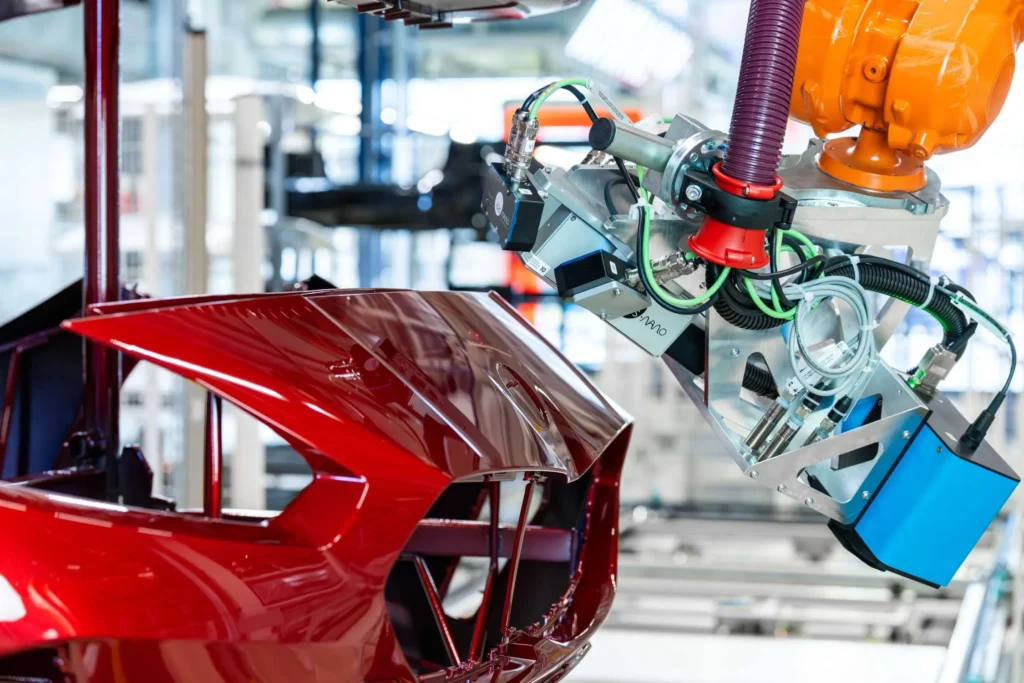
With the new solution, BMW fully automates this procedure using sensors integrated into industrial robots. The equipment is positioned in front of each component and uses terahertz waves to analyze the thickness of the different paint layers in a matter of seconds.
The technology achieves micrometric precision and generates reproducible measurements in real time, facilitating more efficient monitoring within the production line.
Terahertz sensors improve quality control
The system used by BMW is called “Irys” and was developed by the technology company das-Nano for industrial inline applications. Its main capability is to perform measurements without physical contact and without altering the integrity of the inspected parts.
Thanks to this integration, the Leipzig plant can detect manufacturing deviations early and correct parameters before errors affect a larger number of components.
Furthermore, the digitalization of the data obtained increases process traceability and strengthens quality control in automotive production.
Leipzig plant accelerates its digital transformation
The incorporation of terahertz sensors is part of a broader industrial digitalization strategy within BMW. In 2024, the plant had already begun to use automated systems for surface inspection and is now moving towards a fully digital paint operation.
All data collected by the system is stored digitally and can later be used in AI-based analyses. The goal is to identify trends, optimize manufacturing parameters, and anticipate potential operational failures.
BMW believes that this combination of automation, data analysis, and advanced measurement will increase operational efficiency and reduce material waste in its production processes.
BMW sets a precedent in the automotive industry
The Leipzig plant became the first BMW Group facility to use this technology in internal production. Furthermore, the company states that it is also the first application of terahertz-based measurement to inspect paint on plastic components within the sector.
After completing pilot tests, BMW confirmed that the solution can now operate with all parts transport systems and continues to expand its compatibility with different color variants.
The company also considers it viable to extend this technology to other paint shops within the group and to part of its global supplier network.
Plastic production gains strategic relevance
The Exterior Plastics division in Leipzig has approximately 450 employees specializing in the manufacture of parts for various models of the German manufacturer. From this plant, components are supplied not only to Leipzig but also to other BMW facilities in Dingolfing and Regensburg.
With this implementation, BMW reinforces its commitment to more precise, connected, and data-driven industrial processes within the automotive industry.
Additional news of interest
Eni discovers huge gas reserve in Indonesia
Italian oil company Eni confirmed very positive results at the Geliga-1 field located off the coast of Indonesia. Production tests showed that the well can generate large volumes of gas with stable and efficient pressure. According to the company, the field could produce nearly 200 million cubic feet of gas per day and about 10 thousand barrels of condensate per day.
The discovery is located in the Kutei basin and adds to the nearby Gula field, discovered earlier. Together, they could contribute up to one billion cubic feet of gas per day and 80 thousand barrels of condensate. Eni is already working on a plan to accelerate the project's development using existing infrastructure in the region and is also studying expanding the capacity of the Bontang liquefied natural gas plant to increase exports.
Shell raises dividends after strong start to the year
Shell started 2026 with higher-than-expected earnings thanks to the strong performance of its refining, marketing, and liquefied natural gas businesses. The oil company achieved adjusted earnings of $6.9 billion in the first quarter, driven by higher oil and gas prices, as well as stronger refining margins amid global energy tensions.
The company also announced a 5% increase in its quarterly dividend and confirmed a new $3 billion share buyback program. At the same time, it maintained its growth strategy with the acquisition of ARC Resources, a deal that will strengthen its energy production in the coming years. Shell highlighted that its global marketing network and LNG contracts helped sustain results despite the volatility caused by the conflict in the Middle East.
Israel to send aviation fuel to Germany
Israel will begin exporting aviation fuel to Germany following a request from the German government amid energy tensions caused by the war with Iran. The decision was confirmed by the Israeli Ministry of Foreign Affairs after energy authorities determined that there is surplus capacity to make shipments without affecting domestic supply.
The announcement comes as Germany faces new pressures on its supply chains and on industrial sectors highly dependent on energy and raw materials. The Israeli government also indicated that it is analyzing potential natural gas exports to the German market. At the same time, Germany's chemical industry reported a sharp drop in business confidence due to rising costs and logistical problems linked to the conflict in the Middle East.
Waygate launches new industrial inspection system
Waygate Technologies introduced a new version of its Mentor Flex+ remote visual inspection system, focused on industrial sectors that require high-precision technical reviews, such as aviation and energy. The equipment incorporates interchangeable probes that allow a single device to be adapted to different types of inspection, in addition to new 3D measurement functions and improved image quality.
The company explained that the system can detect and measure defects with sub-millimeter precision thanks to Real3D technology. It also integrates automation and cloud storage tools through the InspectionWorks platform, which facilitates data management and accelerates the preparation of technical reports. The device was designed to operate in extreme environments and withstand high temperatures without affecting performance during inspections.