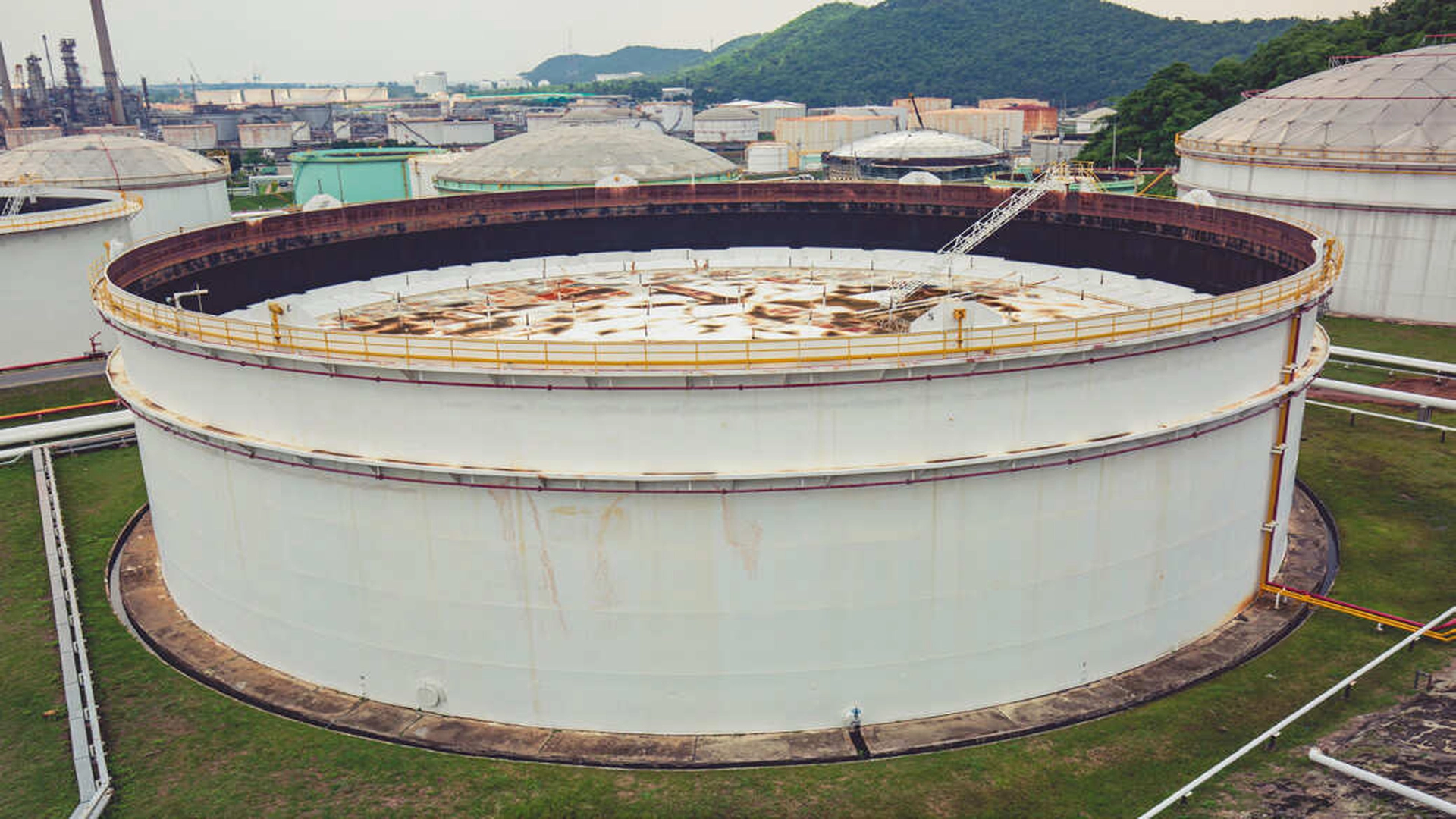
API 653 is the premier inspection and repair document used around the world. Section 6 covers what inspections are required to be performed. More importantly, Section 6 explains in detail what the Owner/Operator are responsible for during these mandatory inspections.
This article will try and explain in simple terms what exactly Owner/Operators need to do to comply with API 653 Section. Obviously, the Owner/Operator is ultimately responsible for not only the inspections of their tanks but for the physical integrity, regulatory compliance, and safe operations of the tanks.
For the Routine In-service Inspections, commonly called the monthly inspections, there is nothing the Owner/Operator is responsible for, except of course to see that the inspections are performed. These are also the only inspections that can be done by someone who is not an API authorized inspector.
These inspections say the external condition of the tank “shall be monitored by close visual inspection from the ground on a routine basis”. This just means someone needs to walk around the tank and note anything out of the ordinary. This implies that the person needs some basic understanding of what to look at.
This person also “should be knowledgeable of the storage facility operations, the tank, and the characteristics of the product stored”. This means that the person should understand what the overall operations are, have at least some basic knowledge of aboveground storage tanks (so they know what to look for), and understand the type of product store and the potential issues involved (flammable, poison, hazards, etc.).
The next inspection is the visual external by an authorized inspector. There is a calculation involved in determining how often this inspection is done based on the corrosion rate of the shell but in most cases, it is every 5 years. Insulated tanks only need enough insulation to be removed to determine the condition of the shell. The only other item specifically mentioned in this inspection is to visually check tank grounding components.
The next inspection is the first one that specifically mentions the responsibilities of the Owner/Operator. The Ultrasonic Thickness Inspection is performed on the shell to try and determine the integrity of the shell. In most cases, these ultrasonic inspections only need to be performed at the maximum interval of 15 years, based on the corrosion rate. However, it has become common for these inspections to be performed every five years along with the External Inspection.
The number and the location of these measurements “shall be determined by the owner/operator”. This means that it is the responsibility of the Owner/Operator to determine how many ultrasonic measurements are taken (one per shell course, one per sheet, five per sheet, etc.) and where (in the middle of a sheet, in a vertical line up the shell, near the stairs, in an x pattern, etc.). How many Owner/Operators have a standard for this? A better question is, how many Owner/Operators rely on what the inspection company provides to them? How many Owner/Operators even know they are responsible for this?
The next inspection is the one many people forget about. If the tank has a cathodic protection system, the system needs to comply with API 651, in both terms of what inspections are performed and how often. The Owner/Operator “shall review the survey results”. In addition, the Owner/Operator “shall assure the competency of personnel performing surveys”.
The final and often time the most important inspection of a tank, is the Internal Inspection. The intervals between these inspections are normally based on the corrosion rate of the bottom, based on my experience about 98% or 99% of the time; the other is based on corrosion of the shell.
Using the corrosion rate method, the first inspection shall not exceed 10 years unless there are some additional safeguards, such as a thicker bottom, coating, cathodic protection, a release prevention barrier, or a different material for the bottom. These safeguards, and the extra time each allows, are listed in Table 6.1 in API 653, 5th edition. These safeguards are additive, meaning that if a tank has a thin-film lining (an extra 2 years) and cathodic protection (an extra 5 years), then the tank can stay in service an additional 7 years. The initial inspections (and subsequent inspections) shall not exceed 20 years for tanks without a release prevention barrier and no more than 30 years for tanks with one.
The other option is for the Owner/Operator to use a Risk-Based Inspection (RBI), where allowed. When using an RBI, the Owner should understand the effectiveness of the techniques used and the potential damage mechanisms. In this case, the Owner/Operator is responsible for determining when the risk exceeds the acceptable criteria.
As you can see, an Owner/Operator has a lot of decisions to make when it comes to inspecting their tanks. Owner/Operators need both competent inspection companies and enough internal understanding and knowledge, either from their own employees or 3rd party consultants, to execute and sustain a well-run inspection program.
This article was developed by Earl Crochet of Crochet Midstream Consulting and published as part of the eighth issue of Inspenet Brief magazine (July 2026), dedicated to technical content in the energy and industrial sectors.