Table of Contents
Van Oord’s fleet and the results obtained at Ecowende’s Hollandse Kust West offshore wind farm confirm that the future of surveying no longer depends on constant human presence at the construction site.
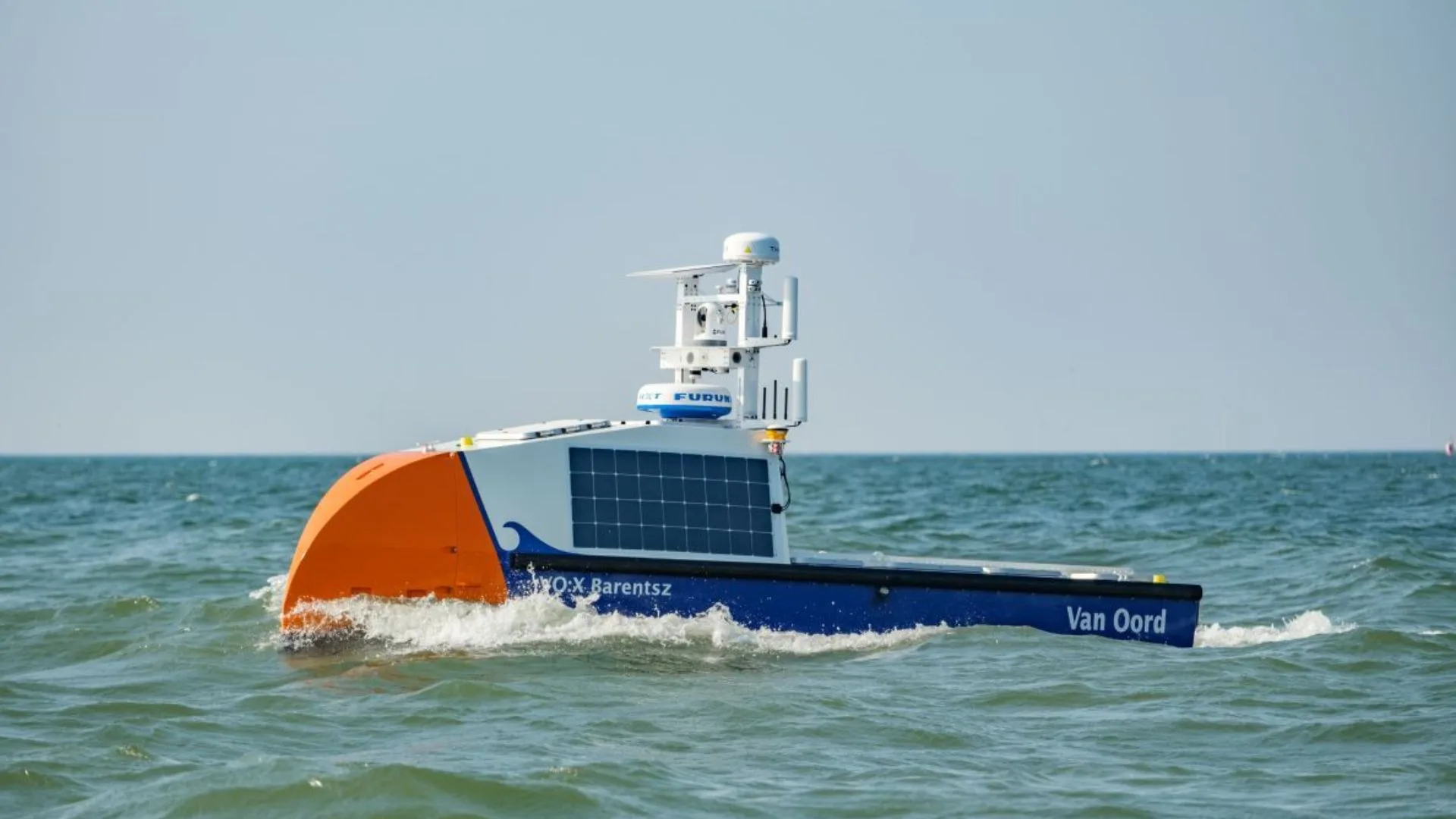
Remote operations of the VO:X Barentsz vessel
The deployment of the VO:X Barentsz unmanned reconnaissance vessel for several consecutive days represents a paradigm shift in offshore logistics. This autonomous deep-sea vessel successfully carried out its surveillance activities and worked in perfect harmony with industry giants such as the Boreas , Nexus , and Subsea Viking installation vessels.
The ability of this unmanned surface vehicle ( USV ) to maintain constant operability without returning to port is a competitive advantage that reduces downtime and optimizes the collection of critical data.
Likewise, the precision achieved in this remote survey allows for meticulous assurance of asset integrity. During the installation of monopiles and the laying of cables , the VO:X Barentsz acted as a technological sentinel, providing high-quality information on the condition of the seabed.
This methodology ensures that critical infrastructure is maintained under extremely rigorous prospecting standards, minimizing the risk of long-term structural failures in facilities as complex as those at Ecowende .
Being a compact and automated unit, fuel consumption is significantly lower compared to other survey vessels. Furthermore, workplace safety is enhanced by eliminating the need to expose operators and surveyors to the harsh conditions of the open sea.
John van der Marel, USV leader at Van Oord, noted that this operation demonstrates the system’s maturity in delivering reliable results remotely, driving constant innovation in marine surveying.
Source and photo: Van Oord