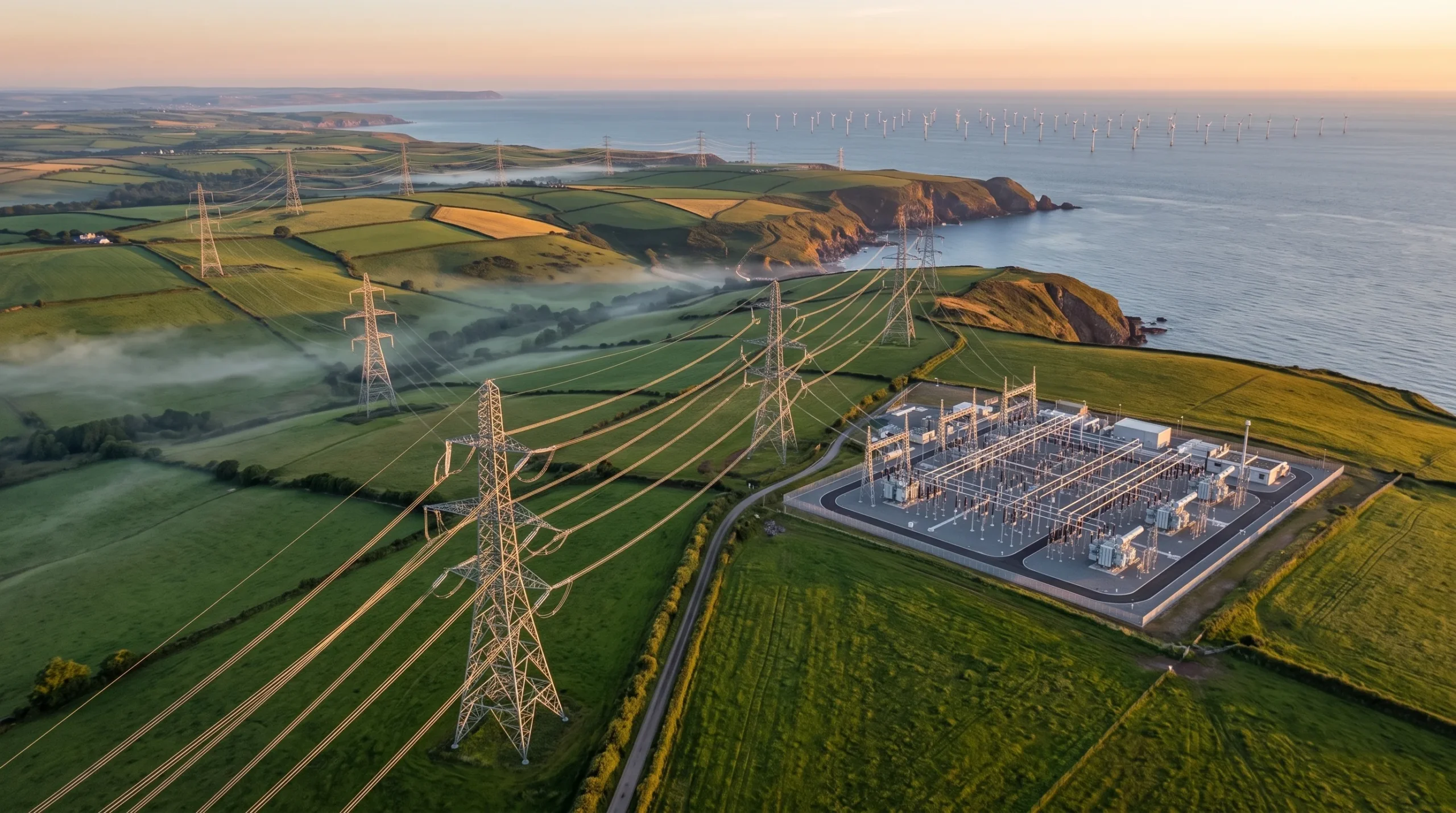
Investment in the UK power grid reaches a new record following the estimate by the National Energy System Operator (NESO), which calculates that Great Britain must allocate around £89 billion to modernize and expand its transmission infrastructure over the next decade.
The figure represents a 53% increase compared to the plan published in 2024 and is the highest estimate the energy system operator has released to date. The increase responds, in part, to new recommendations for offshore connections and the cumulative effect of inflation on construction and equipment costs.
UK power grid investment has become a priority to ensure the system’s capacity to absorb the projected growth of renewable energies and respond to the sustained increase in electricity consumption.
Investment in the UK power grid responds to increased demand
The UK power grid investment seeks to respond to the projected growth in electricity consumption driven by the electrification of transport, industrial expansion, and data centers for artificial intelligence. Without a proportional expansion of the grid, the system would accumulate increasing inefficiencies and pass additional costs on to consumers.
The Beyond 2030 report, published by NESO, identifies 43 strategic transmission projects as priorities for the period. Among the largest initiatives is a project valued at £15 billion to connect Celtic Sea wind farms to the national grid. This project alone illustrates the weight that offshore renewable energies will have in the country’s future energy infrastructure.
The integration of large-scale renewable sources requires not only new generation capacity but also transmission corridors that allow energy to be moved from production areas—coasts, windy valleys—to consumption centers. The deficit in this infrastructure is one of the bottlenecks that the 43 identified projects aim to resolve.
For NESO, the UK power grid investment will reduce connection restrictions, improve system reliability, and accelerate the incorporation of new offshore wind projects and other clean generation sources.
Ofgem approves costs passed on to domestic tariffs
Grid fees currently represent around 25% of the typical domestic electricity bill in Great Britain. Modernization costs are reviewed and approved by the regulator Ofgem, which determines how much can be passed on to final consumers. This dynamic places Ofgem at the center of the political debate on how to distribute the financial burden of the transition.
Keir Starmer’s Labour government faces pressure from the opposition regarding its clean energy goals, while simultaneously seeking to reduce electricity prices to alleviate pressure on household cost of living. The magnitude of the investment projected by NESO adds complexity to this political balance, given that a portion of the costs will end up reflected in tariffs.
The UK power grid investment also poses a regulatory challenge, as it will be necessary to balance infrastructure modernization with the economic impact these works could have on consumers and businesses.
The grid, the backbone of decarbonization
Grid modernization is not an isolated technical matter: it constitutes the physical support without which decarbonization goals cannot materialize. An insufficient transmission system can block the connection of new renewable plants even if they are built and ready to operate, a problem already affecting several European markets in the midst of the energy transition.
The plan also reflects a global trend: power grids built during the 20th century are reaching their capacity limits just as accelerated electrification demands more from them. Countries such as the United States, Germany, and several Asia-Pacific economies are experiencing similar pressures for investment in transmission infrastructure.
Various international organizations agree that the expansion of transmission grids will be one of the main enablers of the energy transition during the next decade. Without an infrastructure capable of integrating new generation sources and responding to the increase in electricity demand, decarbonization and security of supply goals will face significant operational limitations.
In the long term, the UK power grid investment will be one of the factors determining the United Kingdom’s ability to meet its electrification goals, integrate new renewable sources, and strengthen the resilience of its energy system.
For Great Britain, the ability to execute these 43 projects within the planned timeframe will depend on the speed of regulatory approval, access to long-term financing, and the availability of specialized high-voltage supply chains, a market with limited global supply.
Sources: Reuters · National Energy System Operator (NESO) · Ofgem