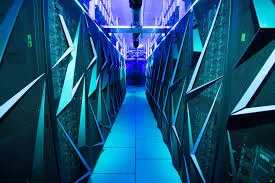
Digital transformation continues to redefine the future of the global energy industry. TotalEnergies announced the development of Pangea 5, a next-generation supercomputer designed to multiply its high-performance computing (HPC) capacity sixfold, consolidating the strategic role of artificial intelligence and advanced analytics in the energy sector.
The project will be developed in collaboration with Dell Technologies and NVIDIA, with an investment of more than €100 million. The system will be hosted at the Jean Féger Scientific and Technical Center (CSTJF), located in Pau in southern France, and is scheduled to be commissioned in 2027.
A supercomputer designed for the new energy era
Pangea 5 represents a significant technological leap for TotalEnergies’ digital operations. The new infrastructure will make it possible to accelerate complex workloads linked to seismic exploration, geological modeling, energy simulations, and advanced artificial intelligence applications.
Thanks to its enormous parallel processing capacity, the supercomputer will drive the deployment of advanced seismic engineering to improve the accuracy of subsurface imaging and accelerate the exploration of lower-cost, lower-emission energy resources.
Namita Shah, President of OneTech at TotalEnergies, noted that artificial intelligence and digital technologies are fundamental strategic drivers for the company’s energy evolution.
Artificial intelligence and HPC to transform energy exploration
The energy industry is undergoing a phase of increasing digitalization in which access to HPC systems has become a critical competitiveness factor. Technologies such as generative AI, machine learning, and advanced simulations require ever more powerful computing capabilities.
Pangea 5 will use specialized processors optimized for massively parallel computing, an architecture that significantly increases efficiency compared with previous generations of supercomputers.
NVIDIA highlighted that the platform will incorporate next-generation GPUs, CPUs, and InfiniBand networks, providing an infrastructure capable of handling extremely demanding scientific and industrial applications both now and in the future.
Dell and NVIDIA drive the new HPC infrastructure
The partnership between Dell Technologies and NVIDIA will be key to delivering the project. Dell will contribute advanced digital infrastructure capabilities, while NVIDIA will supply the accelerated processing technologies required to support the new AI and scientific simulation workloads.
Adrian McDonald, President of Dell Technologies for EMEA, emphasized that Pangea 5 will provide TotalEnergies with the computing capacity needed to accelerate discoveries, improve efficiency, and advance the global energy transition.
The collaboration also reflects how major energy companies are increasingly integrating technologies traditionally associated with the tech sector to optimize operations and accelerate innovation.
Pangea 5 and the digital future of energy
The launch of Pangea 5 confirms that high-performance computing has become an essential strategic tool for the future of the global energy industry.
The ability to process huge volumes of seismic data, complex simulations, and artificial intelligence will enable companies such as TotalEnergies to optimize exploration, production, and energy management with higher levels of precision and efficiency.
With this investment, TotalEnergies strengthens its position within the global digitalized energy ecosystem, committing to a combination of HPC, AI, and sustainability to address the energy challenges of the coming decades.
Source and photo: https://totalenergies.com/