South Korea and Japan agreed to strengthen their energy cooperation and deepen coordination on regional security matters amid growing uncertainty over global fuel supply.
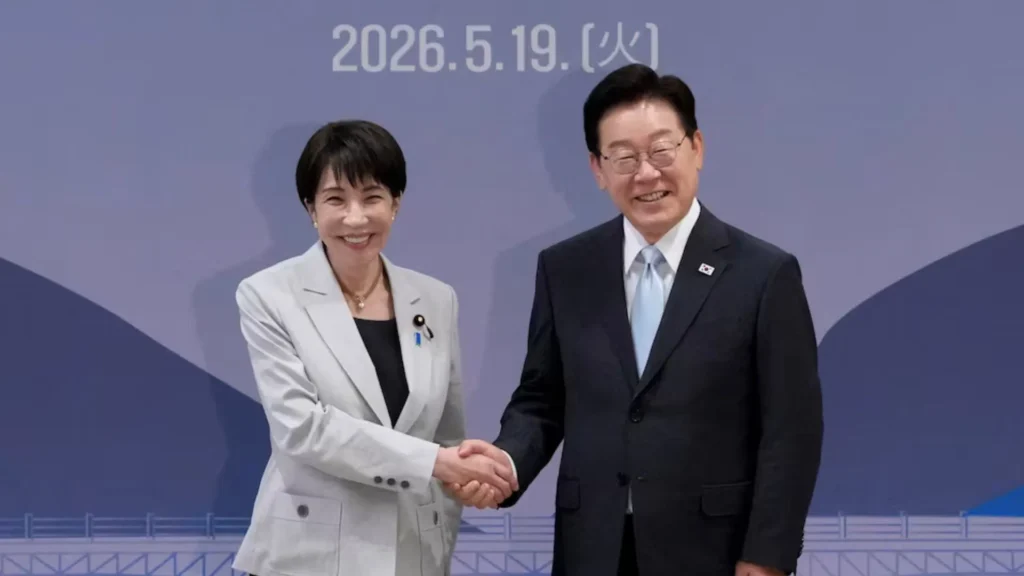
The announcement came following the meeting held in Andong between South Korean President Lee Jae Myung and Japanese Prime Minister Sanae Takaichi. Both leaders confirmed new collaboration mechanisms related to the supply of LNG, crude oil, and refined products.
Likewise, the governments agreed to advance strategic storage schemes and petroleum product exchange to strengthen the energy resilience of their import-dependent economies.
Middle East Volatility Drives New Energy Agreements
Pressure on international markets stemming from the Middle East conflict has heightened concern among several Asian economies regarding potential disruptions in energy supply chains.
Faced with this scenario, South Korea and Japan seek to stabilize access to critical fuels through bilateral cooperation agreements and greater regional coordination in the Indo-Pacific.
Lee noted that recent instability in energy markets demonstrated the need to maintain close cooperation between both nations to ensure energy supply and protect logistics chains.
For her part, Takaichi explained that the new bilateral initiative includes mutual exchange mechanisms for crude oil, refined products, and liquefied natural gas. It also includes the strengthening of strategic energy reserves in the region.
Regional Security and Trilateral Cooperation with the United States
In addition to the energy component, both leaders reaffirmed their intention to strengthen security coordination together with the United States.
The trilateral cooperation seeks to respond to regional challenges linked to North Korea and geopolitical tensions in Asia-Pacific.
Lee emphasized that security talks at the vice-ministerial level represent an important step toward institutionalizing defense dialogue between Seoul and Tokyo.
The meeting in Andong marked the sixth encounter between both leaders since Lee came to power and the second held this year under the “shuttle diplomacy” framework, a mechanism aimed at increasing political and economic contact between both countries.
Bilateral Relations Expand Toward Technology and Economic Security
In recent years, South Korea and Japan have intensified their coordination despite historical disputes that have conditioned the bilateral relationship.
Currently, both governments prioritize areas linked to economic security, artificial intelligence, advanced technological cooperation, and regional stability.
The leaders also emphasized that reciprocal visits to their hometowns reflect an increase in political trust and an expansion of cooperation beyond the capitals.
As part of the diplomatic agenda, Lee and Takaichi participated in cultural activities and protocol meetings aimed at strengthening bilateral ties between both Asian countries.
Source and photo: Reuters