Table of Contents
The company Saitec Offshore Technologies has launched a new phase of environmental testing on the DemoSATH floating wind demonstrator through the DemoSATH Lab program. This initiative uses the operational infrastructure as a full-scale test bed to analyze interactions in the marine environment and promote compatibility with the ecosystem.
The implementation of DemoSATH and marine biodiversity
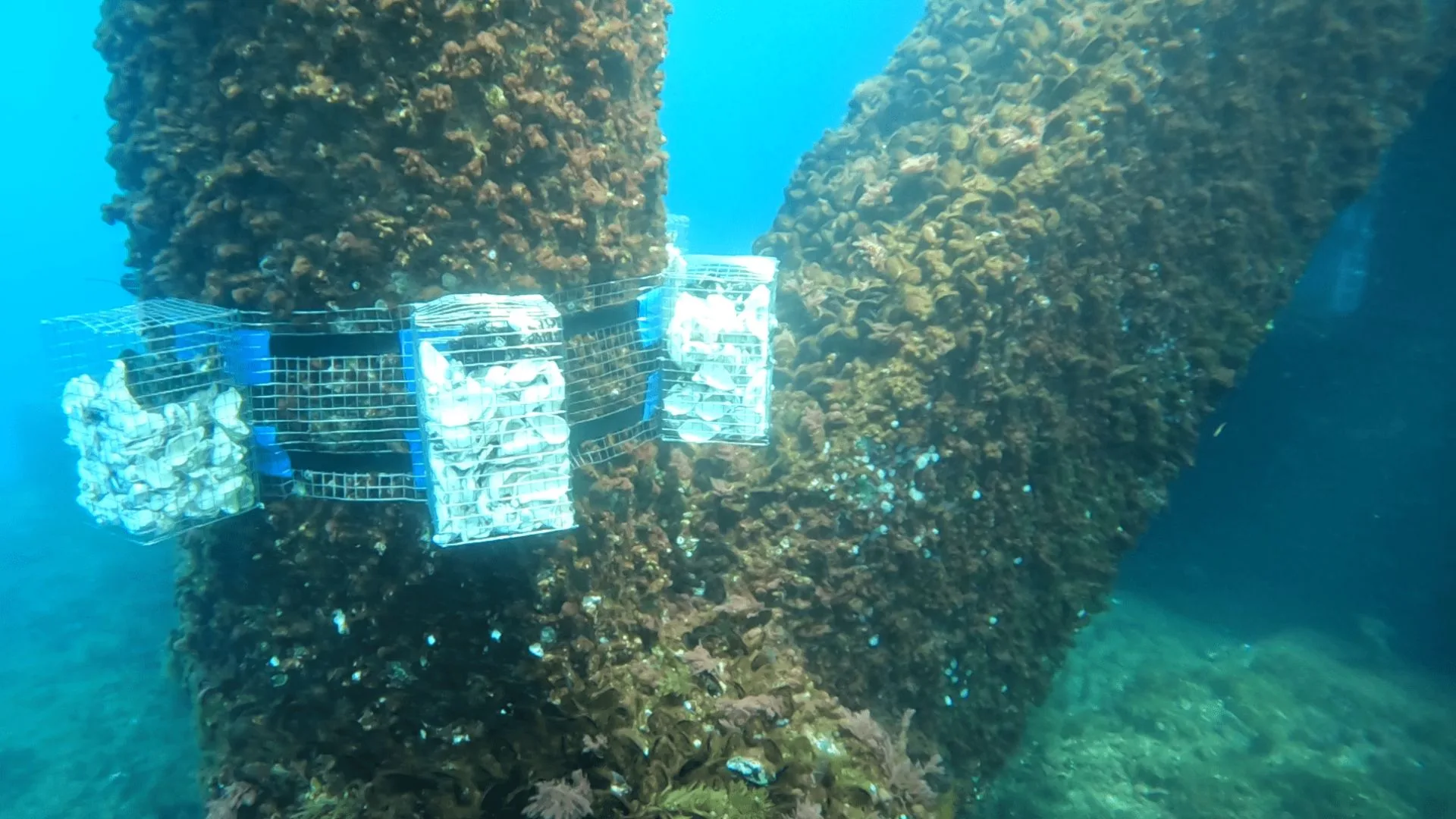
The AQUASATH project involves the incorporation of nature-inclusive design elements adapted to the structure’s underwater columns. These components include shell and mussel fillings aimed at creating microhabitats, offering refuge, feeding, and growth areas for various marine species around the floater.
Furthermore, the initiative evaluates the technical feasibility of the simultaneous cultivation of biological species to study the shared use of marine space between offshore energy production and aquaculture activities.
In this regard, the trial uses a main line equipped with lantern nets, collectors, and specific ropes for the development of European flat oyster (Ostrea edulis), pullet carpet shell (Venerupis corrugata), mussels, and algae of the genus Ulva.
First, the initial phase of the project required the collection of live material and the temporary installation of the structures in a mussel raft before their final transport to the open sea. Each element received precise identification via a numerical code, a color badge, and a record of its biological function to ensure complete traceability in the distribution plan.
Subsequently, the components were removed from the support raft and transferred to the open sea for submerged assembly on the DemoSATH platform. Likewise, the naval maneuver required the coordinated intervention of professional divers, technical mooring personnel, and specialized support vessels.
Finally, Saitec Offshore Technologies managed the operational protocol and documentary control of the activities, with the biological supply from Mar Ceibe and technical assistance from the Kardala Institute during the preliminary suspension.
In this way, the company Kotazero executed the immersion and underwater fastening work on the platform, while the company Amarradores de Santander provided the main vessel and mooring logistics.
Source and photo: Saitec Offshore Technologies