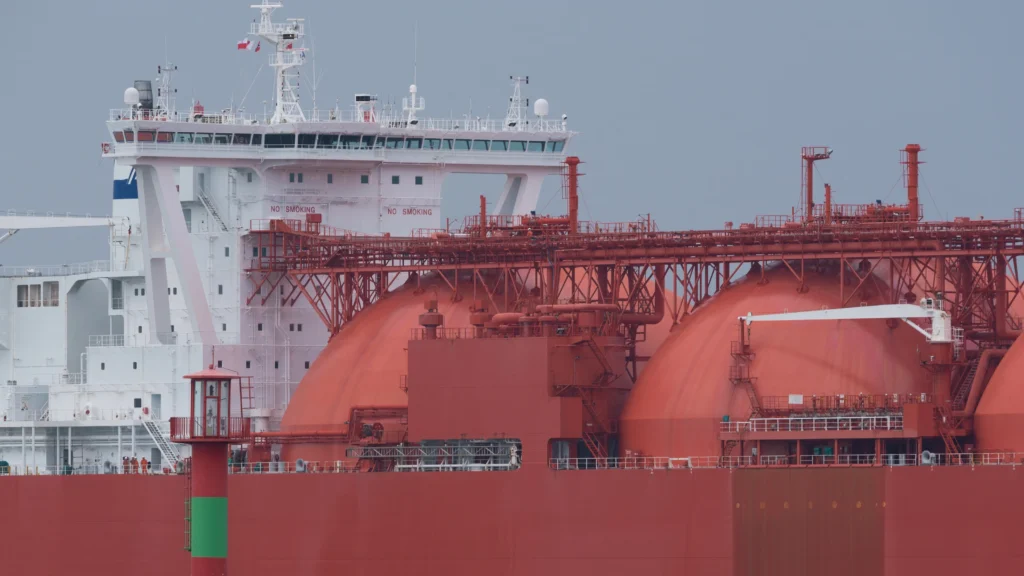
Six LNG carriers empty spaces advance towards Qatar while QatarEnergy evaluates the necessary conditions to recover its liquefied natural gas exports through the Strait of Hormuz.
The movement of these vessels toward the Gulf represents a further indication of Qatar’s preparations to resume its LNG shipments. The ships are currently in or approaching the Gulf of Oman, while Qatar Energy closely monitors the security situation along one of the most important shipping routes for global energy trade.
According to maritime tracking data from Kpler cited by Bloomberg, the six LNG carriers have links to Iran, this is in addition to another vessel that recently crossed the Strait of Hormuz bound for the Qatari coast.
The arrival of empty ships could indicate that Qatar Energy is preparing to carry out new cargoes, however, these movements do not yet represent a formal and sustained resumption of exports to international markets.
Qatar Energy prepares its fleet for new LNG cargoes
At the end of July, QatarEnergy it managed to send a shipment of LNG through the Strait of Hormuz, the operation came weeks after one of its LNG carriers was involved in an incident while transiting this waterway.
The vessel remained in the area for part of July before finally completing the crossing with its geolocation systems activated. Despite this transit, Qatar’s regular LNG exports have not yet returned to normal.
Now, the deployment of several LNG carriers to the region has once again put the spotlight on Qatar’s logistics chain. Should sailing conditions improve, Qatar will need to have enough vessels available to transport the LNG loaded at Ras Laffan.
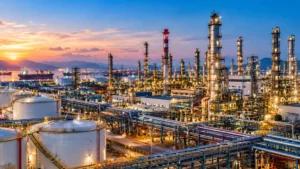
This terminal plays a crucial role in international energy trade, before the conflict, Ras Laffan was among the world’s leading LNG export centers.
Hormuz continues to condition Qatar exports
Maritime security remains the primary factor limiting the recovery of Qatari exports, Qatar declared force majeure following Iranian attacks on the Ras Laffan complex. QatarEnergy had also previously reduced its production before one of its LNG facilities was hit by Iranian missiles.
Subsequently, the company informed its customers that it could recover approximately 50% of its production capacity during the first month following the restoration of safe navigation Ormuz the recovery could increase to approximately 80% within two months.
However, the security of the strait remains an indispensable condition, new attacks on tankers and the exchange of military actions between Iran and the United States keep uncertainty high for shipowners, exporters and energy buyers.
Qatar seeks to maintain the movement of its LNG shipments
Despite the restrictions, Qatar has continued to load some LNG carriers, although it has not yet managed to restore a regular flow of vessels out of the Gulf.
The situation has led Qatar Energy and shipping operators to resort to alternative logistics solutions. During August, the following were recorded, LNG transfers between ships off the coasts of Oman and the United Arab Emirates, allowing certain shipments to continue on to Asian markets.
These operations, known as ship-to-ship, are more complex than conventional oil transfers, LNG must be kept at temperatures close to-162 °C therefore, specialized cryogenic equipment, trained personnel, and precise coordination between vessels are required.
Furthermore, each transfer can add several hours to the process and increase transportation costs, for this reason, this type of operation primarily serves as a temporary solution while restrictions in Hormuz persist.
Ras Laffan depends on safe passage through Hormuz
Qatar’s geographical location also limits the available options for transporting its LNG to major international markets. Shipments departing from Ras Laffan they must necessarily cross the Strait of Hormuz to join the main maritime routes to Asia and other destinations.
This dependence makes the security of the Strait a decisive factor for the recovery of Qatari exports, for now, the movement of six LNG carriers toward Qatar points to logistical preparations by Qatar Energy. The evolution of security and maritime traffic in the Strait of Hormuz will determine whether these operations ultimately lead to a sustained recovery of LNG exports.
Source: Oil Price
Photo: Shutterstock