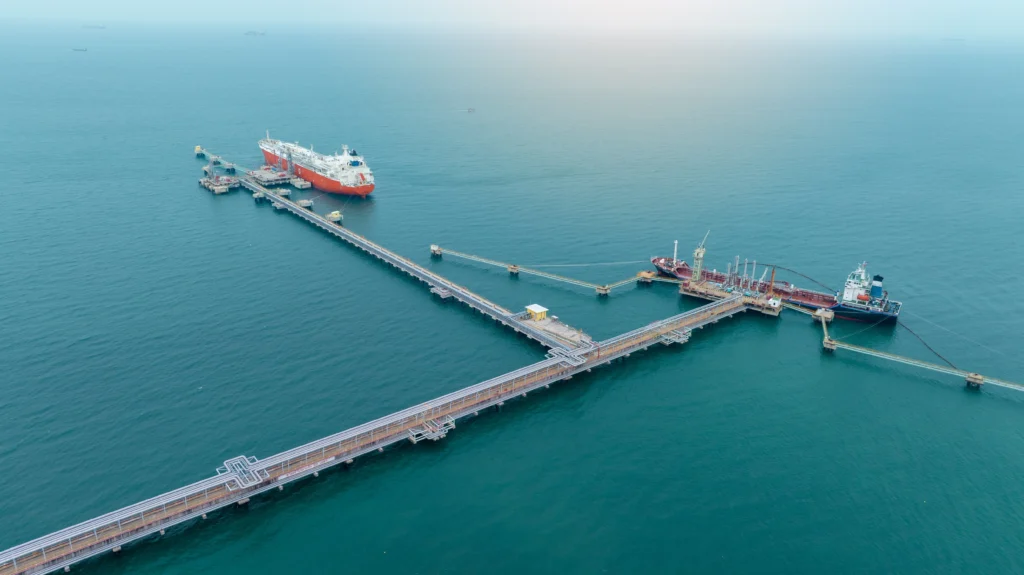
The oil prices remained relatively stable on Tuesday, as investors weighed two opposing factors, the recovery of crude oil exports from the Middle East and the risk of further supply disruptions due to the regional conflict.
At 10:22 GMT, the futures of Brent crude oil for November, prices fell 0.23% to $105.04 per barrel West Texas Intermediate (WTI) Meanwhile, it fell 0.36% to $92.24 per barrel.
Despite the slight decline during the day, both benchmarks had accumulated significant gains during September. Brent was on track to close the month with an advance of nearly 16%, while WTI registered an increase of around 8%.
Middle Eastern crude oil exports show recovery
Physical flows of oil from the region are beginning to recover, with exports from major producers of Middle East they reached 12.8 million barrels per day in September the highest level since February, according to preliminary data from Kpler. Saudi Arabia and the United Arab Emirates were behind much of this increase.
However, the increase in volumes does not mean that market conditions have returned to normal, some shipments still depend on alternatives such as ship-to-ship oil transfers, operations that add logistical complexity and raise transportation costs.
Tim Waterer, chief analyst at KCM Trade, pointed out that these procedures are less efficient and more costly than conventional trading. This helps explain why the crude oil prices they remain high despite the increase in exports.
Saudi Arabia regains a crucial route for its shipments
Saudi Arabia it also resumed oil loading from Yanbu, its Red Sea port, after recovering operations of the East-West pipeline.
This infrastructure provides the kingdom with an alternative route for transporting crude oil without relying exclusively on the Strait of Hormuz. Its restoration expands logistical options for Saudi exports at a time when key energy routes in the Middle East remain under close scrutiny.
The operation of these routes is especially relevant to the market due to the strategic role that the Strait of Hormuz plays in the international transport of oil.
The oil market remains focused on the United States and Iran
Meanwhile, representatives of USA and Iran held separate contacts with mediators amid diplomatic efforts related to the conflict, according to information gathered by the sources consulted.
Operators are closely monitoring these discussions due to their potential implications for the safety of shipping routes and the availability of oil and refined products.
Donald Trump stated that he had not offered concessions to Iran to end the conflict, and also rejected reports about a possible easing of sanctions and the release of frozen funds in exchange for measures related to the Iranian nuclear program.
In this scenario, the market continues to assess diplomatic signals along with the evolution of actual oil flows from the region.
Brent and WTI oil prices amid supply risks
The situation with refined products adds another element of pressure, the United States is considering regulatory changes related to the marketing of red-tinted diesel as a possible measure to contain prices.
US inventories could also provide new clues about market behavior, a preliminary Reuters survey pointed to a weekly decline in crude oil and gasoline stocks, while distillate inventories were expected to remain virtually unchanged.
Thus, oil prices continue to fluctuate between two forces, the recovery of supply from the Middle East and the lingering risks surrounding major supply routes. Increased exports are easing some of the immediate pressure, but higher logistics costs and regional uncertainty continue to weigh on Brent and WTI.
Source: Euronext
Photo: Shutterstock