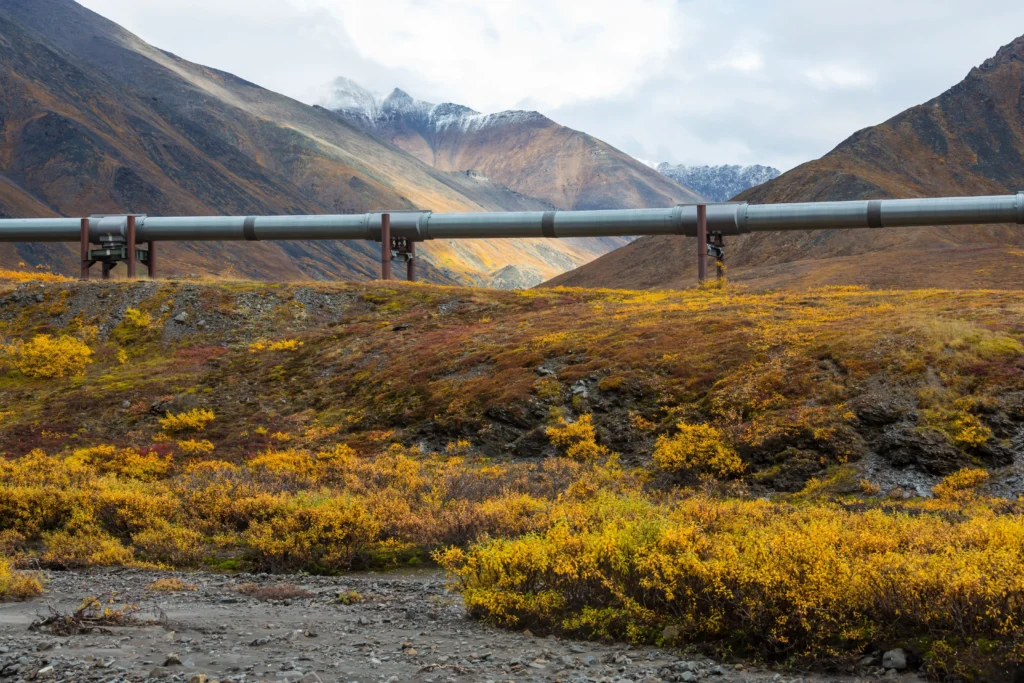
The proposed Canada-US pipeline project South Bow Corp y Bridger Pipeline to transport crude oil from Alberta to Wyoming is getting closer to becoming a reality. Both companies have secured preliminary transport commitments from oil producers that would exceed 400,000 barrels of crude oil per day, a volume considered crucial for moving forward with construction.
Currently, the proposed pipeline would have an initial capacity of 550,000 barrels per day with the possibility of expanding to exceed 1.13 million barrels per day in later phases.
South Bow and Bridger seek to overcome the trade threshold
According to sources close to the process, the companies promoting the project intend to reach approximately 450,000 barrels per day in long-term contracts, a volume that represents around 80% of the pipeline’s initial capacity. This is a common reference point used by traders to approve multi-million dollar investments in energy infrastructure.
Among the companies that have reportedly shown interest are:
- Cenovus Energy.
- Canadian Natural Resources Ltd.
- Tamarack Valley.
- Whitecap Resources.
- Strathcona Resources.
Why is this oil pipeline relevant?
Canada is the world’s fourth largest oil producer (approximately 5.5 million bpd) and urgently needs more pipelines to export its crude. A lack of capacity has hampered its production for years. The project will allow them to:
- Increase Canadian exports to the U.S. by more than 12%.
- Terner is an economical option for carriers.
- Reaching Guernsey (Wyoming), although from there additional connections would be needed to refining centers such as Cushing (Oklahoma) or the Gulf Coast.
Relationship with Keystone XL
One of the most relevant aspects of the project is that it would reuse approximately 150 kilometers of the already built infrastructure of the cancelled Keystone XL in Canadian territory.
The new route, however, would take a different path within the United States. Bridger Pipeline would construct a system of approximately 645 miles from Montana to Wyoming, utilizing existing energy corridors, a strategy that could facilitate obtaining regulatory permits.
The idea resurfaced after President Donald Trump recently signed an executive order granting the necessary cross-border permit for the project. The decision marks a stark contrast to the Joe Biden administration, which formally canceled Keystone XL in 2021 due to environmental concerns.
Doubts persist about the final destination of the crude oil.
Although the project is gaining commercial support, some analysts caution that Guernsey, Wyoming, is not a major final refining hub. Therefore, additional infrastructure would be needed additional connections toward energy hubs such as Cushing, Oklahoma, Patoka, Illinois, and the U.S. Gulf Coast.
Despite these questions, industry specialists believe the project represents one of the most competitive options for adding new capacity oil transport in North America before the end of the decade. Market expectations indicate that infrastructure demand will continue to grow even amid geopolitical and regulatory uncertainties.
Source: Reuters