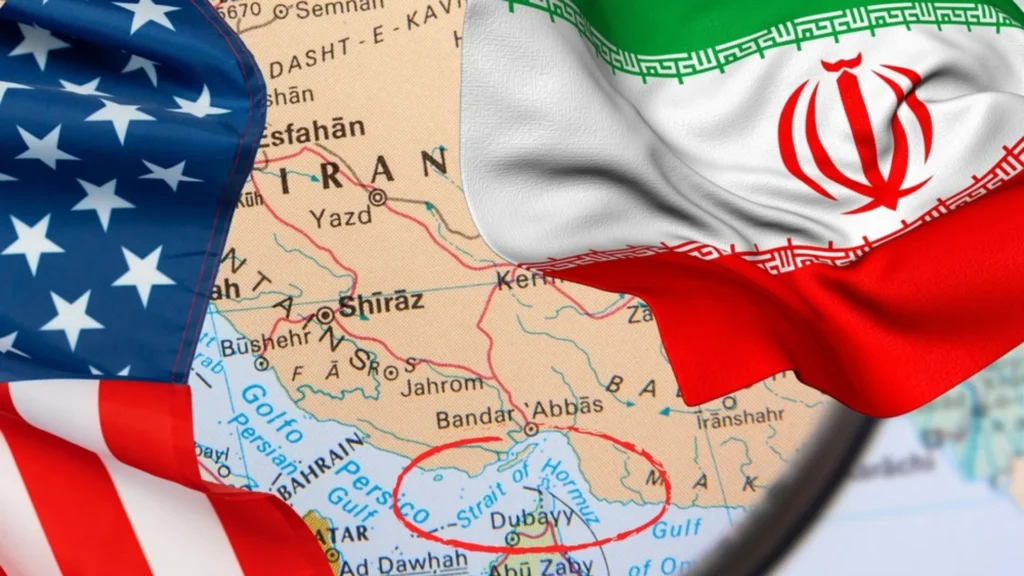
The announcement of a naval blockade on Iran by the U.S. government has raised alarms in the global energy market, particularly due to its direct impact on oil flow through the strategic Strait of Hormuz.
The measure seeks to restrict maritime traffic linked to Iranian ports, which could remove approximately two million barrels per day of crude from the market. This disruption follows the failure of negotiations between Washington and Tehran, escalating tensions in one of the world’s most sensitive trade routes.
A Naval Blockade on Iran with High Operational Risk
According to U.S. Central Command, the restriction will apply only to vessels originating from or destined for Iran, in an attempt to maintain freedom of navigation for other international traffic crossing the strait.
However, implementing this measure poses logistical and military challenges. Monitoring, identifying, and intercepting vessels in a highly congested area increases the risk of incidents, especially given Iran’s warnings of retaliation.
Likewise, maritime security experts warn that such operations may lead to confrontations or attacks on energy infrastructure in the Persian Gulf.
Direct Impact on Global Crude Supply
The blockade could disconnect a significant source of energy supply. Iran has maintained exports close to 1.7 million barrels per day in 2025, with recent peaks above that figure.
Additionally, there is a significant volume of oil stored on vessels, with more than 170 million barrels floating in the region. This inventory could partially cushion the initial impact, although it does not compensate for a prolonged disruption.
Consequently, the supply reduction adds pressure on oil prices, which have already shown volatility following the announcement.
The Strait of Hormuz: Critical Point of Energy Trade
The Strait of Hormuz remains a key bottleneck for hydrocarbon transport. Approximately 20% of the world’s oil and gas transits through this maritime route.
Currently, traffic in the area has decreased significantly. Numerous tankers have avoided crossing the strait, while others have changed routes or remain anchored amid the uncertainty.
This situation affects not only Iran but also Gulf producers such as Iraq, Kuwait, and the United Arab Emirates, whose shipments depend on this route.
Asia, Primarily Affected by the Disruption
The greatest impacts are concentrated in Asia, the primary destination for crude oil crossing the strait. China and India stand out among the most exposed importers.
Before the conflict, China absorbed most of Iranian oil. India, meanwhile, had recently resumed imports following relaxations in sanctions.
If the blockade continues, these countries could face increases in energy costs and adjustments in their supply chains.
Source: Reuters
Photo: Shutterstock