FST presents vertical manufacturing for tanks at NISTM 2026
During NISTM 2026, one of the topics that generated the most attention among manufacturers and operators in the sector was the need to optimize the construction of industrial tanks through vertical manufacturing technologies in the face of increasingly complex challenges. The pressure to reduce production times, improve safety, and increase operational capacity is leading many companies to rethink their manufacturing processes.
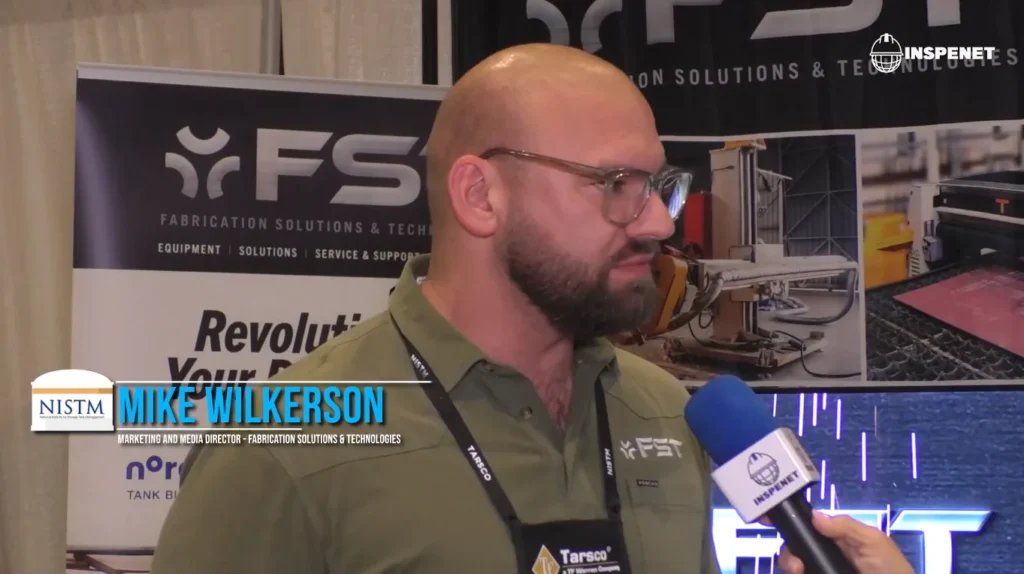
In this context, FST Fabrication Solutions & Technologies presented solutions focused on vertical integration, automation, and integrated workflow design for steel and industrial tank manufacturing. Mike Wilkerson, the company's Director of Marketing and Media, explained how these technologies are helping to transform traditional production methods within heavy industry.
The company, headquartered in Texas with a presence throughout North America, specializes in the sale and support of metal manufacturing machinery. Its offerings focus on solutions for rolling, welding, automation, and tank construction, along with technical support throughout the equipment's lifespan.
Vertical manufacturing to reduce operational complexity
One of the central points of FST's presentation at NISTM 2026 was the role of vertical manufacturing in industrial tank construction. As Wilkerson explained, this type of system allows for a significant change in how large metal structures are assembled.
Traditionally, tank plate rolling is performed horizontally. This method forces operators to constantly work against gravity, in addition to requiring internal supports and extra maneuvers during welding. Vertical manufacturing aims to eliminate many of these operational limitations.
The systems showcased by FST allow for vertical assembly of the tank plates, simplifying the process and reducing the need for temporary structures within the tank. For larger-scale applications, the company also incorporates solutions capable of elevating the construction system to build the tank from the top down.
This approach is particularly relevant for large-scale projects where transporting complete structures presents a significant logistical challenge. The ability to manufacture directly on-site reduces complex movements and allows for faster completion of various construction phases.
Furthermore, vertical construction improves working conditions during the welding and assembly process. By reducing manual handling and simplifying certain operations, companies can achieve more controlled and safer processes.
Within sectors such as energy storage, petrochemicals and industrial manufacturing, this type of solution is beginning to gain ground due to the need to increase production capacity without proportionally increasing operating resources.
Automation and digital controls in steel manufacturing
Another key topic discussed during the interview was the integration of automation and digital controls into steel manufacturing processes. For FST, this shift represents one of the most significant factors in the evolution of industrial manufacturing.
Wilkerson explained that many operations historically relied on operators with extensive practical experience and knowledge acquired over years of work. This reliance made it difficult to bring in new workers and limited the ability to increase production quickly.
Automation reduces some of that dependence through more repeatable and standardized processes. Digital controls enable new operators to adapt more quickly to complex manufacturing tasks, especially in large-scale production environments.
In the construction of industrial tanks, precision is crucial for maintaining consistency in welding, alignment, and component assembly. Therefore, automated systems help reduce variations and improve operational stability during demanding projects.
Likewise, digitalization allows for optimized response times within the plant and simplifies various production processes. For manufacturers facing a shortage of skilled labor, these tools have become a relevant alternative for maintaining competitiveness.
Automation also directly impacts industrial safety. By reducing certain manual tasks and simplifying complex movements during assembly, companies can minimize operational risks in heavy manufacturing projects.
Over the past few years, the metal fabrication industry has increased its adoption of technologies related to process integration, intelligent controls, and automated systems. At events like NISTM 2026, this trend was reflected in the growing focus on solutions that can improve productivity without sacrificing technical precision.
Integrated workflow design gains prominence
In addition to automation, FST emphasized the importance of integrated workflow design in industrial tank manufacturing. For the company, efficiency no longer depends solely on acquiring advanced machinery, but on ensuring that each stage of production functions in a coordinated manner.
As Wilkerson explained, integrating processes allows for reduced operational needs, optimized resources, and simplified manufacturing phases. This includes everything from rolling and welding to material handling and final assembly.
The goal is to create a more seamless production environment where different technologies work together seamlessly. This integration helps reduce disruptions and allows plants to increase production capacity more effectively and reliably.
In large-scale industrial projects, even small delays can have significant impacts on time and costs. Therefore, more and more manufacturers are seeking solutions that improve operational continuity and maintain consistent performance levels.
Within this scenario, vertical manufacturing is integrated as part of a broader ecosystem focused on industrial efficiency and resource optimization.
Technical service and long-term support
Beyond the technological component, FST highlighted another element that it considers key within its business model: permanent technical support.
Wilkerson noted that many companies make significant investments in industrial machinery, but subsequently face difficulties obtaining prompt assistance when operational problems arise. This situation can lead to extended periods of downtime and disrupt production continuity.
Given this scenario, FST is committed to providing technical support throughout the equipment's lifespan. The company offers service, maintenance, and operator training, as well as ongoing assistance once the machinery is installed.
For the company, service is a core part of its offering in the industrial manufacturing market. Beyond simply selling equipment, the goal is to work alongside the customer to ensure that the solutions remain operational and productive in the long term.
This approach also seeks to facilitate the adoption of new technologies within industrial plants undergoing modernization and automation processes.
Vertical manufacturing is gaining ground in the industry
FST presence at NISTM 2026 highlighted how vertical manufacturing and automation continue to position themselves as strategic tools within the construction of industrial tanks.
As the industry seeks to increase productivity, improve safety, and address the shortage of skilled personnel, integrated solutions are beginning to play an increasingly important role in heavy manufacturing processes.
Within this context, technologies focused on vertical construction, digital controls, and on-site manufacturing are marking a significant evolution in the way large-scale industrial projects are developed.
For more content about NISTM 2026, visit our LinkedIn profile.
Source: Inspenet.