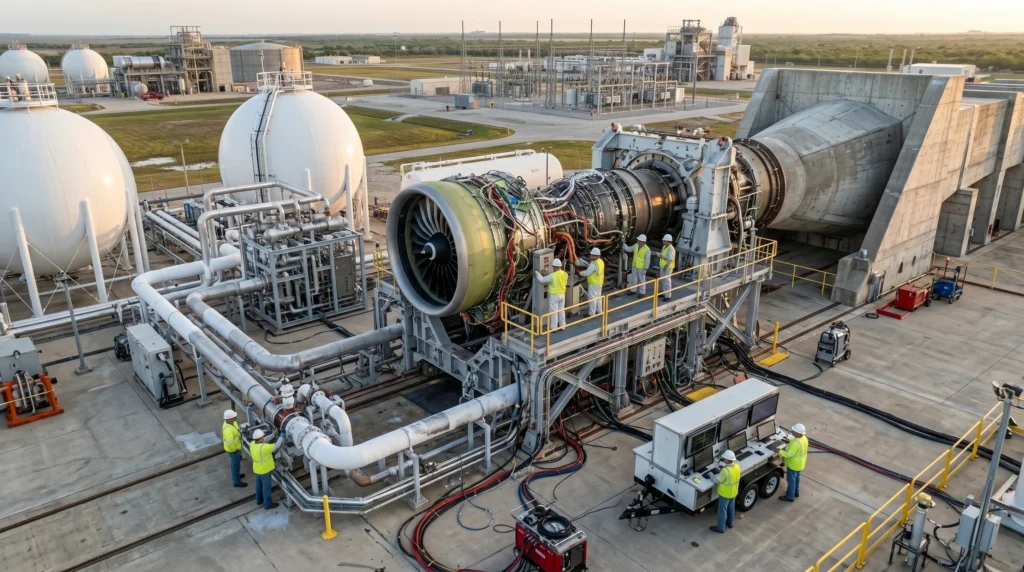
The hydrogen engine took a significant step towards commercial viability after an unprecedented test in which a modern aircraft engine operated on 100% hydrogen and reached maximum takeoff power. Beyond the propulsion system’s performance, this advancement validated materials and components subjected to cryogenic temperatures and high-pressure hydrogen environments, two of the main challenges for the safe development of this technology.
Hydrogen Engine Reaches Maximum Power in Tests
The test program was developed by Rolls-Royce and easyJet as part of an initiative aimed at demonstrating hydrogen’s potential as an aviation fuel. During tests conducted at NASA’s Stennis Space Center in Mississippi, a modified version of the Rolls-Royce Pearl 15 engine completed a simulated flight cycle, including start-up, takeoff, cruise, and landing, using exclusively gaseous hydrogen.
The campaign represents the culmination of several years of work that began with conceptual tests in the UK and evolved into progressive system and component evaluations before reaching a full-scale engine demonstration.
Materials Under Cryogenic and High-Pressure Conditions
Although the performance of the hydrogen engine was a central element of the test, a fundamental part of the project focused on understanding how materials respond to the extreme conditions associated with hydrogen use.
To achieve this, new testing capabilities were developed to reproduce cryogenic temperatures and high-pressure hydrogen environments, conditions that can significantly affect the mechanical behavior of metals and alloys used in propulsion systems.
The data obtained allowed for the evaluation of phenomena associated with the mechanical strength, structural integrity, and operational safety of components exposed to hydrogen for long periods of service.
Hydrogen Embrittlement Remains a Challenge
One of the main challenges for the aerospace industry is ensuring that materials maintain their mechanical properties when operating in continuous contact with hydrogen.
So-called hydrogen embrittlement can reduce the ductility and strength of certain metallic materials, creating potential risks for components subjected to high stresses. Therefore, experimental validation of materials remains an indispensable stage before any commercial deployment of engines powered by this fuel.
The information generated during the program contributes to establishing more robust design criteria for future generations of aeronautical turbines.
Hydrogen Gains Ground in Aviation Decarbonization
The aviation sector considers hydrogen as one of the alternatives with the greatest potential for reducing carbon emissions in long-haul flights. However, its adoption requires simultaneous advancements in storage systems, refueling infrastructure, materials, and propulsion technologies.
The test conducted demonstrates that progress is no longer limited to conceptual studies and is beginning to translate into real-scale validation programs, bringing closer the possibility of incorporating hydrogen-powered engines into future commercial aircraft platforms.
Materials Testing Accelerates Technological Development
Beyond the engine’s result, the campaign confirms the importance of advanced materials testing in the development of emerging energy technologies.
The ability to evaluate components under cryogenic conditions and high-pressure hydrogen environments provides critical information for designing safer, more efficient, and more reliable equipment—an indispensable requirement for the hydrogen engine to evolve from the experimental phase to future large-scale commercial applications.
Source: Aerospace Testing International / easyJet