Table of Contents
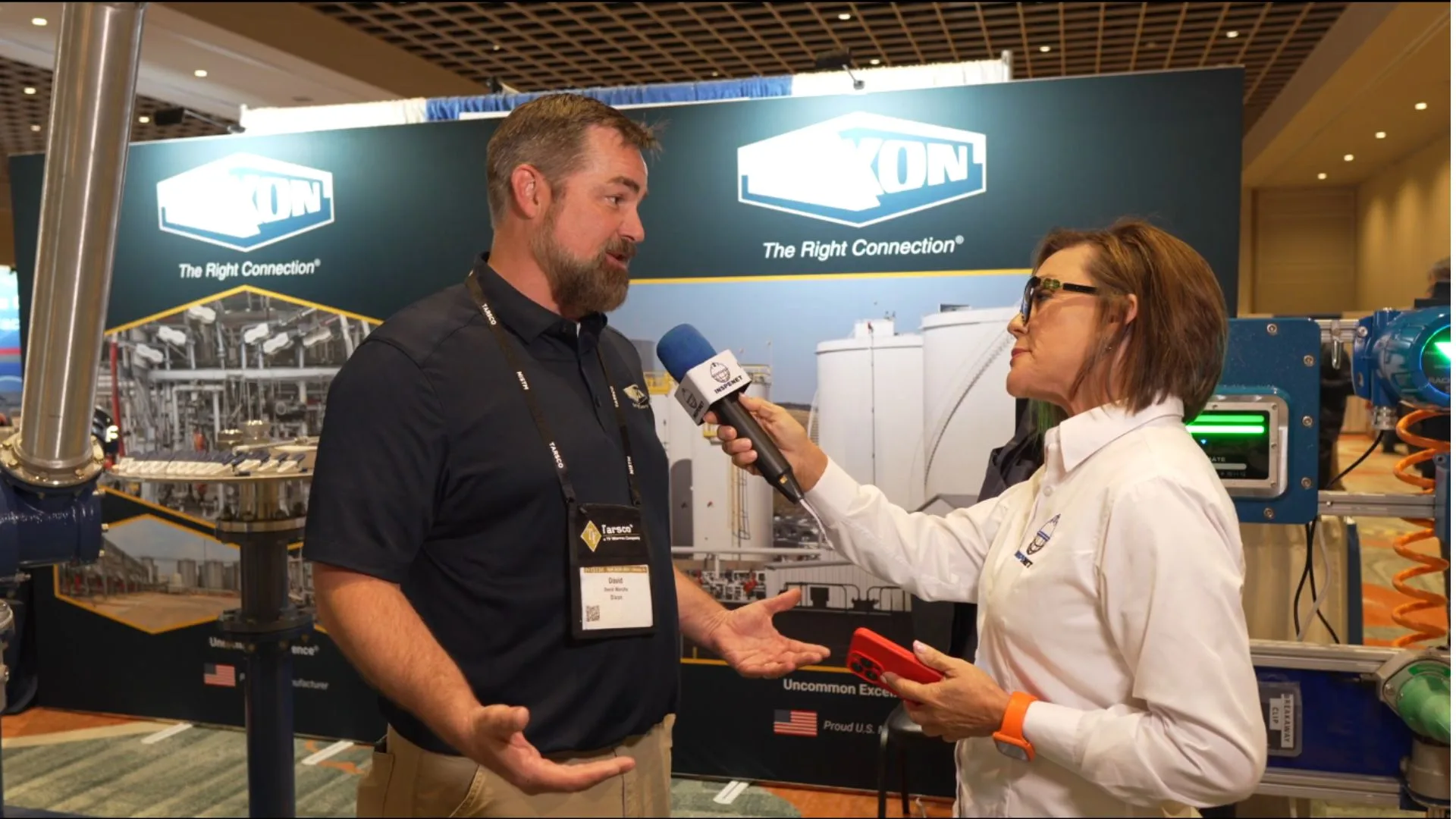
During the National Institute of Storage Tank Management (NISTM) event, David Murphy, a terminals specialist from Dixon Valve, explained how the company has built its reputation over more than a century of experience. Founded in 1916, the company manufactures fittings, valves, and fluid transfer solutions for multiple industries.
Murphy emphasized that the combination of product quality and customer service remains the company’s core focus and is what allows Dixon to remain a benchmark in safe and reliable industrial connections.
Hoses vs. loading arms
The interview addressed hose failures, one of the most critical points in industrial operations, as hoses are prone to risks associated with wear, sealing, and material compatibility. In response, Dixon proposes the use of loading arms, which eliminate the need for hoses when working with closed piping systems. This significantly reduces points of failure during fluid transfer, especially in plants and fuel terminals.
However, Murphy clarified that hoses remain a valid option. Their main advantage is operational flexibility, facilitating connections in applications such as aviation. In contrast, pipes offer greater durability and require less frequent replacement.
Furthermore, the specialist emphasized that the key to any system is ensuring proper sealing and material compatibility. These factors determine performance and safety in transfer processes, regardless of the system used.
Innovation with breakaway systems
In terms of innovation, the company unveiled a new breakaway system for load racks. This emergency disconnect device is designed to prevent accidents in case of power surges or unexpected movements during operation.
According to Murphy, this is a recent solution on the market, focused on improving operational safety in industrial facilities. Furthermore, Dixon continues to develop similar systems for loading arms, expanding its portfolio of solutions.
Source: INSPECTION