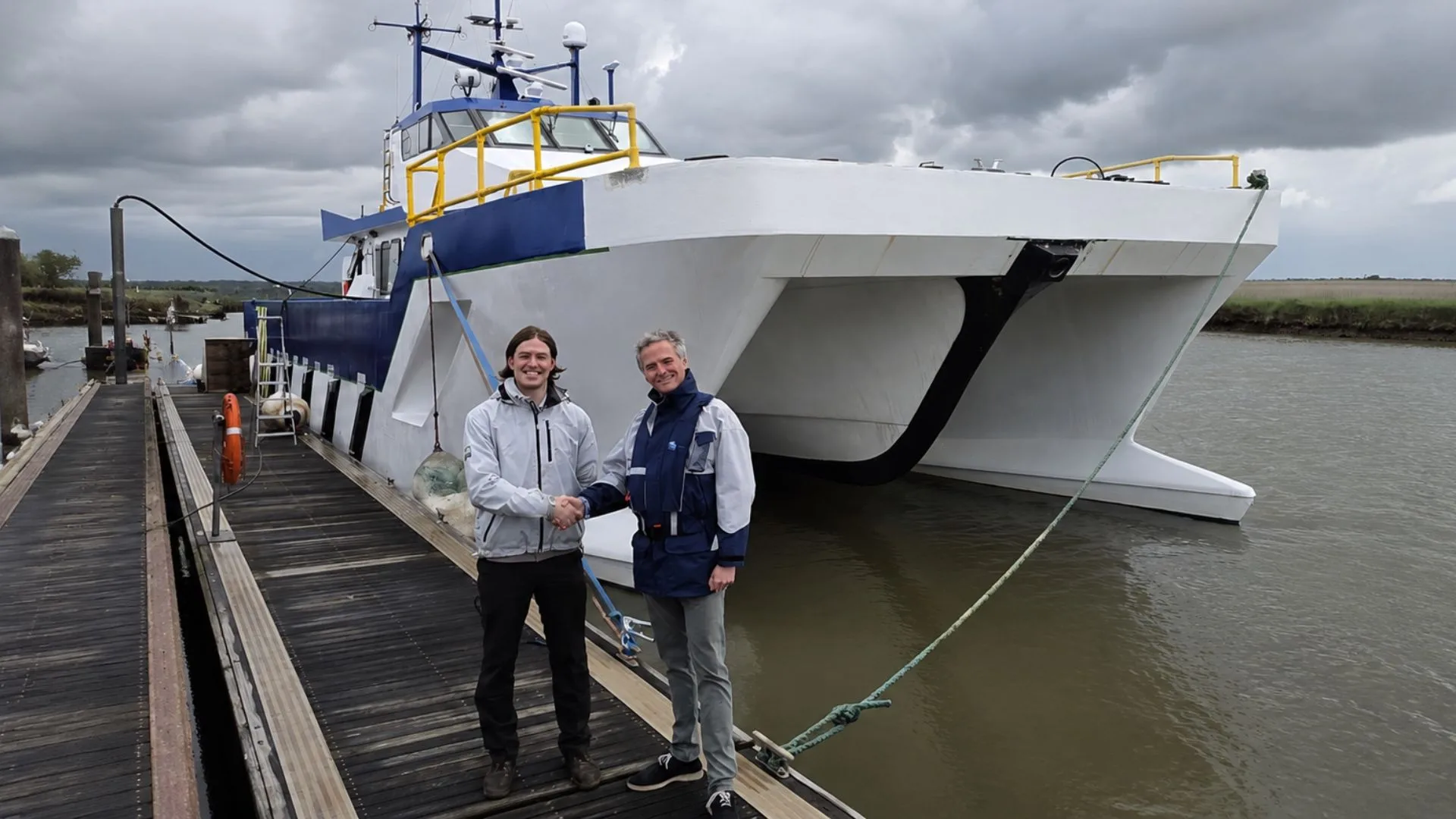
Maritime electrification continues to gain ground in the offshore sector with Aqua superPower and Tidal Transit announcing a strategic alliance to accelerate the deployment of electric personnel transfer vessels (E-CTVs) in ports and docks linked to maritime operations and offshore wind farms.
The agreement seeks to offer an integrated solution for port operators, offshore wind energy developers and maritime authorities moving towards zero-emission operations.
An alliance focused on maritime decarbonization
As announced by both companies, Tidal Transit will be responsible for building and operating the E-CTVs, as well as managing the installation of offshore charging infrastructure. Aqua superPower, for its part, will design, operate, and maintain the onshore charging systems located at the vessels’ ports of origin.
The collaboration aims to simplify the implementation of marine electric operations through a coordinated model that integrates vessels, energy infrastructure, and marine charging systems.
Likewise, the companies believe that this strategy can reduce the technical complexity for port operators seeking to accelerate their electrification plans.
Offshore ports accelerate their energy transition
The global growth of offshore wind energy is increasing the demand for cleaner and more efficient maritime transport solutions. In this context, electric personnel transfer vessels are emerging as an alternative to reduce emissions and lower operating costs.
Matt Holland, chief project engineer at Aqua superPower, stated that ports need scalable solutions to advance the decarbonization of their maritime operations.
By partnering with Tidal Transit, we can offer a complete charging ecosystem for electric personnel transfer vessels that reduces project complexity and gives operators greater confidence to accelerate the transition.
Matt Holland, chief project engineer at Aqua superPower.
For his part, Leo Hambro, CEO and co-founder of Tidal Transit, highlighted that the offshore wind sector faces a significant opportunity to reduce emissions through electric vessels.
Working together with Aqua superPower allows us to combine naval expertise with proven cargo infrastructure to develop a comprehensive electrification solution for ports and offshore operators.
Leo Hambro, CEO and co-founder of Tidal Transit.
The e-Ginny program reinforces the viability of E-CTVs
Tidal Transit had already taken significant steps in maritime electrification through the e-Ginny program, considered one of the first projects to convert a diesel personnel transfer vessel to electric.
The initiative also enabled the development of specialized offshore cargo infrastructure for maritime operations in wind farms.
According to both companies, these advances demonstrate that electric vessel operations are beginning to strengthen as a viable business option for the offshore sector.
Charging infrastructure and long-term sustainability
E-CTVs supported by dedicated marine cargo infrastructure offer additional benefits for ports and maritime operators. These include lower emissions, reduced operating noise, and less maintenance.
Furthermore, the integration of onshore and offshore charging systems could facilitate the future expansion of electric fleets in port facilities linked to marine renewable energy.
With this alliance, Aqua superPower and Tidal Transit seek to position themselves among the main drivers of maritime electrification geared towards offshore operations and support for offshore wind infrastructure.
Source and photo: Aqua-superpower.com