HAMR Energy was selected by the Australian Government to join the Investor Front Door pilot program, an initiative created to streamline approvals and facilitate access to investment for projects deemed of national importance. The decision reinforces the company’s progress in developing low-carbon liquid fuels for aviation, maritime transport, and heavy mobility.
HAMR Energy advances strategic sustainable fuel projects
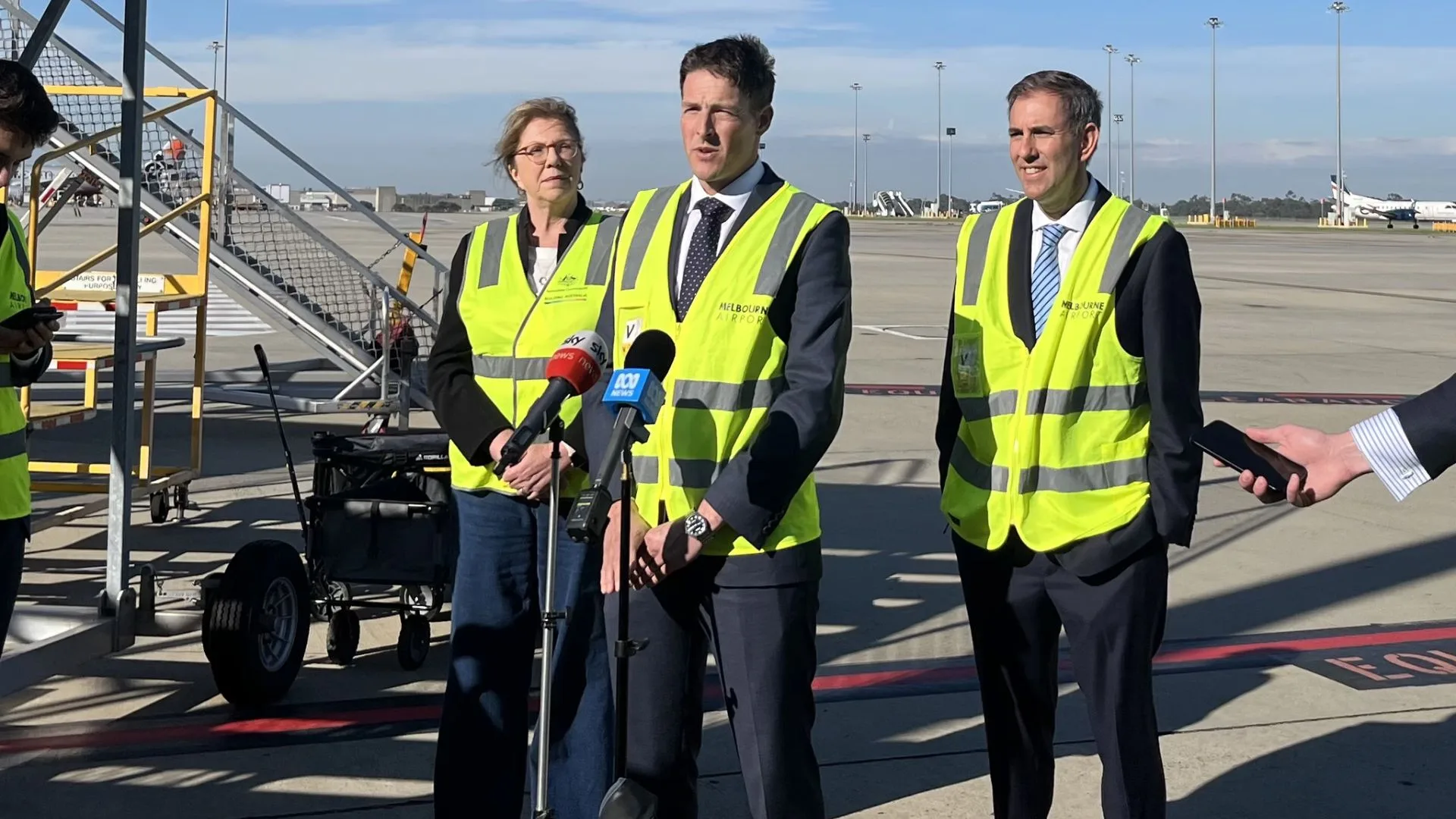
HAMR Energy’s inclusion in the program places the company among the most relevant projects for Australia’s industrial and energy agenda. The scheme was presented at an event at Melbourne Airport by Treasurer Jim Chalmers and Minister Catherine King.
The initiative seeks to accelerate regulatory processes and increase visibility for opportunities capable of attracting local and international capital. In this case, institutional support comes at a time when Australia is trying to strengthen its domestic fuel production, reduce reliance on imports, and improve the resilience of its supply chains.
Low-carbon methanol and SAF at the core of the strategy
Furthermore, the company’s flagship project is Portland Renewable Fuels, in Victoria. The facility will use local forestry industry waste to produce 300,000 tonnes of low-carbon methanol annually. This volume gives the project significant industrial relevance within the Australian alternative fuels market.
The methanol can be directly used for maritime transport or serve as a feedstock for manufacturing sustainable aviation fuel. In this way, HAMR is advancing a technological path that connects forest biomass with energy solutions for two segments that are particularly difficult to decarbonize.
Additionally, the company is working on selecting a site in South Australia to develop Australia’s first large-scale methanol-to-jet fuel plant. The planned capacity is 140 million liters per year, and the plan has the support of the state government.
The location also provides logistical and industrial advantages. South Australia offers consolidated infrastructure and proximity to sustainable forest raw materials from the Green Triangle, a key factor for maintaining the project’s long-term competitiveness.
In parallel, HAMR states that its developments could generate hundreds of jobs during construction and new permanent skilled positions. The expected impact extends to both Victoria and South Australia, benefiting regional economies seeking new value chains linked to the energy transition.
The proposal also adds an energy security component. By expanding domestic production of low-carbon liquid fuels, Australia would gain its own industrial capacity in critical segments for transport and logistics. This point was one of the main themes of the official message during the program’s presentation.
The announcement comes shortly after the closing of HAMR Energy’s Series A funding round for AUD 10 million. Airbus, Qantas, and thyssenkrupp Uhde participated in this financing, signaling industrial interest in technologies capable of producing low-carbon methanol and SAF at a commercial scale.
Looking ahead to the coming months, the company plans to advance regulatory approvals, site planning, technical evaluation, and dialogue with local stakeholders. This work will be crucial for bringing the projects closer to their final investment decisions.
Source and photo: HAMR Energy