Table of Contents
The company First American Nuclear (FANCO) formally submitted its regulatory engagement plan to the Nuclear Regulatory Commission (NRC) for the SMR EAGL-1 reactor. This action initiates the necessary pre-application consultations to obtain construction permits for a technology that promises to transform the availability of large-scale clean energy.
The technical presentation of the SMR EAGL-1 reactor to the NRC
First, the EAGL-1 design stands out for its fast-spectrum architecture and cooling via a lead-bismuth alloy. Unlike other proposals, this liquid-metal system avoids chemical reactivity with water or air, simplifying the structure by eliminating intermediate heat circuits. The simplicity of this technology does not reduce output, as a group of six units can supply power to more than 1.5 million homes with a minimal physical footprint compared with traditional plants.
Likewise, FANCO’s strategy addresses its customers’ urgency through the patented Bridge Power system. The solution enables the immediate supply of gas-generated electricity while the nuclear licensing process is completed. Through this operational bridge, companies secure their current supply and facilitate a smooth technical transition to nuclear energy without the need for costly structural modifications in the future.
On the other hand, the project’s viability is supported by analyses from the Pacific Northwest National Laboratory. Technical reports suggest that the EAGL-1 can be certified under the current regulatory framework, avoiding the creation of new, complex standards. The reactor’s engineering is based on industrial serial manufacturing and factory assembly, a model that reduces construction timelines and ensures superior quality control in every component.
Finally, the commitment to safety is reflected in a fully passive residual heat removal system. By operating under a four-loop, unpressurized configuration, the risk of failures that could expose the core is ruled out by the laws of physics.
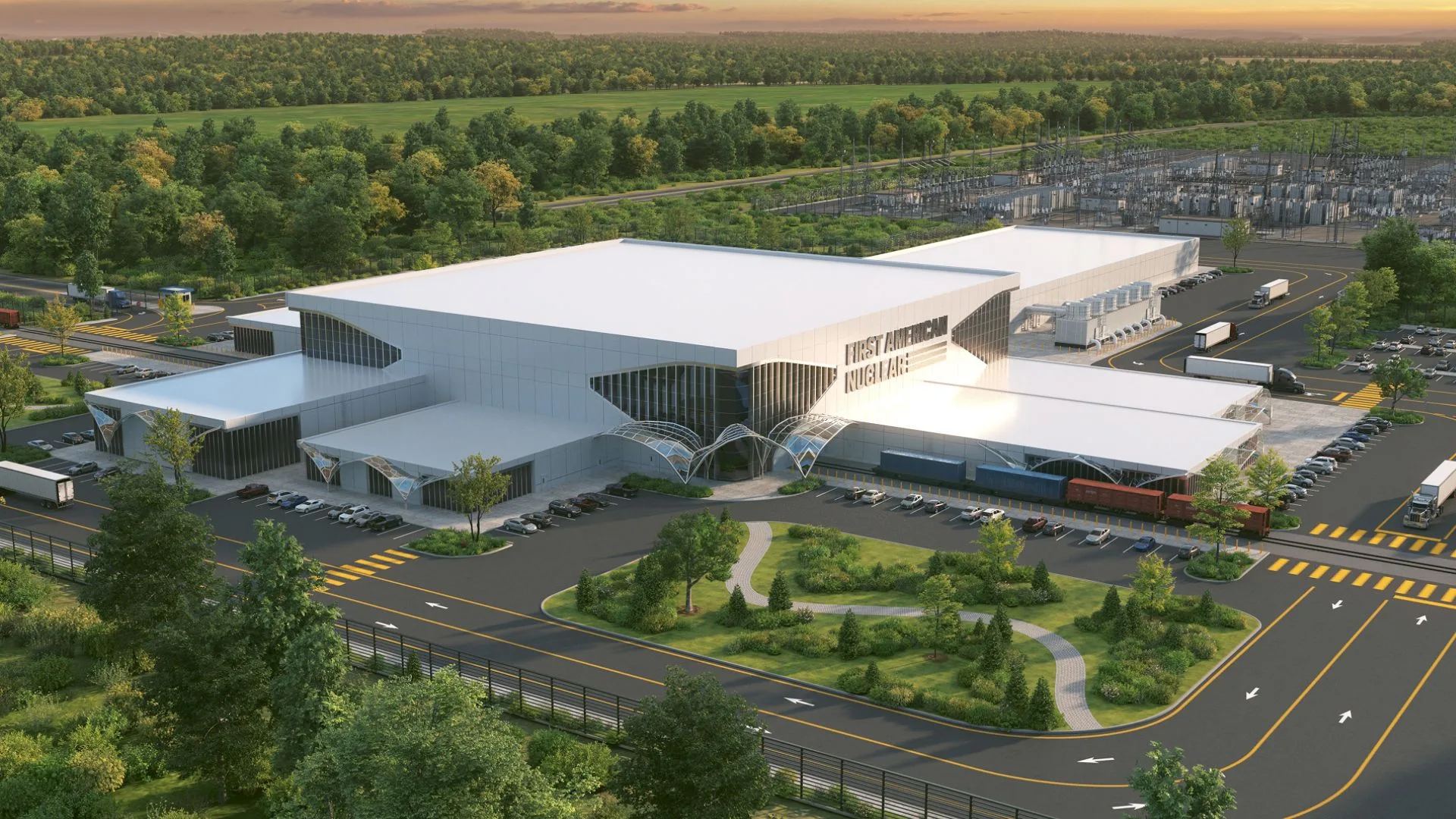
Source and photo: First American Nuclear