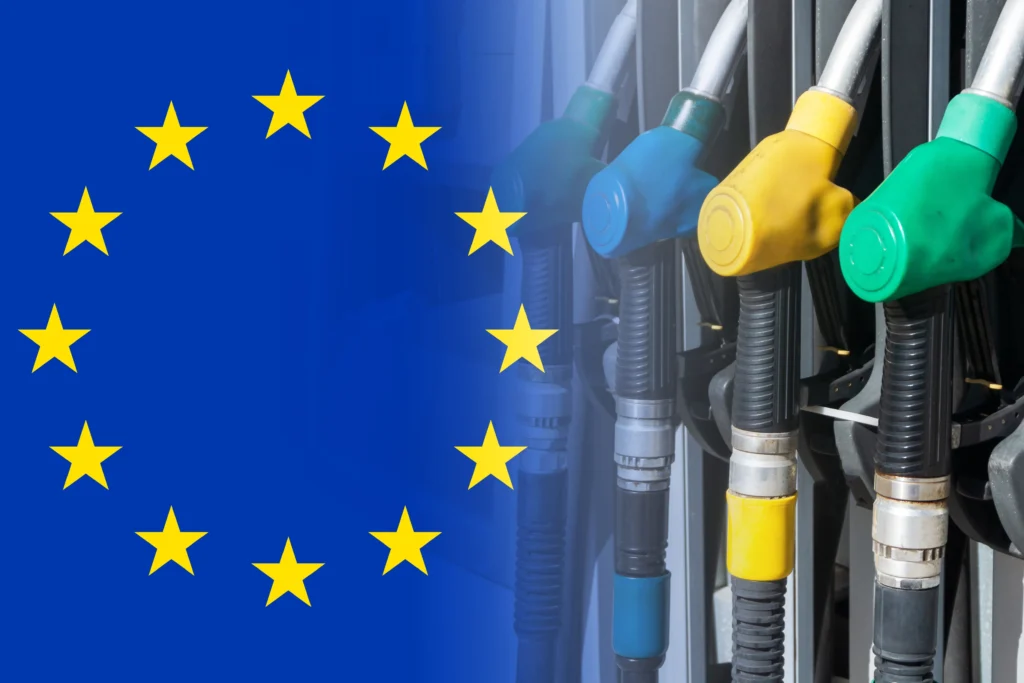
Energy imports more expensive are driving up the bill for countries in the European Union Since the start of the war with Iran, the bloc has spent more than €100 billion (approximately US$113.5 billion) in additional spending, as pressure mounts to reduce its reliance on fossil fuels.
The price increase comes amid supply disruptions caused by the closure of the Strait of Hormuz, a key route for global oil trade. This situation has driven up fuel prices and once again placed European energy security at the center of the debate.
The EU pays more for its energy imports
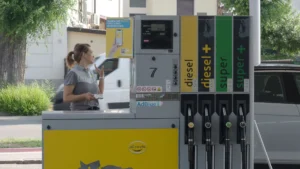
In some European countries, consumers are paying almost a 50% more at service stations. In certain markets, prices have exceeded the equivalent of US$11 per gallon after the interruptions resulting from the conflict.
During a meeting of the energy ministers of the 27 EU countries in Dublin, the European Commissioner for Energy, Dan Jørgensen, described the situation as critical.
Despite the more than 100 billion euros allocated to energy purchases, Jørgensen pointed out that member countries have not received a single extra molecule of gas or oil.
Much of the pressure on the prices it is linked to the Strait of Hormuz, before the conflict, around a fifth of the world’s traded oil circulated through this maritime route.
Europe seeks to accelerate the transition to electricity
Given this scenario, European ministers are studying measures to accelerate the replacement of fossil fuels with electricity and expand the bloc’s electrical infrastructure.
According to Jørgensen, the intention is to reduce Europe exposure to external suppliers and increase energy production within the European Union itself.
We need to replace fossil fuels, imported, polluting and expensive molecules, with domestically produced energy: green electrons.
Dan Jørgensen, European Commissioner for Energy.
The crisis also highlights how the map of the European energy imports, After reducing its historic dependence on Russia following the large-scale invasion of Ukraine in 2022, the EU increased its reliance on the United States as a direct supplier.
Diesel supply is a concern ahead of winter
He diesel it has become one of the most sensitive points for European energy security, Fatih Birol, executive director of the International Energy Agency (IEA), warned that Europe is especially exposed due to the high volume it imports.
Concern is growing as winter approaches, nearing 50% of Europe’s diesel supply comes directly from the United States, according to the data cited during the conversations.
Adding to this dependence is the political uncertainty in the US market, some Republicans in key states have proposed restricting diesel exports to bolster domestic supply before the midterm elections.
The Irish Minister for Climate, Energy and Environment, Darragh O’Brien, deemed an export ban unlikely due to the impact it would have on economies on both sides of the Atlantic. However, he maintained that Europe must prepare for potential supply disruptions.
Finland shows another way to reduce energy dependence
As the EU analyzes how to strengthen its energy independence, Finland emerges as one of the examples within the bloc.
According to Finnish Environment Minister Sari Multala, nuclear reactors, turbines, peat bogs, and hydroelectric power plants generate around 95% of the country’s electricity.
This combination allows for relatively moderate electricity prices and reduces the Finnish electricity system’s direct exposure to fuel imports.
For the European Union as a whole, the challenge will be to shift some of this reduced dependence on external energy sources to a much broader and more diverse energy system. The high energy bill accumulated since the start of the war with Iran is increasing pressure to expand electricity grids, strengthen domestic generation, and reduce the bloc’s vulnerability to further international disruptions.
Source: AP News
Photo: Shutterstock