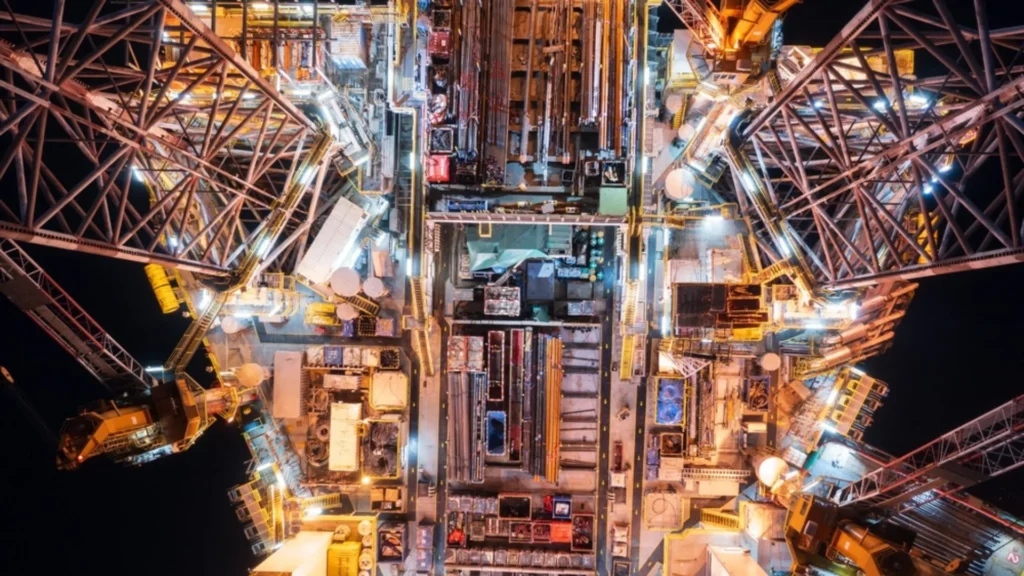
The recent gas discovery in Indonesia by Eni once again positions the Kutei Basin as one of Southeast Asia’s most promising regions for energy. The find, confirmed after drilling the Geliga-1 well in the Ganal block, reveals estimated resources of approximately 5 trillion cubic feet of gas along with 300 million barrels of condensate.
Furthermore, the well was drilled to a total depth of nearly 5,100 meters in deep waters of approximately 2,000 meters, where a significant gas column was identified in Miocene formations with excellent petrophysical properties. This result reinforces the technical viability of the field and opens the door for future productivity evaluations through DST testing.
Gas discovery boosts Kutei
On the other hand, this discovery is not an isolated event. It adds to a series of recent successes in the region, including Geng North and Konta-1, consolidating a pattern of high productivity in the basin. Likewise, it confirms the scalability of gas resources and the geological continuity of the system.
The proximity between these finds allows for the consideration of integrated developments. In particular, the combined resources of Geliga and Gula could contribute around 1 bscfd of additional gas along with 80,000 barrels of condensate per day, which would facilitate the creation of a new production hub.
Key infrastructure and accelerated development
In this context, Eni is evaluating options to accelerate field development by leveraging existing infrastructure. Notable among these is the use of an FPSO with a capacity of 1 bscfd and 90,000 bpd of condensate, in addition to the Bontang LNG plant.
Likewise, studies are underway to expand liquefaction capacity to extend the plant’s operational life, which would increase Indonesia’s export capacity. These synergies allow for cost reductions and shorter time-to-market.
Strategic impact for local and international markets
From an energy perspective, the discovery comes at a key moment for Indonesia, which seeks to sustain its gas production and avoid future deficits. Consequently, the newly discovered volume could contribute to both domestic supply and LNG exports.
Additionally, the project is part of a broader strategy that includes the creation of Searah, a joint venture between Eni and Petronas aimed at managing assets in Southeast Asia and developing billions of barrels of oil equivalent.
Future exploration outlook
Finally, Eni maintains an active campaign in the region with several additional wells planned through 2027. This exploratory continuity reinforces the company’s long-term vision and its commitment to Indonesia as a strategic growth axis.
Photo: Eni
Photo: Shutterstock