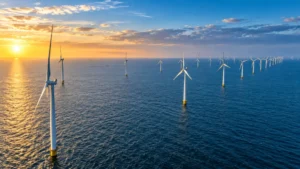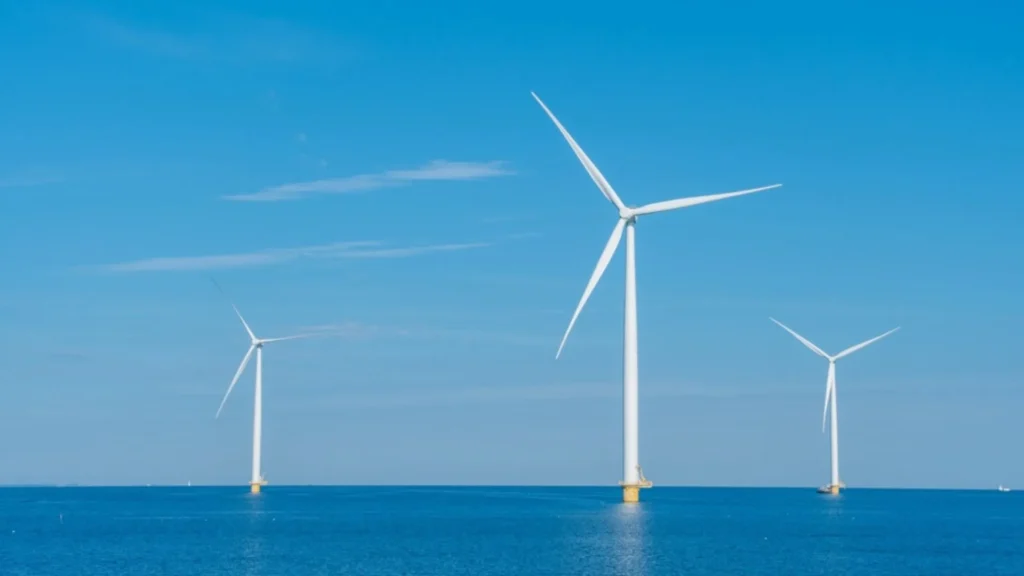
The U.S. Department of the Interior announced an agreement with Duke Energy to voluntarily cancel the Long Bay offshore wind lease off North Carolina. The company will allocate approximately $129 million to new generation capacity and associated electrical reliability improvements in the Carolinas.
The move is part of President Donald Trump’s administration’s energy agenda, focused on strengthening U.S. energy security and reducing costs for consumers. Under the agreement, Duke Energy abandons an offshore wind project that was still in an early stage of development and reorients resources toward alternatives considered more robust to meet electricity demand.
A Change of Course for the Offshore Wind Project
The lease corresponded to an area located in Long Bay, off the coast of North Carolina. The project had not yet begun construction, which facilitated the negotiated exit between the company and the federal government.
Likewise, the agreement includes a partial reimbursement linked to the lease and a commitment to reinvest approximately $129 million. The company can direct these funds to additional generation capacity, potential nuclear power plants, natural gas plants, and grid infrastructure projects.
Energy Security and Electricity Demand in the Carolinas
Interior Secretary Doug Burgum presented the agreement as a way to convert a national security concern into energy investments with a direct impact on users. The official priority is to promote affordable, reliable, and available energy for communities in North Carolina and neighboring states.
For its part, Duke Energy stated that the reinvestment seeks to support the growth of electricity demand in the Carolinas. The company maintains that the resources will be used in initiatives capable of strengthening system reliability and keeping costs under control.
Nuclear, Natural Gas, and Electric Grid Gain Prominence
The agreement also marks a shift from offshore wind development in the region. While the Long Bay project is out of Duke Energy’s plan, the company opens the door to continuous generation technologies and improvements in the electric grid.
Furthermore, the decision comes in a context of increased pressure on electric companies due to growing demand, infrastructure modernization, and the need to ensure a stable supply. For Duke Energy, the immediate goal will be to transform a wind asset into investments with a more direct operational return for its customers.
A Precedent for Federal Energy Policy
The voluntary cancellation of Duke Energy’s offshore wind lease reinforces the Trump administration’s strategy for offshore projects. The official approach favors investments in sources considered reliable and profitable over early-stage renewable developments.
With this agreement, the Department of the Interior and Duke Energy seek to close a dispute out of court and redirect capital toward energy projects with regional application. The result will be closely watched by the electricity sector, especially by companies with renewable assets in federal waters.
Source: U.S. Department of the Interior
Photo: Shutterstock