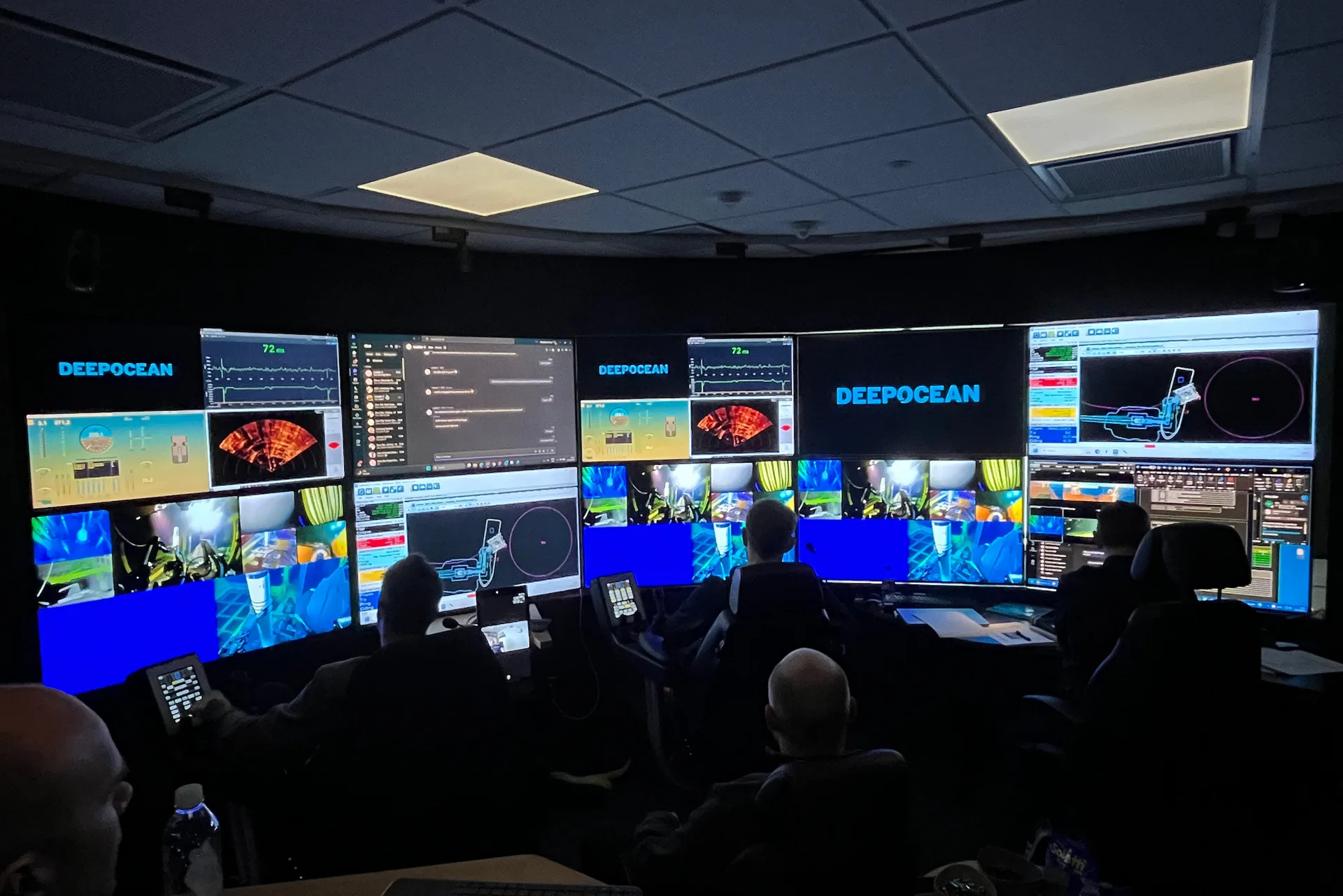
The advancement of smart offshore operations continues to accelerate. The company DeepOcean announced the successful execution of the first remote subsea intervention with operational leadership managed entirely from shore, consolidating a new paradigm for the global subsea industry.
The operation was developed for Aker BP at the Idun Nord field, located in the Norwegian Sea, and represents one of the most significant technological steps in offshore digitalization during 2026.
The project integrated remotely operated vehicles (ROVs), real-time operational supervision, and advanced communication systems from a remote operations center located in Haugesund, Norway.
A new operating model for the subsea industry
The subsea intervention included subsea crane operations and vessel proximity positioning, activities that historically required specialized supervisors and engineers to be physically present aboard an offshore vessel during campaigns of up to two weeks.
However, DeepOcean managed to transfer those critical functions to shore through its Remote Operations Center (ROC), significantly reducing the presence of offshore personnel without compromising operational safety or maneuver efficiency.
As explained by Olaf A. Hansen, Executive Vice President for Northwest Europe at DeepOcean, this model allows for the optimization of highly qualified specialists and reduces both operating costs and emissions associated with the transport and stay of personnel at sea.
Emission reduction and greater offshore efficiency
One of the most relevant aspects of the project was logistical optimization. Traditionally, this type of campaign involves mobilizing specialized personnel to platforms or vessels for extended offshore periods. On this occasion, the operation was completed in just a 12-hour shift.
In addition to the environmental impact, the strategy also improves operational flexibility. Operators can coordinate multiple subsea tasks within the same offshore campaign using remotely located specialists, maximizing resources and reducing downtime.
Aker BP highlighted that this approach strengthens the efficient use of vessels and technical personnel, maintaining high standards of safety and operational control.
DeepOcean accelerates subsea digitalization
DeepOcean is not new to the development of remote subsea operations. The company launched its first digital campaigns in 2018 and has since progressively increased the complexity of tasks executed from shore.
In 2025, the company achieved another technological breakthrough by completing remote subsea dredging operations, demonstrating that subsea digital capabilities continue to evolve rapidly.
The recent intervention at Idun Nord confirms that the offshore industry is entering a new stage where automation, remote systems, and advanced connectivity redefine subsea project management.
The future of remote offshore operations
The growing adoption of remote operation centers reflects a structural transformation within the marine energy sector. Companies seek to reduce costs, improve safety, decrease emissions, and increase operational efficiency through advanced digital technologies.
The success of DeepOcean and Aker BP could accelerate the implementation of similar models in future offshore campaigns, especially in regions such as the North Sea, the Gulf of Mexico, and deepwater subsea projects.
DeepOcean strengthens its position as one of the global leaders in digitalized subsea services, while the offshore industry moves toward increasingly autonomous, connected, and sustainable operating ecosystems.
Source and photo: https://www.deepoceangroup.com/