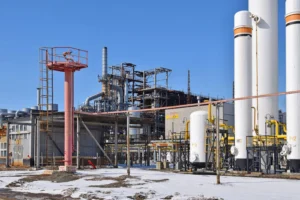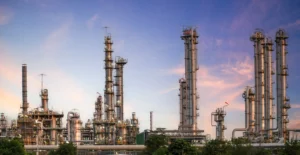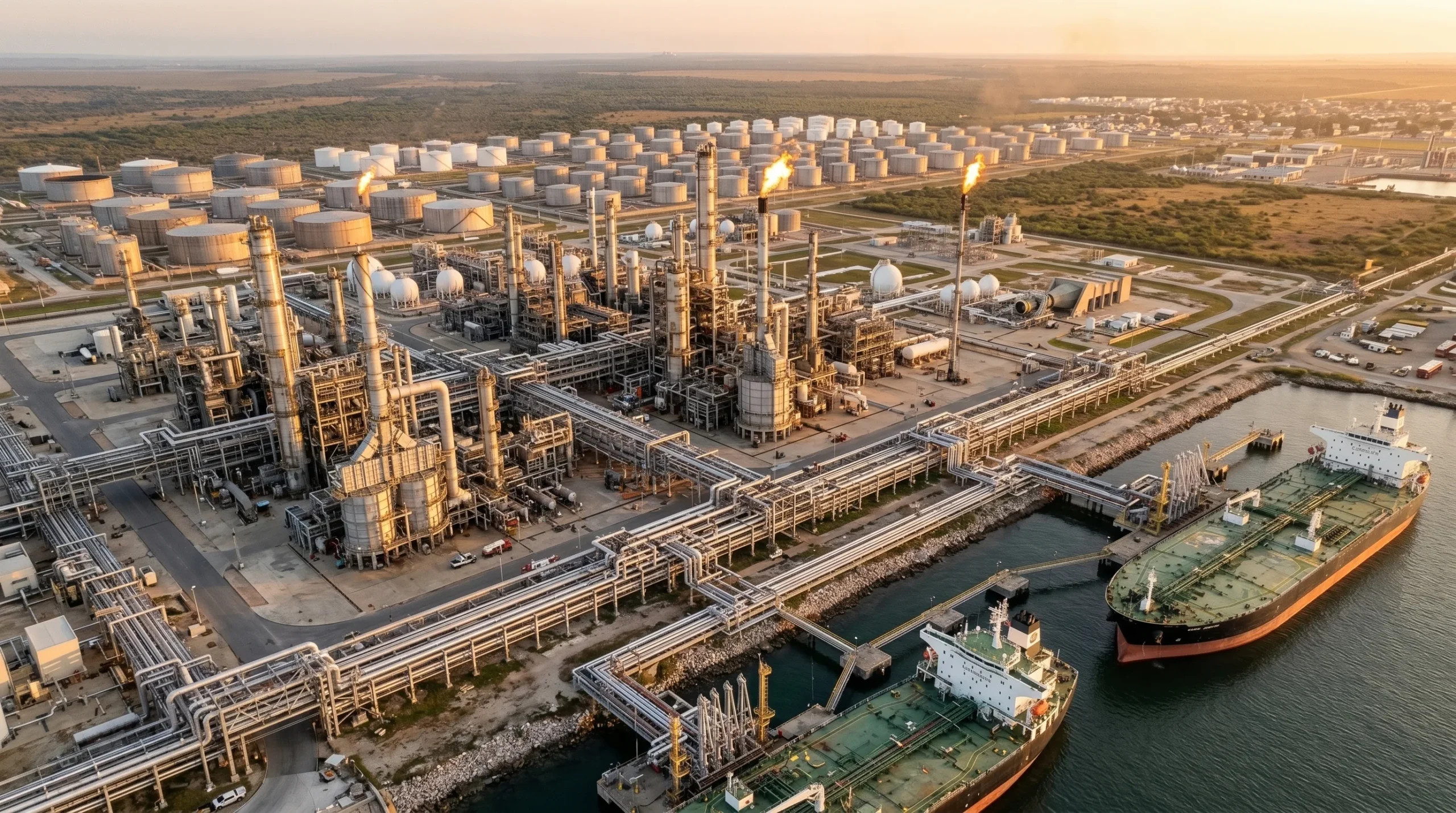
The Dangote refinery in Nigeria processed 700,000 barrels per day during a performance test, exceeding its design nameplate capacity of 650,000 bpd and consolidating its role as a new global fuel hub, as reported by Reuters.
The result places the complex, owned by businessman Aliko Dangote’s group, operating above its design parameter. For a facility that has barely reached operational maturity, exceeding nameplate capacity in a controlled test is a technical indication of the margin with which the continent’s largest refining project was conceived.
Dangote Refinery Exceeds Its Nameplate Capacity in Test
The processing of 700,000 bpd represents 7.7% above the nominal 650,000 bpd for which the plant was designed. The company considers this performance a step toward its expansion plan, which aims to increase capacity to 1.4 million barrels per day within approximately 30 months, more than doubling its current scale.
The facility produces gasoline, diesel, and aviation fuel (jet fuel), the three cuts in highest demand in transportation markets. This product flexibility allows the Dangote refinery to redirect volumes according to price signals from each market, rather than being tied to a single commercial destination.
The performance is supported by a technological optimization program for the complex. The plant has been adjusting its process units to sustain elevated rates, in line with the fine-tuning work that Honeywell has developed to optimize the Dangote refinery and maximize the yield of its highest-value cuts.
Dangote Refinery Exports to Three Continents
The production surplus is already translating into export flows. The refinery dispatched 353,000 bpd in April and 285,000 bpd in May, with destinations spanning Africa, Europe, the United States, and Saudi Arabia. CEO David Bird noted that the plant has a substantial jet fuel surplus and capacity to supply global markets.
“We have a large jet fuel surplus and can supply international markets,” the executive stated, in a declaration that underscores Nigeria’s shift from net importer of refined fuels to regional exporter with intercontinental reach.
This role change was anticipated from the project’s inception. When Nigeria inaugurated Africa’s largest oil refinery, the stated goal was to cover domestic demand and allocate at least 40% of capacity to exports, generating foreign exchange and reducing the country’s imported fuel bill.
Operational and Asset Management Implications
Operating above design presents specific demands in the downstream arena. Sustaining 700,000 bpd continuously requires reinforced reliability programs, equipment integrity control, and asset management capable of absorbing the increased thermal and mechanical stress on process units.
For refining operators, the case offers a reference on actual operating margins versus nameplate capacity. The difference between a one-time performance test and sustained operation at those levels will depend on crude availability, dispatch logistics, and predictive maintenance of critical units.
If confirmed as stable operation, the Dangote Refinery would strengthen its position as a structural player in Atlantic refined product flows, with capacity to influence gasoline, diesel, and jet fuel price differentials across multiple markets simultaneously. The next test will be maintaining the pace while advancing the ambitious expansion plan toward 1.4 million barrels per day. This exceptional performance demonstrates that Nigeria’s Dangote Refinery is already Africa’s largest refining complex.