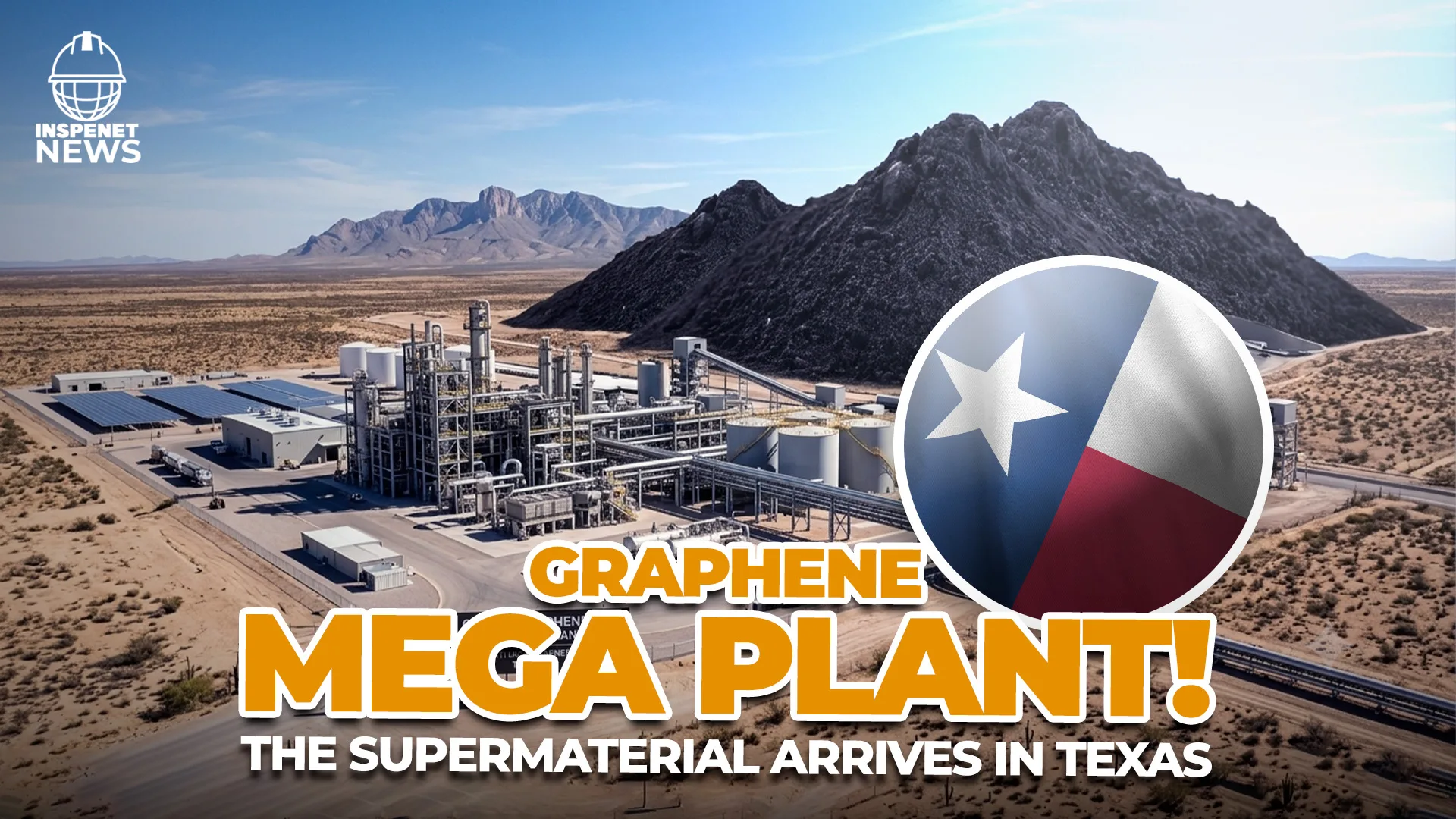
Graphene plant in Texas secures supply and expands production
HydroGraph Clean Power took a decisive step toward launching its first large-scale graphene plant in the United States after finalizing long-term agreements that secure both the site and a continuous supply of acetylene. The facility will be located in Bellville, Texas, and aims to meet rising demand for this material in sectors such as energy storage, electronics, and composite materials.
HydroGraph strengthens the supply chain from the source
Specifically, the Canadian company signed a ten-year contract with Western International Gas & Cylinders to receive acetylene via a dedicated pipeline. In addition, it leased land within its supplier’s facilities, a decision that will enable integration of feedstock supply with future industrial production.
This strategy reduces reliance on road transport, streamlines logistics, and improves supply stability—factors considered essential to maintaining continuous graphene production.
According to HydroGraph, having the infrastructure next to the supply source will help optimize operating costs and strengthen manufacturing reliability as demand increases.
The plant will produce up to 360 tonnes per year
Once permitting and site preparation work are completed, construction of the facilities will begin. The company expects to inaugurate the plant in the first half of 2027.
The complex will cover nearly 40,000 square feet and will initially have capacity to produce up to 360 tonnes of graphene per year. HydroGraph then plans to expand the facilities to exceed 750 tonnes per year, in line with growth in the advanced materials market.
Hyperion reactors will expand graphene production
The project will incorporate six modular Hyperion reactors from its initial phase; each can manufacture up to ten tonnes of graphene per year and be added progressively without the need to build new complete production lines.
Thanks to this modular design, the company will be able to expand manufacturing capacity as the needs of its industrial and government customers evolve.
In parallel, HydroGraph is also installing three Hyperion reactors at its Austin headquarters; these units will be dedicated to technology development and will provide capacity of up to 30 tonnes per year once they come online.
Western International guarantees acetylene supply
Western International notes that its acetylene production, storage, transportation, and distribution network provides a solid foundation to supply the new plant safely and continuously.
The company believes that the direct pipeline connection and the long-term supply agreement will help consolidate a national chain for advanced materials manufacturing by leveraging existing infrastructure.
For HydroGraph, this collaboration represents a fundamental component of its growth strategy in the United States, where it seeks to consolidate industrial capacity capable of serving high-value technological applications.
Graphene expands its presence in strategic industries
Graphene continues to gain prominence by combining high mechanical strength with excellent electrical conductivity and low weight. These characteristics support its incorporation into composite materials, industrial coatings, electronic components, batteries, and energy storage solutions.
With the new graphene plant, HydroGraph aims to strengthen the availability of this material within the U.S. market and reduce dependence on external supply chains. Integration between the feedstock supplier and manufacturing facilities also positions the project to respond more quickly to the expected growth in demand for advanced materials over the coming years.
Additional news of interest
Kent strengthens its presence with Aramco
Kent signed long-term agreements with Aramco to participate in future engineering, procurement and construction (EPC) and project management consultancy (PMC) opportunities in Saudi Arabia. These agreements bring the company into tendering processes for industrial conversion projects and strengthen its position in one of the region’s most important energy markets.
The company noted that the agreements reflect its project execution experience and the relationship it has maintained with Aramco for several years. It also reiterated its intention to continue providing services focused on safety, reliability, and performance as the Kingdom drives new investments to develop its energy sector.
Japan advances an essential material for nuclear fusion
NGK Corporation and Kyoto Fusioneering signed an agreement to develop and commercialize FLiBe, a molten salt essential for future nuclear fusion power plants. This material acts as a coolant and also participates in tritium production, a fuel needed to sustain fusion reactions. The collaboration includes production, refining, and testing of the compound, as well as the development of circulation systems and a specialized plant for its manufacture.
The project will combine NGK’s expertise in the safe handling and processing of beryllium with Kyoto Fusioneering’s capabilities in fusion reactor engineering. The companies will also work to obtain FLiBe with greater corrosion resistance and reduced material degradation over long operating periods. The compound will be evaluated on a test platform designed to verify that it meets the technical requirements of future commercial applications.
Burnham considers reactivating projects in the North Sea
Andy Burnham is considering authorizing the development of the Jackdaw and Rosebank energy projects just days after taking office as UK prime minister. Both fields, located off the coast of Scotland, already had licenses granted previously, although their approvals were overturned by the courts and they are currently undergoing a new public consultation process. The measure would also include expanding the connections that allow new drilling near existing fields.
The projects are operated by Adura, a Shell and Equinor joint venture, which argues that these initiatives would strengthen the country’s energy security during the winter, as well as help sustain domestic oil and gas production. The proposal has generated mixed views, as some sectors highlight its economic and employment impact, while environmental organizations maintain their opposition due to its potential effect on emissions-reduction targets.
Decom exceeds its annual target in just six months
Decom Engineering secured contracts with an estimated value of £4.5 million during the first half of 2026 and exceeded ahead of schedule the target it had set for the full year. The company now projects revenues of close to £6 million thanks to growing demand for its cold cutting technologies for subsea projects, both decommissioning and new infrastructure installation.
The company is involved in projects across North America, South America, Africa, the Middle East, Australia, and the North Sea. Its activities include campaigns to remove subsea pipelines and structures, as well as the deployment of new assets. Decom also strengthened its position with international quality, environmental, and safety certifications while expanding its tool portfolio to meet the needs of different markets.