Table of Contents
The steel industry in China is undergoing a period of increasing pressure due to the imbalance between production capacity and a demand that continues to weaken in key sectors such as construction, manufacturing, and consumption. Beyond the impact on steel prices, this trend is beginning to project effects on global raw materials markets, energy, logistics, and infrastructure, given China’s influence as the world’s leading steel producer and consumer.
China’s steel industry maintains high production capacity
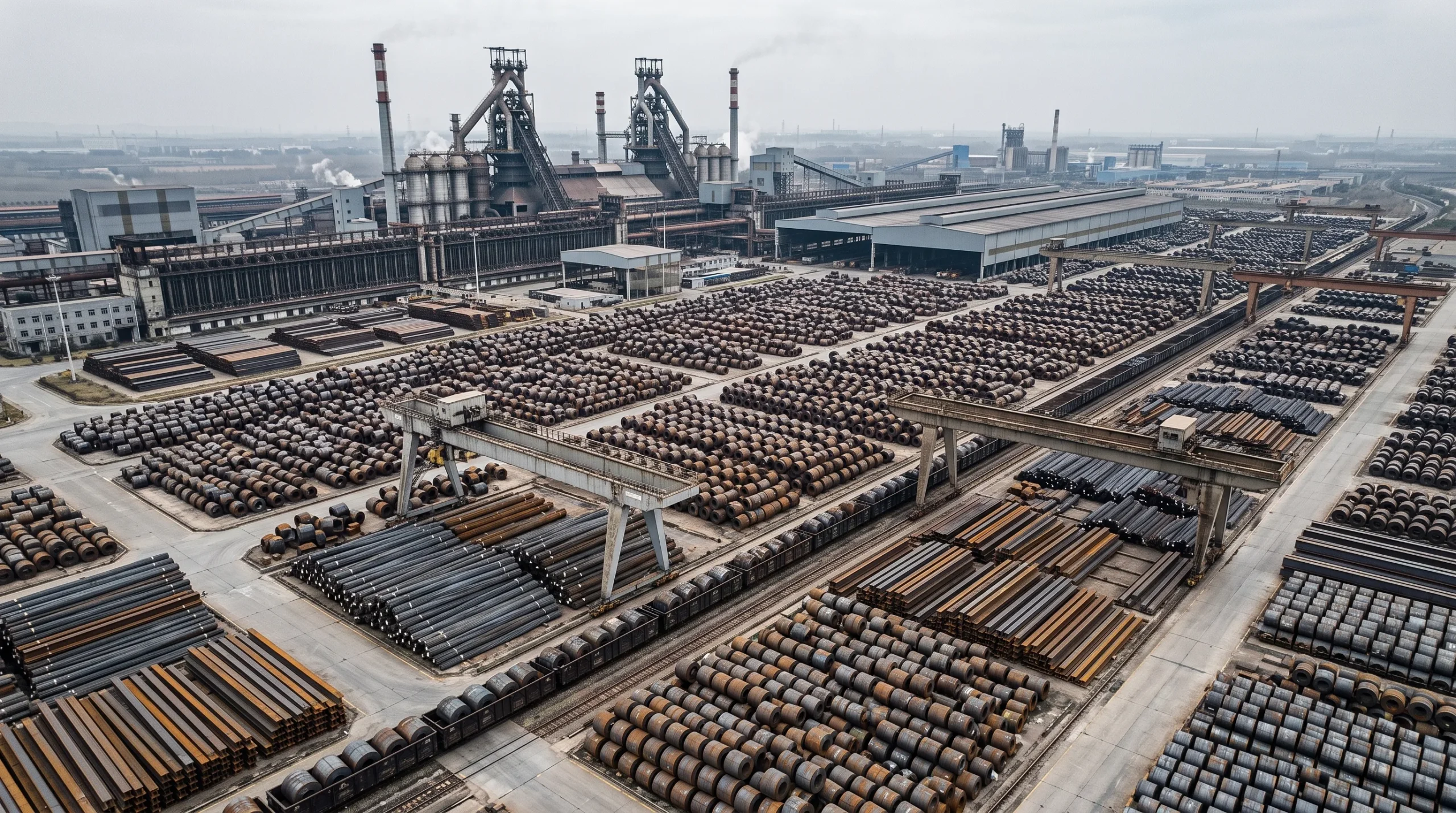
In recent years, Chinese steel mills have maintained high production levels to keep facility utilization high and preserve the competitiveness of their operations. However, the growth in supply has not been accompanied by an equivalent recovery in domestic demand.
This situation increases the availability of steel products in the market and limits the ability of manufacturers to improve their margins, especially in an environment where consumption continues to show signs of moderation.
For the industry, the challenge is no longer solely about producing more steel, but about balancing installed capacity with a demand that is increasingly selective and conditioned by the behavior of other economic sectors.
Construction continues to weaken domestic demand
The real estate market remains one of the most decisive factors for steel consumption in China.
Lower investments in new residential and commercial developments reduce the demand for long products used in civil works, while the slowdown in infrastructure projects limits the growth in consumption of structural materials.
Although Chinese authorities maintain policies to stimulate economic activity, analysts believe that the recovery of the real estate sector will be gradual, maintaining a scenario of caution for the steel industry during the second half of the year.
Industrial slowdown impacts energy and raw materials
The slowdown is not limited to the construction sector.
Industries such as automotive, appliance manufacturing, heavy machinery, and consumer goods also show more moderate behavior, reducing the need for flat steel, rolled coils, and other industrial products.
This scenario forces manufacturers to optimize inventories, control operating costs, and seek export markets to maintain plant utilization.
At the same time, distributors face increased competition in a market where material availability exceeds the pace of demand growth.
The impact reaches energy and raw materials
The evolution of the Chinese steel sector transcends the steel industry itself.
Lower production activity can reduce the consumption of iron ore, metallurgical coal, coke, electricity, and industrial fuels, affecting raw material suppliers and exporters in different regions of the world.
Countries with a strong dependence on iron ore and coal exports, such as Australia and Brazil, are closely watching the evolution of the Chinese market, while logistics and shipping operators also monitor potential changes in trade flows.
From an energy perspective, lower industrial production could moderate part of the demand for electricity and fuels used in steelmaking processes, although the effect will depend on the duration of the slowdown and the economic measures adopted by the Chinese government.
China continues to set the pace for the global market
China accounts for approximately half of the world’s steel production, so any variation in its industrial activity has repercussions that transcend its borders.
Decisions related to investment in infrastructure, housing, manufacturing, and industrial capacity continue to be an indicator closely followed by steel producers, mining companies, energy firms, and international trade operators.
In this context, the evolution of the Chinese market over the coming months will be decisive in defining the direction of numerous industrial segments linked to the energy transition, infrastructure development, and global demand for raw materials.
A signal for the entire industry
The pressure currently facing the steel industry in China reflects a broader structural challenge: maintaining the balance between production and demand in an economic environment marked by the slowdown of some traditional sectors and the transformation of global markets.
For the energy, mining, shipping, and infrastructure industries, the evolution of the Chinese steel sector will remain one of the main indicators for anticipating changes in international trade, raw material demand, and industrial activity for the remainder of the year.
Source: S & P Global